Illustrations by the Balbussos
As with any investment, your capital is at risk.
One of the things that drew me to put money in Scottish Mortgage – and later to come to work for the Trust – was the air of rebellion surrounding its growth investments. To me, the portfolio represents a revolt against suboptimal and outmoded ways of doing things.
Our portfolio companies operate across diverse growth trends, from AI to the transport revolution and to novel forms of healthcare.
Their shared tendency to invest in new and better approaches could make them exceptionally valuable to their customers and consequently to shareholders. That aligns them with the long history of human progress: a journey towards better and better ways of doing things, leveraging the leading ideas of the age.
Many believe ‘crypto’ is part of that story of progress, with potential to write a whole new chapter.
The great crypto paradigm shift
Traditional money is government-issued. You can use it in hard or digital form. Money supply is centrally controlled, as is the cost of borrowing. Together these levers comprise ‘monetary policy’, a macroeconomic toolbox not without detractors. Traditional money can also be traced and frozen by authorities.
Crypto offers a paradigm shift. It is a type of digital money that, with a few exceptions, is not controlled by a central bank or government.
Much of the crypto world, notably Bitcoin, takes the form of decentralised currency, the governance of which is democratised. All participants in the system have equal rights and responsibilities.
This system runs on a ‘blockchain ledger’, a peer-to-peer digital record book that tracks all transactions securely and transparently.
Each time a ‘block’ – a group of transactions – is added to the blockchain, the network issues a limited amount of currency. Anyone with the knowhow and resources can build a block: the process is known as ‘mining’. They can then claim the block reward and can own and spend their new cryptocurrency.
The mysterious birth of a financial revolution
Few growth themes have had such intriguing beginnings. The founding myth centres around the possibly pseudonymous Satoshi Nakamoto who, in 2008, published the Bitcoin white paper. This document outlined a revolutionary peer-to-peer electronic cash system, promising decentralisation and financial autonomy.
In 2009, Nakamoto mined the first Bitcoin block, known as the Genesis Block, in which he embedded a message about bank bailouts, symbolising distrust of traditional finance. The alluring mystique around Nakamoto and cryptocurrency’s origins helped spark a global movement.
The defining quality of crypto is that your participation is not controlled by anyone else. This freedom appeals to many and has given crypto increasing prominence as a form of currency and an asset class.

By the end of 2024, 420 million people globally owned some form of crypto and its total market value was nearly $4tn. A growing number of companies will accept crypto payments for at least some transactions, including Ferrari and SpaceX.
There are thousands of cryptocurrencies in existence, with prominent examples including Bitcoin, Ethereum, Binance Coin and Solana.
The re-election of President Trump looked like a positive for the industry. He has said he wants to make the US the crypto capital of the planet, with the greatest strategic reserve of Bitcoin.
So, whether or not you’re compelled by the grand underpinning notion of crypto, its growth seems worth considering. It’s in that spirit that Scottish Mortgage has some limited exposure.
Selling picks and shovels in a gold rush
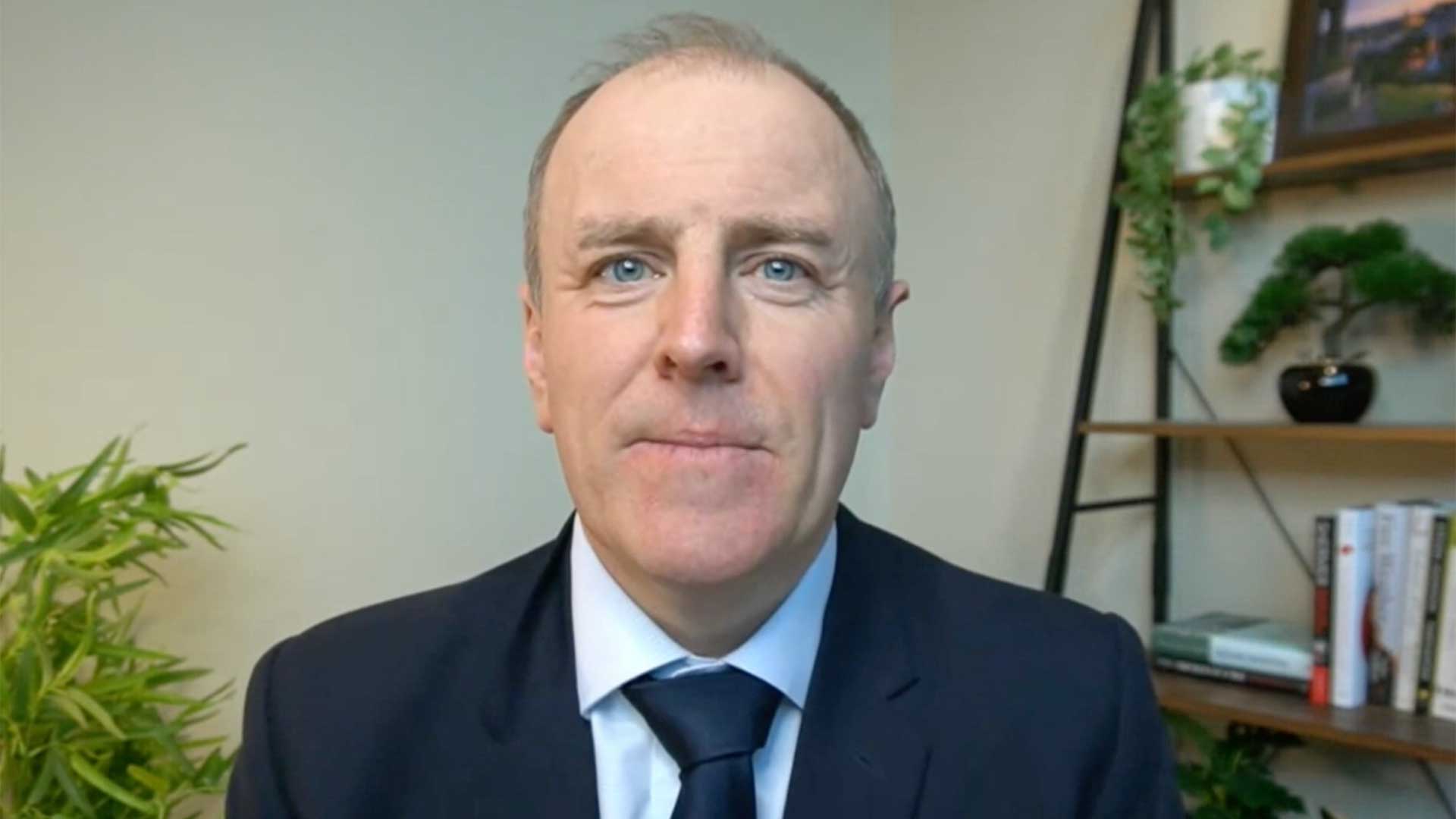
A small part of our portfolio is invested in Blockchain.com, which we might call a ‘picks and shovels’ business. It’s not a cryptocurrency itself. Rather it provides tools for others seeking to participate in crypto. Blockchain.com’s digital platform offers ways to buy, hold and use cryptocurrency, “making it possible for people to be part of the crypto ecosystem”, as co-founder and chief executive Peter Smith told Scottish Mortgage recently.
Blockchain.com is one of the world’s oldest and most trusted crypto platforms, with over 90 million wallets – the digital tools that allow users to store, manage and transact cryptocurrencies – and 40 million verified users. It has facilitated over $1tn in transactions and has strong investor backing. It has shown rapid revenue growth, approximately 1,500 per cent over four years, via products that include:
- Wallet: a digital tool for storing, sending and receiving cryptocurrencies such as Bitcoin
- Exchange: a platform to buy, sell and trade cryptocurrencies
- Explorer: a tool to view details about transactions and addresses on the blockchain
- Institutional facilities: services for businesses and professional investors, including crypto custody, trading and brokerage
Scottish Mortgage also invests in digital payments company Stripe, which provides infrastructure and applications for online payments and business operations, partnering with online leaders to enhance capabilities and navigate global networks.
Stripe processed $1.4tn in payments in 2024, a 38 per cent increase from the previous year. That’s about 1.3 per cent of global GDP.
Stripe has ventured into ‘stablecoins’ – cryptocurrencies pegged to stable assets such as the US dollar – by acquiring Bridge Network for $1.1bn, aiming to enhance its global payment capabilities. This could slash costs and streamline cross-border transactions, making digital payments faster and more efficient.
These two holdings allow us to remain agnostic about individual cryptocurrencies – notoriously volatile and hard to value – while exposing us to a potentially revolutionary development. They also offer fantastic opportunities for Scottish Mortgage to learn more about crypto.
Facing up to the ethical challenges
And there’s much to learn, not least the ethical challenges it presents. These include crypto’s potential for:
- facilitating illicit activities owing to anonymity
- environmental impact from energy-intensive mining
- regulatory evasion
- promoting financial instability
Such issues threaten security, sustainability and equitable access in the rapidly evolving digital economy. Our decision-making framework – how we identify and own exceptional growth companies – includes rigorous checks on such ‘social licence to operate’ factors.
There’s also the volatility. Investing in crypto has been compared to experiencing three times the risk-reward volatility of the Nasdaq. Broadly, when that tech stock index has gone up, crypto has sometimes gone up faster. When it’s fallen, crypto has often suffered worse.
Hence the importance of finding companies that are earning trust. In an industry replete with get-rich-quick scams, the value of trust can’t be overstated.
As Peter Smith told us, the firm has an unblemished record of honouring its deals. “One of the things that excites me is I feel we’ve proven to the market that we can be trusted. I think that’s probably one of the most valuable assets you can own… in my 10-plus years as CEO, we’ve never broken a trade.”
Questioning the value of cryptocurrency is akin to asking ‘what is trust worth?’. Money is merely an instance of everyone agreeing to believe in an abstraction, a system of storing and exchanging value.
There is growing demand in many quarters for that system to be decentralised and democratised. The potential is therefore huge. With the right exposure – in our case, backing those selling picks and shovels in a gold rush – the upside might be profound.
Important information
The views expressed in this article should not be considered as advice or a recommendation to buy, sell or hold a particular investment. The article contains information and opinion on investments that does not constitute independent investment research, and is therefore not subject to the protections afforded to independent research.
Some of the views expressed are not necessarily those of Baillie Gifford. Investment markets and conditions can change rapidly, therefore the views expressed should not be taken as statements of fact nor should reliance be placed on them when making investment decisions.
Baillie Gifford & Co Limited is wholly owned by Baillie Gifford & Co. Both companies are authorised and regulated by the Financial Conduct Authority and are based at: Calton Square, 1 Greenside Row, Edinburgh EH1 3AN.
The investment trusts managed by Baillie Gifford & Co Limited are listed on the London Stock Exchange and are not authorised or regulated by the Financial Conduct Authority.
A Key Information Document is available by visiting bailliegifford.com