Key points
- Silicon Valley's unique ecosystem of talent, research and entrepreneurialism has led to a high density of innovative growth companies
- Keeping close tabs on the area has led Baillie Gifford to Astera Labs, Amplitude, Twist Bioscience, among other transformational companies
- Boston’s biotech hub and California’s Space Beach are other innovation centres of note, with holdings including Beam Therapeutics and Rocket Lab
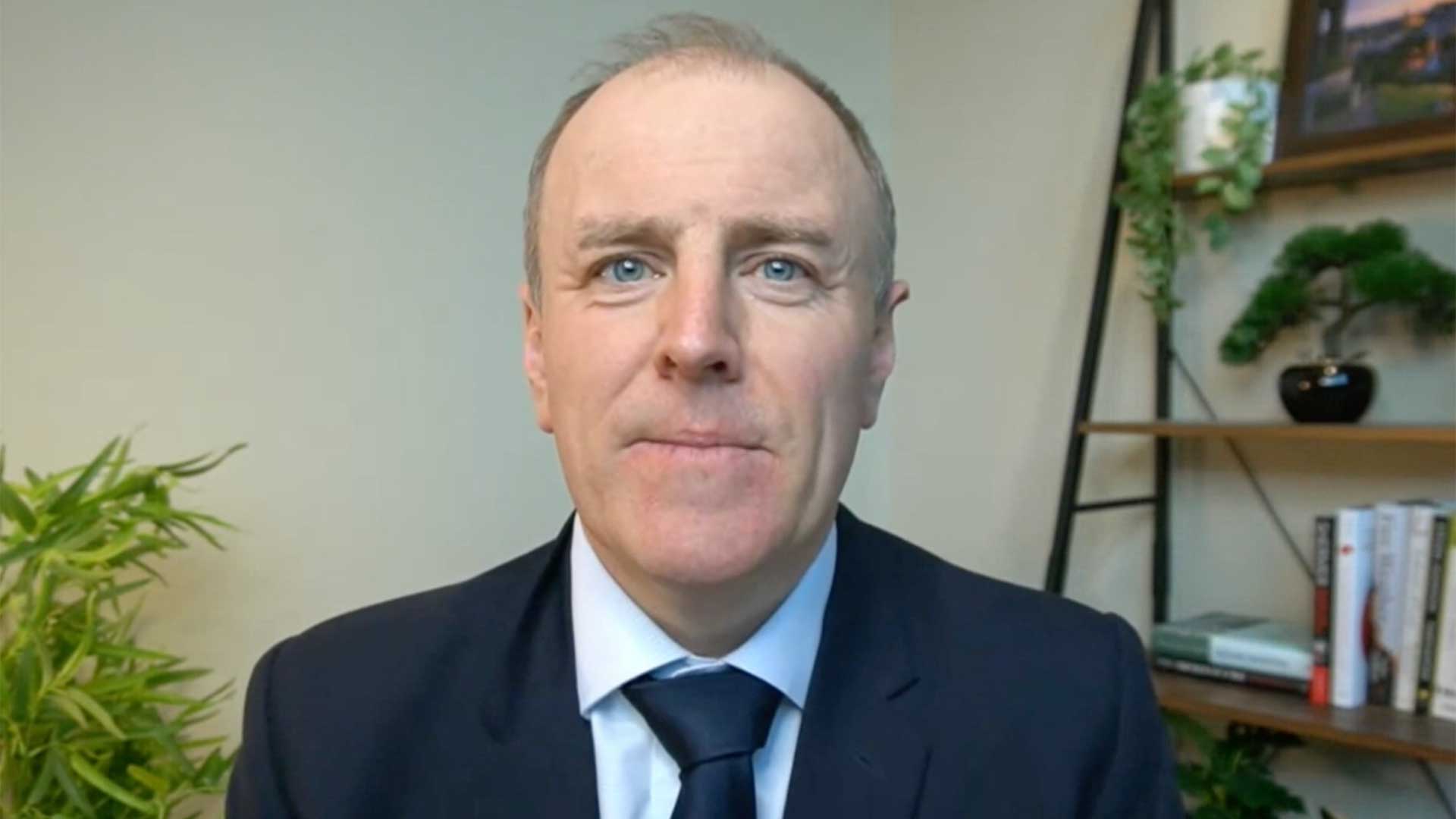
WATCH: Investment manager Brogan Harris (right) explores the rising stars in Silicon Valley and other US innovation hubs in his Disruption Week briefing
Your capital is at risk.
Ever since William Hewlett and David Packard started a business in a Palo Alto garage in 1939, Silicon Valley’s happy marriage of science, technology and commercial skill has radiated entrepreneurial energy.
For more than 70 years, this concentration of expertise has led wave after wave of technological transformation. As its advantages have compounded, it has inspired other US tech hubs and drawn in investors seeking access to tomorrow’s world-changing ideas.
“There’s no single reason why Silicon Valley has proved such an enduring success,” says Brogan Harris. The biologist-turned-Baillie Gifford manager regularly visits the region.
“It’s a system where lots of cogs work in unison. You have Stanford University generating primary research and ideas, a rich network of angel investors and venture capitalists, and an ecosystem of suppliers to help scale start-ups, and, most importantly, a deep pool of talent spanning everything from hard-silicon engineering and software development to interdisciplinary fields such as biotechnology. They all come together to form the cluster.”
Harris, whose PhD is in bioinformatics – the computerised analysis of biological data – recently returned from a visit, where he caught up on the progress of investee companies. Forging and maintaining connections with founders and other company leaders is also key to finding the new ideas that will deliver returns for investors.
“I owe a lot to colleagues who have gone before me and have helped build trust in the firm based on our long-term thinking,” Harris says. “That’s opened many doors, and I’m hoping I can contribute to that reputation with time.”

“One big ecosystem”: the co-dependent clusters of talent around the San Francisco Bay Area is key to its enduring success
AI data centres
On his most recent trip, Harris engaged with about 20 chief executives and management teams, gaining new insights into their long-term strategies and how they intend to realise them.
One example is San Jose-based Astera Labs, a hardware company benefiting from the AI wave by providing performance-enhancing products and services to datacentre clients. “The business is growing like an absolute weed,” Harris says, citing 104 per cent year-on-year revenue growth in a recent quarter, largely driven by burgeoning demand for data-centre infrastructure stoked by the AI revolution.
Astera develops connectivity chips, or ‘retimers’, that improve the flow and integrity of data as it travels between the multitude of rack-housed chips. It also provides COSMOS, software that lets operators monitor hardware performance and fix problems quickly – a “nervous system” for data centres, as Harris puts it.
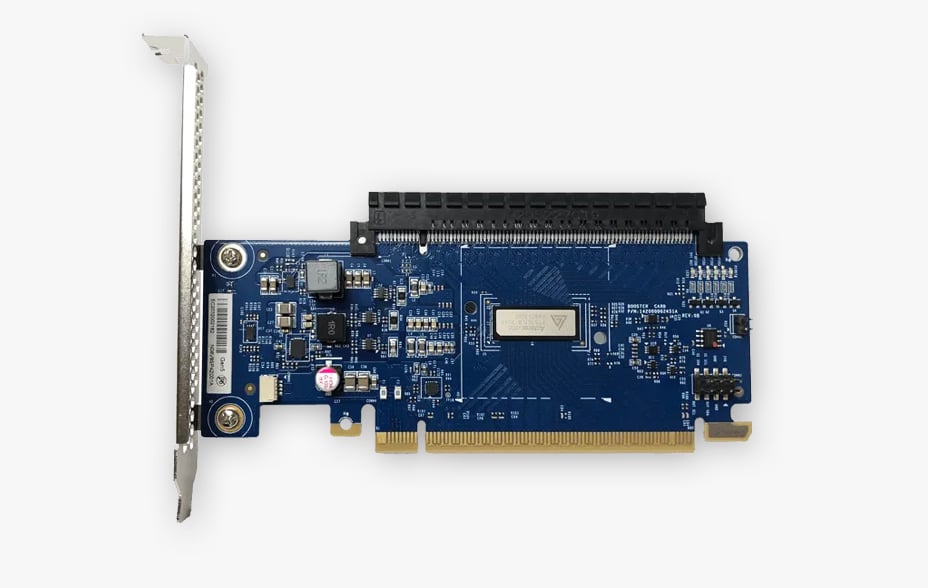
Astera Labs' ‘retimer’ speeds the flow of data across giant AI datacentres. It's helped the firm more than double its revenue.
© Astera Lab
It’s a complex field with demanding customers, requiring exceptional engineering talent. Astera’s task, Harris says, is to recruit at sufficient quality and scale to stay competitive in AI infrastructure.
Next-generation analytics
Another opportunity exciting him is how AI is prompting businesses to redesign their digital products to build competitive advantage.
“One of the companies we think is going to benefit hugely is Amplitude, which we invested in back in March,” he says “Amplitude is a data analytics platform that helps companies understand how customers interact with their websites and application – what they like, where they get stuck, and what keeps them coming back”.
“By finding the optimum configuration of their website, they can boost conversion and retention. At the moment, this process is quite manual – it takes a human to do the analytics. Amplitude is building an AI agent that’s ‘always on’, helping to surface more insights.”
The founder-run company collects trillions of data points. Today, it helps clients hone their users’ experience and experiment with new features. But in time it could help usher in a new age of personalisation – tailoring website and apps precisely and differently to each user.
“With the data Amplitude is collecting and the software it’s developing, it’s in a very good position. The chief executive Spenser Skates has long-term vision and a huge passion for bringing the company to the forefront of analytics. And the speed at which he can position the business is much faster than larger incumbents like Google and Adobe.”
In the field of biotech, that commitment to long-termism is especially important, Harris explains. Disruptive new treatments can take years to incubate and to prove.
“It can cost billions of dollars and take decades, which puts a lot of pressure on companies to sell out to pharmaceutical firms. We look for those rare companies that can cross that chasm and build sustainable, long-term businesses. That requires ground-breaking science as well as a formidable management team with a real long-term vision. But the returns can be phenomenal when they get it right.”
AI is also transforming the biotech sector. Not just in terms of aiding research, but in reducing the cost and time dedicated to regulatory compliance. That means more resources and mindpower can be dedicated to scientific discovery.
“There’s a company we’ve been investing in for several years called Twist Bioscience,” Harris says. “This isn’t a traditional biotech. It doesn’t produce its own drugs or therapeutics but synthesises DNA, which is used in advanced therapeutics and diagnostic tests.”
The firm has developed a way to turbocharge the process by manufacturing DNA strands in millions of tiny ‘nanowells’ embedded into the structure of a silicon chip. The result is that it can synthesise 9,600 genes on a single chip. By contrast, traditional lab equipment produces a single gene.

Silicon beats plastic: Twist Bioscience's ‘nanowells’ chip can build thousands of custom DNA pieces in parallel, faster, cheaper and cleaner than the traditional 96-well microplate.
© Twist Bioscience
“Imagine you’ve had cancer and undergone surgery to remove a tumour,” Harris says. “Twist’s technology can be used to make a tumour-informed DNA panel. After surgery, a doctor can use this diagnostic tool to test whether the cancer has returned. The test can be more sensitive than traditional means, allowing earlier detection, faster treatment and better outcomes. This could be foundational to cancer testing long-term.”
Harris also regularly visits the Boston-Cambridge hub in Massachusetts – the US’s other big biotech powerhouse. There, Beam Therapeutics counts among Baillie Gifford’s investments. The gene-editing pioneer’s techniques enable precise single-base changes to DNA, which in turn pave the way to cures for ailments including sickle-cell disease – a painful disorder that today medics treat as a chronic condition.
Space rockets and beyond
Harris is also plugged into Space Beach – Long Beach, California’s aerospace cluster, based in the US’s former aeronautics centre. Harris recently led Baillie Gifford’s investment in Rocket Lab. The firm manufactures and launches satellites for clients and is in the process of developing a reusable version of its Electron rocket – expanding a sector pioneered by another of our investments, SpaceX.
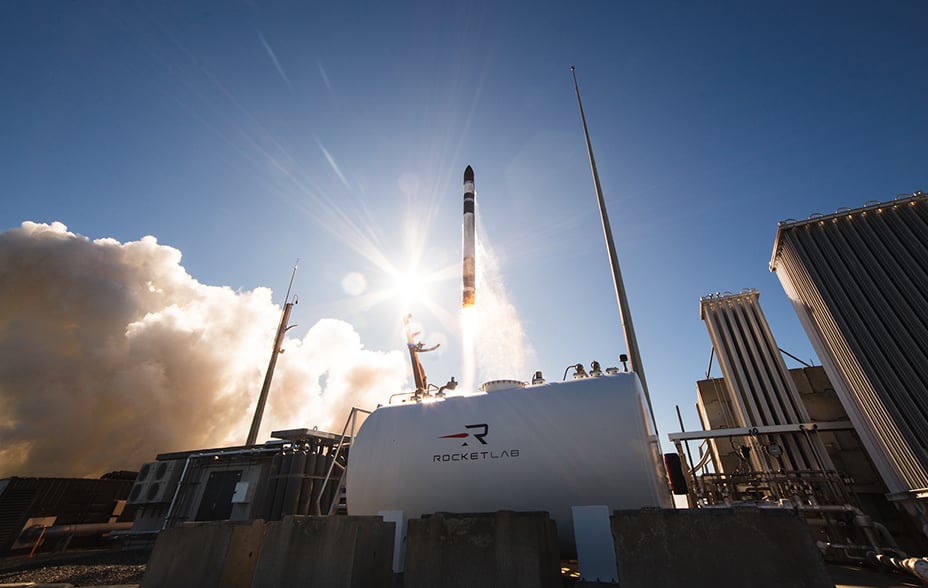
Rocket Lab's 65th Electron launch on 3 June, 2025, deploying BlackSky's Generation 3 satellites into orbit.
© Rocket Lab
For Harris, the value of spending time amid the US’s innovation hubs – and the windows into the future they provide – is about staying close to firms.
“The best entrepreneurs want to be surrounded by like-minded individuals to give their baby the best chance. We aim to invest in progress alongside them, so we need to be attuned to these ecosystems, understand their thinking and share their tolerance for uncertainty. All that culminates in our ability to deliver on our core task: to drive returns for our clients.”
Risk Factors
The views expressed should not be considered as advice or a recommendation to buy, sell or hold a particular investment. They reflect opinion and should not be taken as statements of fact nor should any reliance be placed on them when making investment decisions.
This communication was produced and approved in November 2025 and has not been updated subsequently. It represents views held at the time of writing and may not reflect current thinking.
This communication contains information on investments which does not constitute independent research. Accordingly, it is not subject to the protections afforded to independent research, but is classified as advertising under Art 68 of the Financial Services Act (‘FinSA’) and Baillie Gifford and its staff may have dealt in the investments concerned.
All information is sourced from Baillie Gifford & Co and is current unless otherwise stated.
The images used in this communication are for illustrative purposes only.
Words by Colin Donald
179343 10059019