
Key points
- Large language models are powerful tools for statistical prediction, but they are not reasoning machines
- Understanding that difference helps clarify which parts of investing can be supported by machines and which cannot
- Long-term investing still depends on human exploration, judgement and synthesis

As with any investment, your capital is at risk.
When did computers first beat humans at chess? The residents of Vienna believed it was the Mechanical Turk machine in 1770, famous for beating the chess masters of its day.
They were wrong. It wasn’t a thinking machine; it was a hoax. For over 80 years, human chess players hid inside the cabinet, deciding the moves and operating the machine mechanically. It worked because audiences wanted to believe what they were seeing was a machine capable of genuine thought.
I think, therefore, I am
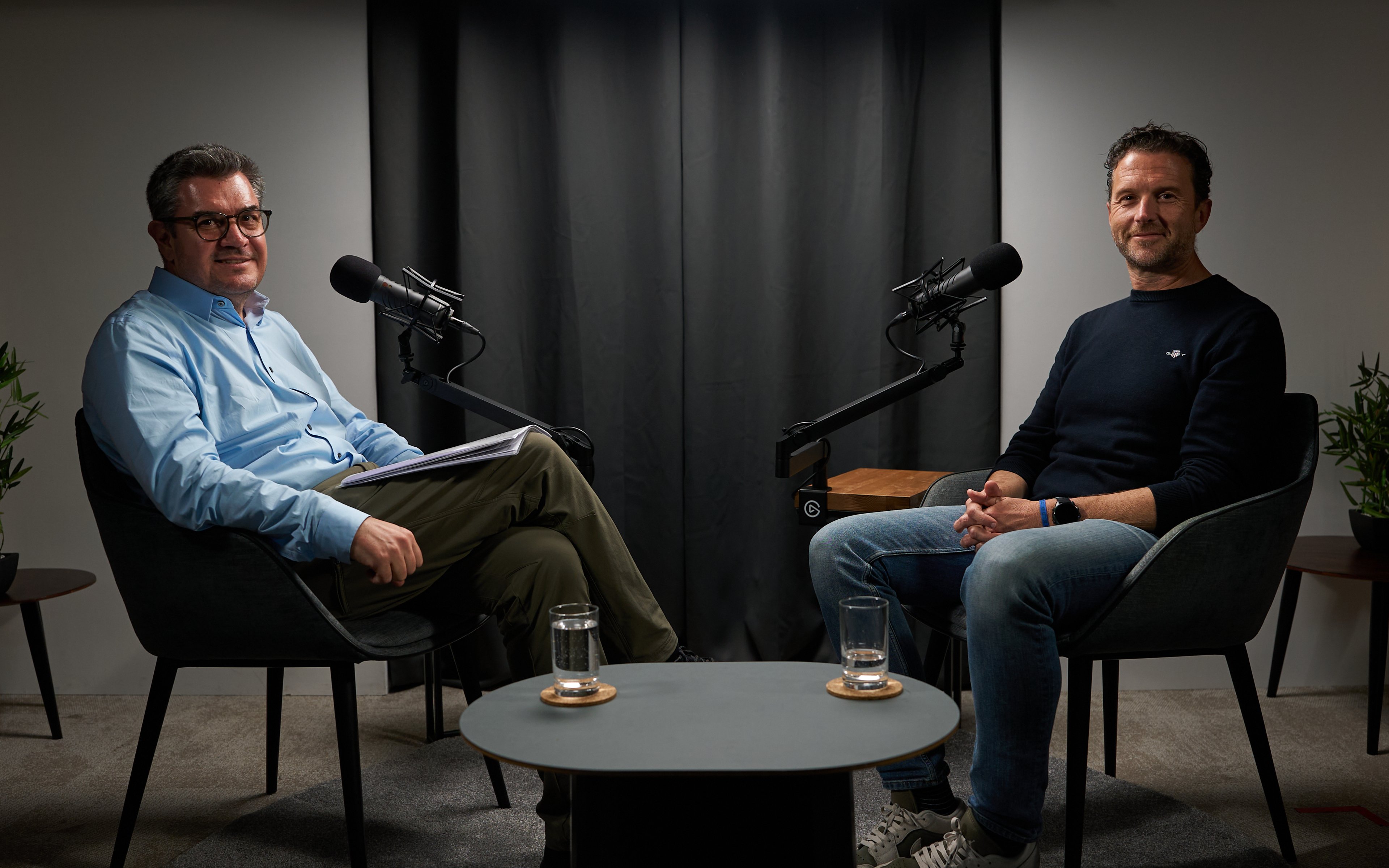
At a 2025 investor forum, investment manager Robert Natzler warned that large language models (LLMs) can also appear to be reasoning when, in fact, they are not. If we’re going to use them well in investment research, we need to stay clear-eyed about what they are.
“Backpropagation [the training method used within neural networks] is applied statistics,” Natzler said of the engine behind artificial intelligence (AI). In other words, it doesn’t model the world in the same way a human analyst would.
Natzler noted that if you asked an LLM about the impact on global supply chains of a conflict in the Taiwan Strait, it would produce “a pretty compelling answer.” However, all it is doing is “generating the most probable answer to your prompt.”
In contrast, Natzler suggested, “If you ask a human to write something, that’s going to force them to go away and think quite deeply about it.”
That’s why he warned, we must “be very, very careful” not to confuse impressive prose as a proxy for actual thought.
Summarising the received wisdom
Natzler suggests that “if you build habits around verification,” there is a role for LLMs in investing as a valuable tool that can give you “the most likely summary” of received wisdom.
Natzler highlighted that the largest model available today has nearly 2 trillion variables. And if that sounds unbelievably large, he pointed out, it’s estimated that the human brain has over 100 trillion synapses.
He said, “Until we have these reasoning machines [of a similar scale], we should think constructively about where our organisations should be specialising their humans.”
The human touch
So, where should humans specialise in an AI-enabled investment process? Natzler offered three roles he believes remain “unquestionably” human: the human investor as explorer, judge and synthesiser.
The first is an explorer. Humans go out into the world to gather new information. Sitting in the Private Companies Team, his role can involve anything from conversations with leading AI labs about their public semiconductor suppliers to engaging with the next generation of ecommerce companies to understand the threats to incumbents.
“Again and again and again, across sectors and geographies, we find that private companies give us a rich seam of information with which to analyse businesses in public markets better,” he said. Importantly, as this information isn’t in the public domain, it remains outside of the training data used by LLMs.
The next aspect is judge, “working out how to weigh that data and combine it effectively”. That’s why effective stock discussions should probe the “psychological, the unspoken” instincts investors pick up from their fieldwork and engaging with customers, suppliers and employees.
Natzler said, “The investor is not just a sensor… they are also a processor.” In other words, they act as a synthesiser. Investors’ value-add is from being “profoundly present” in the system they’re trying to understand.
He illustrated the importance of synthesis with an illustration from Baillie Gifford’s Long Term Global Growth Team.
Among its ten top-performing holdings, there were 43 moments when a stock fell by 30 per cent or more on the way to becoming one of the fund’s standout winners for clients.
At those moments, the investor’s ability, “to have inside their mind an understanding of the dynamic system that those companies are part of” and apply “their own intuitive, informal understandings of the world” is crucial to making the call on whether to continue holding the stock or move on.
AI is not an investor replacement service
He summarised Baillie Gifford’s investment edge as “our formula for meaningful synthesis.”
This arises from “building an environment of people who are curious enough to go out into the world and act as explorers… who are equipped with the judgement to weigh the information they gather appropriately in a calm space.”
It is then providing them with the psychological support to synthesise that information into “genuinely meaningful understandings and frameworks for how the world is changing over the next five to 10 years.”
The bottom line is that it is this ability to synthesise that is “incredibly important for investment returns.” And that’s something only humans can do, said Natzler.
Words by Gillian Christie
Risk factors
The views expressed should not be considered as advice or a recommendation to buy, sell or hold a particular investment. They reflect opinion and should not be taken as statements of fact nor should any reliance be placed on them when making investment decisions.
This communication was produced and approved in January 2026 and has not been updated subsequently. It represents views held at the time of writing and may not reflect current thinking.
Potential for Profit and Loss
All investment strategies have the potential for profit and loss, your or your clients’ capital may be at risk. Past performance is not a guide to future returns.
This communication contains information on investments which does not constitute independent research. Accordingly, it is not subject to the protections afforded to independent research, but is classified as advertising under Art 68 of the Financial Services Act (‘FinSA’) and Baillie Gifford and its staff may have dealt in the investments concerned.
All information is sourced from Baillie Gifford & Co and is current unless otherwise stated.
The images used in this communication are for illustrative purposes only.