
Key points
- Growth investing includes transformative disruptors and durable compounders, both driving long-term returns
- Transformative growth stays ahead of the curve; durable growth offers resilience and stability in volatile markets
- Blending growth styles balances risk, adapts to market shifts and supports patient, diversified investing

© Getty Images, Klaus Vedfelt
Growth investors are often caricatured as momentum junkies, seduced by glamorous stories and doomed to shipwreck on the rocks of hype, while value investors are Odysseus, lashed to the mast and resisting the siren song.
At Baillie Gifford, we take a simpler view: investing means paying less today for something that will be worth more tomorrow, and growth is a vital part of that future value.
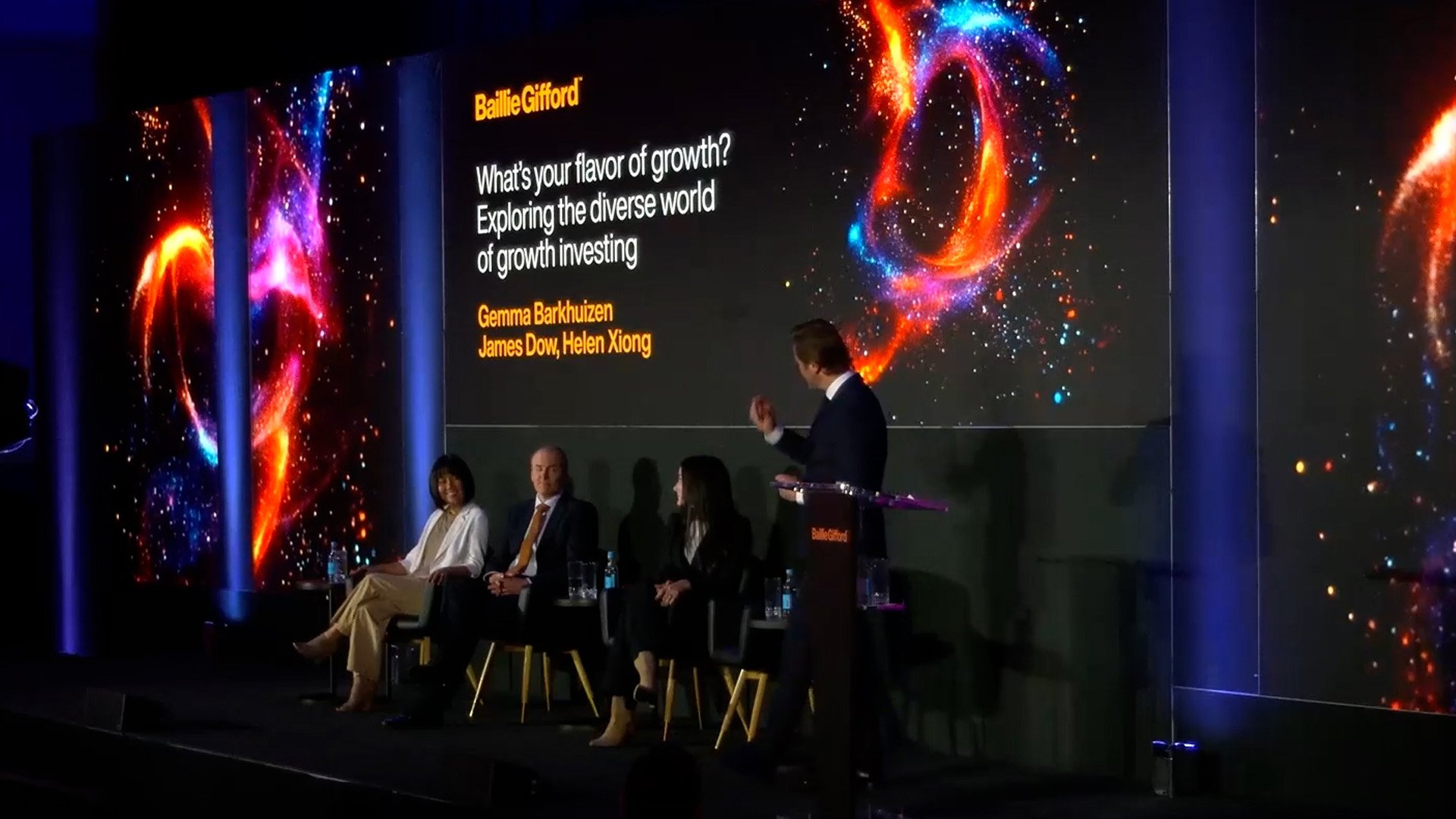
At a recent investor forum, three of our investment managers described their favourite ‘flavours’ of growth: transformative, durable and a balanced blend of both.
Turning up the heat: transformative growth
Long Term Global Growth investment manager Gemma Barkhuizen opened with the Scoville scale, which measures the heat of chilli peppers. Transformative growth companies, she noted, “deliver superior capital growth” but sit at the spiciest end of the scale.
“Transformative growth companies are those that benefit from dramatic change rather than benefit from the status quo. These are the disruptors. They're the businesses that drive or ride exponential adoption curves, often those associated with new technologies,” she said.
“Change,” she added, “can be extremely lucrative for those on the right side of it,” because it is often mispriced.
These stocks tend to be among the small number of big winners that capitalise on the “asymmetric payoff” from equities and drive most long-term returns.
Avoiding transformative growth, she argued, therefore risks missing the companies that could drive portfolio returns for decades to come.
She suggested we are in the “earliest innings” of the application layer of AI, which will yield “significant value.”
Early AI application companies are already outperforming some of today’s tech leaders, leading her to conclude that transformative growth plays “a central derisking and future-proofing role”.
Slowly blooming: durable growth
James Dow, an investment manager in the Durable Growth Team, drew inspiration from the Dutch flower painter Rachel Ruysch. Her early work was competent but unremarkable, yet a steady refinement over decades produced a body of unequivocal masterpieces.
Similarly, Dow noted that durable growth companies “get better and better and better every year,” as they quietly compound earnings and cash flows. They often have strong competitive positions and cultures that continually improve operations, one step at a time.
He argued that investors frequently undervalue these businesses and downplay compounding, focusing on short-term excitement over the biggest edge in this style of investing: “patience”.
Dow suggested that durable growth companies tend to be less volatile and more resilient during downturns.
They are established companies with substantial profit margins and management teams that have navigated several economic cycles. They have a “playbook for the down cycle” and know how to take advantage of it without having to raise cash.
He reminded the audience that “to get that fantastic real return that public equities deliver over longer periods, you’ve got to stay the course.” For him, identifying “self-improvers with a long runway for growth” is the key to staying on course with durable compounding.
A balanced plate: blending the flavours
Global Alpha’s Helen Xiong began with a guide on how not to invest – a “recipe for portfolio heartburn”.
First on the list was chasing the highest expected returns. She warned that “the real world involves uncertainty, not just risk alone.” A strategy that looks optimal on paper “is worth little if it can’t withstand the bumps, shocks and unknowns along the way”.
Another recipe for indigestion is committing to a single style of growth and assuming that investing in different geographies and industries automatically creates diversification.
Xiong reminded the audience that “they’re still driven by the same underlying forces” and therefore can still move in unison.
Her third caution was against assuming that markets behave rationally. She used Pop Mart’s viral Labubu dolls – limited-edition toys – to show how demand can be engineered.
Markets, she suggested, work in much the same way, ruled by sentiment, greed and envy. “These biases can push prices far from fundamentals for extended periods of time,” she said.
Xiong favours embracing variety for a more balanced portfolio. She argued for blending different types of growth: holding some transformative companies alongside durable compounders to provide resilience, while keeping the flexibility to adjust allocations as opportunities evolve.
Argument among friends
This diversity of growth styles is deliberate. We embrace the idea, attributed to the Scottish philosopher David Hume, that “truth springs from argument among friends”.
There is no single correct way to be a growth investor. As a client, you can adjust the heat according to your goals and risk tolerance.
What matters is knowing what each approach brings to the table, the role it plays in your portfolio, and then having the patience to let all of the flavours compound over time.
Words by Gillian Christie
Hungry for more?
This is a bite-sized recap of a session at our Synthesis event.
Risk factors
The views expressed should not be considered as advice or a recommendation to buy, sell or hold a particular investment. They reflect opinion and should not be taken as statements of fact nor should any reliance be placed on them when making investment decisions.
This communication was produced and approved in January 2026 and has not been updated subsequently. It represents views held at the time of writing and may not reflect current thinking.
Potential for Profit and Loss
All investment strategies have the potential for profit and loss, your or your clients’ capital may be at risk. Past performance is not a guide to future returns.
This communication contains information on investments which does not constitute independent research. Accordingly, it is not subject to the protections afforded to independent research, but is classified as advertising under Art 68 of the Financial Services Act (‘FinSA’) and Baillie Gifford and its staff may have dealt in the investments concerned.
All information is sourced from Baillie Gifford & Co and is current unless otherwise stated.
The images used in this communication are for illustrative purposes only.
186516 10060292