

Key points
- A new market regime is taking shape as higher rates and weaker globalisation change where growth can thrive
- Opportunity is shifting towards financial businesses, infrastructure and materials that power a more physical economy
- A broader opportunity set is emerging for investors prepared to rethink where long-term growth will come from

As with any investment, your capital is at risk.
For the better part of fifteen years, the investing world operated under a remarkably stable set of assumptions. Interest rates stayed low. Globalisation deepened supply chains and compressed costs. Capital was abundant and the businesses that thrived were those that could scale with minimal physical investment: asset-light platforms, software, digital marketplaces. It was a wonderful environment for a particular kind of growth company.
There are now clear signs that this environment is over.
What has replaced it is not a temporary dislocation but a structural shift in the forces that drive economic activity and investment returns. Several trends that had been building quietly for years have now converged with enough force to reshape the opportunity set.
Start with the cost of capital. Real interest rates across advanced economies spent a decade in negative territory. They have now returned to levels not seen since before the global financial crisis and recent events increase the likelihood they will stay higher for longer. The era of near-free money, which subsidised speculative business models and rewarded duration above all else, has given way to one in which capital is more scarce. For the first time in two decades, the businesses that provide and allocate capital – banks, financial exchanges, insurers – are earning structurally higher returns. The return of positive real rates, stronger nominal growth environments and a more supportive regulatory backdrop, particularly in Europe with its trillion-euro fiscal expansion in Germany, are creating an earnings platform for financial franchises that simply did not exist in the post-2008 world.
Meanwhile, the globalisation that defined the previous era is fragmenting. Trade restrictions have tripled since 2019. The World Bank observes that global commerce has splintered into five distinct trading blocs, up from two in the 1990s. Pursuing energy independence, semiconductor self-sufficiency, or domestic manufacturing capacity have risen up the agenda, and many countries are now building what they previously imported. That is enormously capital-intensive and it is creating sustained demand for the physical inputs required for construction.
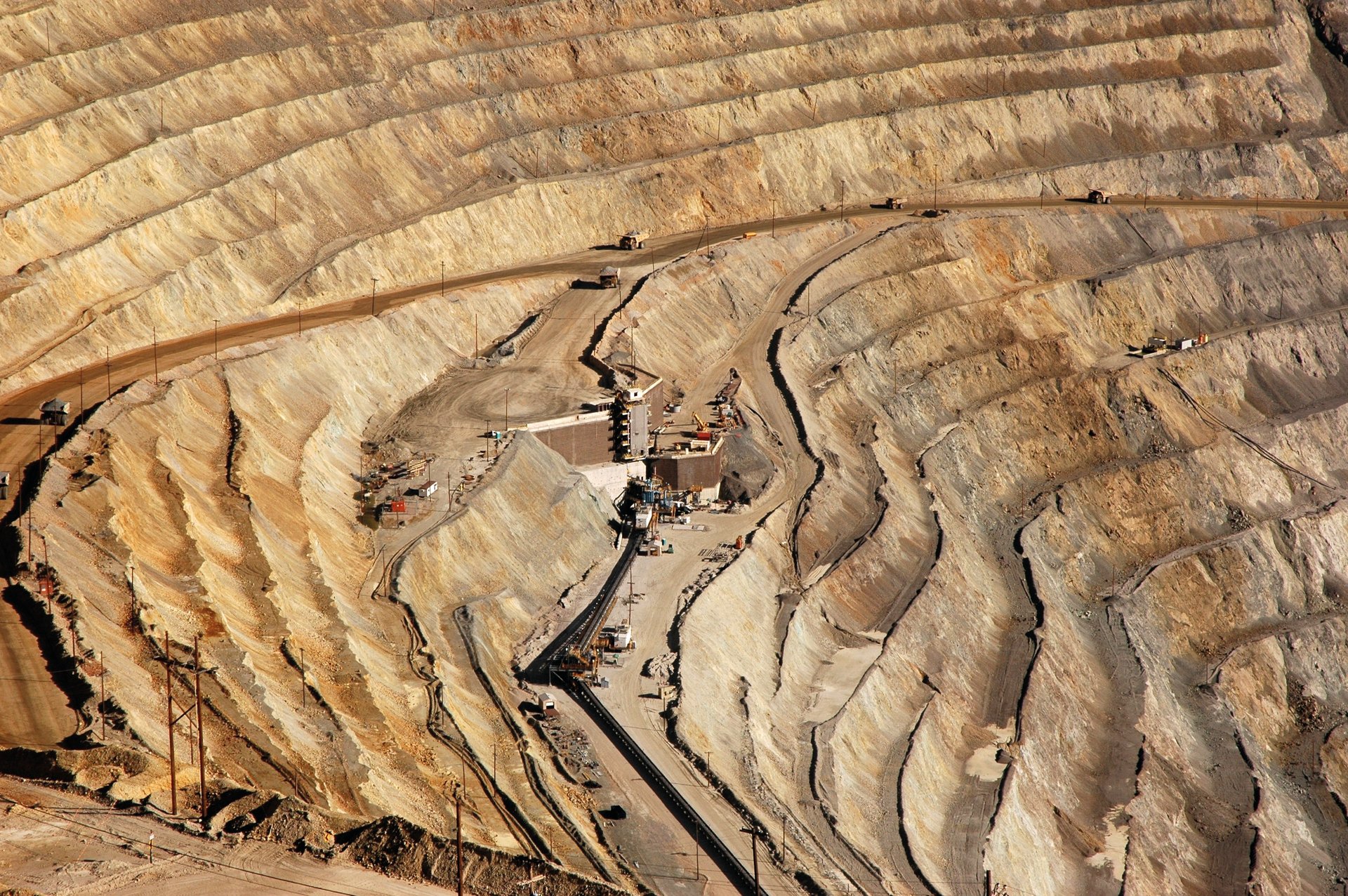
An open pit copper mine.
Consider copper: the International Energy Agency (IEA) projects a 30 percent supply deficit by 2035, with mined production expected to peak this decade before declining as ore grades deteriorate and existing mines deplete. New mines take over a decade to develop.
Layered on top of all this is the energy system itself. Global energy investment is set to reach $3.3tn in 2025, with electricity-sector spending now 50 percent higher than total fossil fuel supply investment. Grid infrastructure, chronically underinvested at $400bn annually, needs to roughly double to keep pace with the electrification of transport, industry and the explosive growth in datacentre demand driven by AI.
Catering to this new investment landscape does not mean abandoning our enduring growth philosophy. We remain committed to identifying companies that can grow their earnings faster and for longer than the market expects. Disciplined, fundamental stock-picking matters more than ever. What has changed are the industries and sectors where these companies are found. In the previous regime, they were overwhelmingly digital and asset-light. Today, the exceptional growth opportunities increasingly sit at the intersection of financial capital allocation, physical infrastructure, critical materials and the enabling technologies of AI.
The nature of growth is migrating, and we are moving with it. For investors willing to look beyond the playbook of the last decade, the opportunity set ahead is as rich as any we have seen.
Risk factors
The views expressed should not be considered as advice or a recommendation to buy, sell or hold a particular investment. They reflect opinion and should not be taken as statements of fact nor should any reliance be placed on them when making investment decisions.
This communication was produced and approved in April 2026 and has not been updated subsequently. It represents views held at the time of writing and may not reflect current thinking.
Potential for Profit and Loss
All investment strategies have the potential for profit and loss, your or your clients’ capital may be at risk. Past performance is not a guide to future returns.
This communication contains information on investments which does not constitute independent research. Accordingly, it is not subject to the protections afforded to independent research, but is classified as advertising under Art 68 of the Financial Services Act (‘FinSA’) and Baillie Gifford and its staff may have dealt in the investments concerned.
All information is sourced from Baillie Gifford & Co and is current unless otherwise stated.
The images used in this communication are for illustrative purposes only.
191212 10061812