

This transcript was generated by AI.
Will Sutcliffe (WS): Let me start off with a question. When you hear the words growth investor, what are some of the characteristics that come to mind? Ambition. Oh, ambition, OK. Anything else? Optimism. Oh, optimism, a wonderful characteristic for a growth investor. Ambition, optimism, anything else? Curiosity. OK, thank you. All very favourable characteristics so far, but perhaps some less favourable characteristics come to mind as well.
Perhaps you associate growth investing with a higher level of risk, or with recklessness even. Many of you will be familiar with Ben Graham’s warning about seeking adventure in the glamorous but dangerous field of anticipated growth. And it is a caricature that has stuck, right? How many times do we hear growth investors compared to momentum junkies who get sucked into sexy-sounding stories and end up overpaying for that growth? Or how often are we compared to the sailors of Greek mythology who are unable to resist the lure of the siren song and end up shipwrecked on the rocky shores of misplaced hype?
And of course, it is value investors in this analogy who take on the role of Odysseus, keeping their discipline by strapping themselves to the mast and stuffing their ears with beeswax. It is, of course, a false dichotomy. As Warren Buffett was fond of saying, growth investing and value investing are joined at the hip. Growth must always be a component in any calculation of value.
At Baillie Gifford, we agree that investment is too nuanced a task to fit into nice, neat boxes. We have our shared values, and we are immensely proud of them. We are all unashamedly long term. We are all unashamedly growth-oriented. And of course, it is only by being long term that you can allow that correlation between growing companies and growing share prices to fully play out for our clients.
But we also embrace many different flavours of growth at Baillie Gifford. If you have a look on our website, you will see references to high growth. You will see references to durable growth. You will see references to cyclical growth. And if you look at the largest holdings that we manage on behalf of our clients, you will see those transformative growth companies alongside the more modest compounders.
So yes, we are very proud of our shared values, but we are also very proud of our differences. We do not believe in having house views at Baillie Gifford. We do not have a chief investment officer. We abolished that role 15 years ago. And we certainly do not think that all our portfolios should be exposed to exactly the same stocks and exactly the same themes.
Rather, we prefer the idea, in the words of the Scottish philosopher David Hume, that truth springs from argument among friends. And it is in that very spirit of friendly argument that I am joined on stage by three of my colleagues. We have got Gemma Barkhuizen from our Long Term Global Growth team. We have got James Dow from our Durable Growth team, and we have got Helen Xiong from our Global Alpha team.
Each of these three is going to talk about their preferred flavour of growth. And in the interest of injecting a bit of good-natured rivalry into proceedings, they will be doing their best to persuade you that their approach is the best. So, without further ado, let me start off by handing over to Gemma, who is going to kick us off with transformative growth.
Gemma Barkhuizen (GB): Thank you, Will, and good morning, everyone. Since this session is about flavours of growth, I would like us to start by contemplating this scale. It might be familiar to some of you. It is called the Scoville scale, named for an American pharmacist who pioneered a method for measuring the spiciness or heat levels of different types of chilli peppers.
Now, my colleague James, in discussing durable growth, will shortly try to talk you into the appeal of the milder peppers down there on your left. These are the bell peppers, the poblanos. It is the gentle stuff. It is all going to be very sensible, it is all going to be very kind to our digestive systems.
But for the next 20 minutes, discussing transformative growth investing, you and I are going to hang out all the way up here on the right, around the habanero peppers, even the Carolina reapers. These are the spiciest of all the chilli peppers. They are the ones that make us break a sweat. They are the ones that make us maybe even cry a little bit. Although, to be frank, when doing a presentation like this one in front of important clients, one of my main objectives is to keep my own sweating and crying to a minimum.
If I succeed with that, what I am going to do is lay out the case for why I believe transformative growth should be considered a strategic and even defensive allocation in any equity portfolio. In doing so, I am going to argue that avoiding the spiciest peppers would actually not be the safer choice, but in fact a very risky one.
So, to start, what do I mean by transformative growth investing? Transformative growth companies are those that benefit from dramatic change rather than those that benefit from the status quo. These are the disruptors. They are the businesses that drive or ride exponential adoption curves, often those associated with new technologies. We will touch on many examples through the course of this discussion.
Financial orthodoxy would tell you that these companies tend to be the most volatile. The range of return outcomes from holding them is wide, and I am not here to disagree with any of that. It is all true. They really are the habanero peppers in that respect. But that is only one part of the story. So why do I prefer transformative growth investing?
I want to start with first principles and think about what equity exposure is actually supposed to deliver. It is not volatility reduction or wealth preservation. Other asset classes are inherently better suited to deliver that, and I think our industry tends to forget that sometimes. No, what equities are best optimised to deliver is capital growth.
This is what the asset class is really well suited to because of the favourable asymmetric payoff profiles that come from investing in stocks. With that core purpose in mind, the first, most obvious and most important reason why I prefer transformative growth investing is because it delivers superior capital growth. You can see an example of that on this chart.
If a client had invested $1,000 in Baillie Gifford’s flagship transformative growth fund, LTGG, 20 years ago, she would have around $11,000 net of fees today, which is more than twice the return that client would have from investing that same $1,000 in the global index. What this bears out is the fact that change can be extremely lucrative to those on the right side of it, because change is inherently very susceptible to mispricing. It is in the mispricing that all the opportunity in investing resides.
Extrapolation is easy, which makes stasis quite simple to model and to price, but transformation is inherently really difficult to model, which makes for significant market-cap creation potential for companies that are able to successfully capitalise on it. These tend to find themselves among that small number of stocks that dominate wealth creation in equity markets.
This is a skew we have seen play out over long periods. Most of you are familiar with this. Over the last 30 years or so, it is about 2 per cent of companies that have created all the wealth in global equity markets. We are familiar with this. Our clients understand this distribution of returns quite well.
To stick to a recent example, which is probably still top of mind, we can simply reflect on the astonishing success of the Magnificent Seven over the past five years. Bear in mind, what drove this success was the payoffs to companies capitalising on technological transformation over long periods of time.
Tesla in the shift to electric vehicles; Microsoft powering the digital transformation of the enterprise and the shift to the cloud; Amazon likewise leading that cloud transition and, of course, pioneering online retail; Meta and Alphabet in digital advertising; Apple in mobile; and, of course, NVIDIA providing the picks and shovels that power AI.
What these companies have borne out is the principle, shown time and time again, that technological change can deliver significant upside to companies that are properly aligned with it. Indeed, that upside can be so significant as to dwarf everything else.
We know that not owning these Magnificent Seven companies has made outperformance quite difficult for much of the market, because the Magnificent Seven drove about 40 per cent of the US market return over the past five years and a third or so of the global market return over the same period.
You will find no shortage of commentary explaining that the extent of this dominance is an anomaly, and that active managers could not have been expected to anticipate it. But frankly, through this lens, I would argue we should not be so surprised, because it is quite normal for companies on the right side of technological transformation to create and capture disproportionate wealth.
Briefly, I want to shift from the rear view and look ahead to round out this point, because all this discussion of the lucrative nature of change should be particularly interesting to investors today, when we are in the earliest innings of the technological transformation to come from AI.
Yes, this has already powered NVIDIA past the $4 trillion market-cap threshold, but so far most of the wealth creation from artificial intelligence has really been confined to the infrastructure layer. It is the data-centre build-out, which you actually see fairly prominently around here in Virginia.
But AI is a general-purpose technology, which is to say there is not a single economic activity that intelligence does not touch. Historical lessons from other general-purpose technologies would suggest that there is still significant value to be created at the application layer, in business models and products that never could have existed without AI.
Historically, in the shift from steam power to electricity, we got GE, fine, but this also enabled assembly-line production, which was essential to creation of the modern automotive industry. More recently, the internet powered applications like e-commerce and digital advertising, which created multiple trillions of dollars of market capitalisation. Mobile gave us applications like ride-hailing and TikTok.
All of this is to say we are still in the earliest innings of this application-layer opportunity as far as AI is concerned. It actually stands to disrupt larger markets than the retail and advertising TAMs that powered the online application giants of the recent past.
As one simple proxy for an obvious application of intelligence, knowledge work accounts for about $25 trillion of annual spend. That is before we even get to the physical applications of AI in autonomous driving, logistics and manufacturing.
Having drawn out the case that transformative growth investing is effective because change can be very lucrative, I now want to explore the second reason why transformative growth is my preferred flavour: the fact that change is structurally accelerating. This is the part that shifts transformative growth exposure from a mere preference of mine to actually a necessity.
This chart shows the time that it took for different technologies to be adopted by 50 million users. You can see at the top, in the 19th century, it took the telephone just over 70 years. A couple of decades after that, radio nearly halved that time frame. By the early 20th century, television cut that time frame more than in half once again, and so on and so on.
By the time that we got to Facebook in 2004, it took just three and a half years. WeChat in China took just one year. Most recently, ChatGPT took two months, which is to say generative AI crossed the same adoption threshold more than 400 times faster than the telephone.
There is a clear historical pattern of technological diffusion accelerating through time, and most recently this has been supercharged by the internet, mobile devices and global connectivity. But what this really means for asset allocators is that change only becomes an ever more prominent feature of the economic landscape that every investor has to contend with.
With this in mind, the single biggest portfolio risk that I can see is being left behind. As asset allocators, I would invite you to think about how much of your portfolio would actually benefit if this trend does not reverse. Often the answer is not a lot, because most companies are set up to benefit from the current status quo. Most companies flourish when conditions are stable, and their valuations tend to assume that stability as well, which can be surprisingly dangerous.
Against that backdrop, transformative growth exposure plays a central de-risking and future-proofing role for any portfolio.
To recap where we have got to so far, I have explained my preference for transformative growth according to these two points. First, that transformative growth investing is effective at compounding wealth because change can be very lucrative. Second, that transformative growth exposure is actually necessary because change is accelerating.
The natural question that remains is why transformative growth investing should appeal as an active equity strategy. I am a stock picker. I run an active portfolio where I can only deserve my fee by outperforming the benchmark. But is not all of this ultimately an argument for indexing? Why not just accept that the scale, value and increasingly fast pace of change are simply features of the market landscape that will naturally, and indeed very cheaply, be reflected in the benchmark?
To put a fine point on it, why not just get your Magnificent Seven exposure through the index and call it a day? That is the question that I will tackle in our remaining time together.
The first point I would like to speak to here is the fact that, yes, the index does guarantee you the beneficiaries of transformational growth. It does. But it also guarantees you the casualties. Remember the point I made earlier, that 2 per cent of companies account for all the wealth creation in equities? The flip side of that coin is a substantial drag on returns from the other 98 per cent of companies. Getting rid of that dead wood is precisely the opportunity that the active stock picker has in order to deliver higher expected returns.
The second reason transformative growth appeals as an active strategy is because cap-weighted indices really only give meaningful exposure to the big transformational growth winners after much of their compounding has already happened. This means that a stock picker who can identify them earlier and let them run can raise expected returns even with a lower hit rate, thanks to that eighth wonder of the world that is compounding.
So, to return to that question of why not just buy the Magnificent Seven through the benchmark, over the past year we have already begun to witness a changing of the guard, with several of Baillie Gifford clients’ transformative growth holdings beginning to comfortably outperform every single one of the Magnificent Seven companies in terms of both growth and share price.
These range from some of the early AI application companies, like AppLovin in digital advertising or Horizon Robotics in autonomous driving. But they also include businesses as wide-ranging as warehouse automation company Symbotic, Chinese battery technology leader CATL, gaming company Roblox, next-generation aviation company Joby, and space-economy disruptor Rocket Lab. These are all really negligible positions in any benchmark, where those benchmarks remain dominated by companies whose performance now lags this new guard. Once again, that comes down to an opportunity for the active manager to deliver higher expected returns.
Finally, any active investment approach has to be anchored in market inefficiencies that it can exploit. Without those, you absolutely should just buy the index. Transformative growth is ideal from this perspective because of structural market characteristics that keep transformative growth companies under-owned for extended periods of time.
The late Charlie Munger famously said that if you cannot stomach a 50 per cent decline in your investment, you do not belong in the stock market. I would argue quite a substantial portion of the market resides in that camp today, and that is precisely the opportunity for the transformative growth manager.
Ingrained benchmark hugging, tracking-error aversion and career risk associated with short-term volatility all deter many traditional fund managers from buying transformative growth companies until their success has already become consensus. These companies, as we have said, are the most volatile.
What this means is that if a fund manager and her clients are able to weather short-term volatility better than the rest of the market, they can have a substantial competitive advantage in this type of investing. Again, for those of you who have remained awake, this boils down to higher expected returns.
Where does all of this leave us ultimately? Financial orthodoxy would tell us that an equity manager can treat innovation or transformation as a peripheral theme and still achieve some reasonable diversification and outperformance. The sheer scale of success of transformative growth companies makes that very difficult.
The disruption risk that we take on when we neglect transformative growth exposure is a problem that really only intensifies over time because of the accelerating rate of change. To me, what that means is that while owning transformative growth companies risks volatility, neglecting them risks chronic underperformance. I think we can agree which one of those is worse.
I started by describing transformative growth as the spiciest flavour. While it is certainly the most extreme and the most volatile, let us not forget that those same spicy compounds that make chilli peppers so hot actually evolved as a defence mechanism to protect plants from being eaten. Precisely those same spicy compounds are the active ingredients we use in pepper spray for our self-defence.
Transformative growth is exciting, yes, but it is also fundamentally a matter of portfolio protection and survival. Living as we do in times of such rapid and valuable change, we have to make sure that we own the driving forces of that change and not the roadkill. For those of you at the back who maybe cannot read the caption on my cartoon, it says: ’He always followed a linear path, and now he is dead.’ Thank you.
James Dow (JD): Good morning, everyone. As you have heard, Gemma has just walked us through the wild, wonderful world of chilli peppers. Hot, spicy. I am going to talk about something completely different. I am going to talk about flowers. Sweet, gentle, fragrant.
This incredible artwork that we see here up on the screen is by Rachel Ruysch, the Dutch flower painter. Rachel Ruysch painted more than 250 different flower paintings during the course of her amazing career. The interesting thing about Ruysch is that when she started, back in the 1680s, we see here one of her earliest works. When she started out, if we are honest, she was average.
She was pretty unremarkable. This was very similar to other works at the time. But here is the interesting thing. As she went through her career, she just got better and better and better. Each painting she did was not night-and-day better than the one before it, but it was maybe 10 per cent better than what preceded it.
The result was that by the time she got through to 1715, from that painting we started with, she was producing unequivocal masterpieces. Let us pause for a moment to appreciate why this is such a masterpiece and something to learn from today.
If we take just the artistry that she brought to this, if you look at this tulip at the top of the painting, the brushwork and the understanding of lighting to make this bulge out of a 2D canvas is sensational. If we look at her understanding of the anatomy of plants and her accuracy and detail, she was such a formidable painter that these works were then adopted in scientific reference books for decades afterwards as the representation of what these plants actually looked like.
She enhanced our understanding of botany and biology around the world because she collected specimens from the four corners of the globe and brought them back to Holland. This represents all the flowers in just one of her paintings, and she arranged them in ways that helped us understand the relationships between species. She wove narratives through the painting. She was next-level good, and she was producing masterpieces later in her career.
You may say, what has this got to do with investing? Where is this all going? It is a great example of a different type of growth investing: durable growth investing. The analogy that we see in the corporate world is the company that just gets better and better and better every year.
It is adding new innovations, other ways of adding value for customers, bringing more customers into the fold, engaging in new markets. It is not night and day, this transformation, but it is growing its sales and profits maybe 10 per cent a year as it does this, and it does that for a very long period of time.
When we look back at the results at the end that this steady, durable growth and this compounding have delivered, the growth and the results are phenomenal. You can probably think of some examples of this already in your head. One of my favourite examples is L’Oréal, the French cosmetics company.
We see here the phenomenal record of growing earnings at L’Oréal over the years, going back to the 1980s. It is very much one of these stories of durable growth. The secret is that L’Oréal is constantly iterating and improving its products and services.
If you took this year’s range of lipsticks at L’Oréal, the 2025 range of lipsticks, and compared them with last year’s, you would say they are a bit better, maybe 10 per cent better than last year’s, but it is not night and day.
If, on the other hand, you went back 20 or 30 years and compared the two products, you would say, wow, this is transformation, this is incredible growth over the period. We are talking in terms of pigmentation, smudge resistance, moisturiser content, vitamin content, and so on. The company has found ways to continue to make things better and better, and the result has been this sales and profit growth over a long period of time.
The mind-blowing statistic here is that if you went back to the start, to the late 1980s, and compared L’Oréal’s profit then with today, it has grown by 35x. That is enormous growth, even though in any individual year you would have said it is only 10 per cent growth. So, fantastic results.
Let us put this in context with what Gemma has been talking about with all her chilli peppers. We have heard over the past couple of days a few references to the S-curve. The concept here, we see it in the growth rate of flowers, we see it in technology adoption, we see it time and time again. Growth often starts off slow, it then accelerates rapidly for a period of time, and then it starts to smooth off at the top.
What Gemma has been talking about is where all her chilli peppers are, smack bang in the middle of the S-curve. That is where all the exciting stuff is happening, in a period of very rapid growth. Durable growth is concerned with what happens towards the top of the curve, what happens afterwards.
Often, and this is the challenge for Gemma, the answer to what happens at the top of the S-curve is, of course, death, or to give it its more highfalutin term, disruption. We see this again and again.
If we think of examples like BlackBerry, BlackBerry went up that S-curve: rapid adoption, network effects, all very exciting. Then the iPhone comes along. Think of Yahoo.com. In the mid-90s we thought the internet would be like a hand-curated portal of links where we would go in and click, and then Google came along. It was not that. Yahoo died a slightly prolonged but rather sticky death after that.
Here is the exciting thing for durable growth investors. There are some companies – these are not common – but there are some companies that, when they get to the top of that S-curve, just carry on growing. They go on and on and on, compounding steadily for a very long period of time. Very different type of growth from what Gemma is talking about, but incredibly valuable growth all the same. That is what we are talking about when we talk about durable growth. We are trying to find those types of companies.
Let us think of an S-curve that has already played out to exemplify this. I am going to take the example of the airline industry. If we went back to the 1920s and 1930s, there were seven commercial aviation routes globally and two types of aircraft. Very formative days, at the bottom of the S-curve.
In the 1950s, 60s and 70s, we then see this rapid explosion up the S-curve. The Boeing 737 comes in. Prices fall. Everyone wants to go on holiday. Deregulation in the States takes off.
Now we have got through to a later stage, where the S-curve is over and what we have been left with is this incredibly complex and dense airline network around the world. Thousands of planes are taking off every hour, on all kinds of routes. There is a lot of complexity.
The result is that, for airlines and airports, it is very difficult to manage this. The way they do that is through highly specialised software, and the leader in that field of software for airlines and airports is a company called Amadeus, based in Spain. It is another example of something that has been up the S-curve.
Every year, what Amadeus is doing with its software, there is always more complexity, more rule changes, new aircraft types, different commercial models coming in. It is constantly being iterated and improved, and that has delivered many years of very steady growth.
We see it again in the case of Amadeus, where, through this constant iteration and improvement, it is delivering this compound growth for a very long period of time. I have highlighted here in yellow an interesting period in the late 2010s, when Google tried very hard to disrupt this business. It came in, spent a lot of money, and in 2013 Google gave up and exited. They said that even by their standards this is brutally complex. There is so much domain-specific knowledge here, and all kinds of other services you have to bring to bear to make the model work. They gave up and got out.
So it has proved an incredibly durable source of growth at Amadeus for many years. As I say, at the end of the S-curve it is this type of durable growth. These companies can deliver a different type of growth, but very rewarding in terms of growth for shareholders.
There are two other features of durable growth that are really appealing to investors. The first is that very often these companies turn out to be undervalued. It is a recurring feature when investors look at these companies. They say the same things again and again. They look at them and say: yes, it is a great business, it has a lot of growth ahead of it, but it is a bit expensive, those shares.
They will say: 25 times PE, I do not know whether that is really justified. We know from examples like L’Oréal that if you then deliver 35x profit growth, it was actually screamingly cheap back in the day. But the models we often use to value companies do not really work here, and that often leads to undervaluation.
There are a few factors at play. One of the issues is that, at a very basic, quite profound level, humans are bad at maths. That really plays into this. If I took you back in time and I said, here is a company, it is going to compound at 10 per cent for this period of time, how much will the profits grow by at the end? Very few people are going to say 35x. Our brains do not process compounding very well. They work in linear ways. This often leads to undervaluation.
The second factor is that these companies are often perceived as boring. They are seen as unexciting. Gemma will get up on stage, as she just has, and say: I have chilli peppers for sale, they are hot, they are spicy, you ought to get them while you can, they are really exciting. Then poor me, I get up on stage, a durable growth investor: hello, I am a bell pepper, would anybody like to invest in my companies?
It just does not trigger the chemical reactions and the endorphin flow that get investors excited. So again, you often see these things being undervalued because people do not respond to them.
The third factor is incentives. Humans, in many ways, unfortunately, are quite short-term creatures. If you look at the typical incentivisation structure of active asset managers, you will often see 12- or 36-month bonus calculations. If you are an asset manager looking for that pop that is going to pay out your bonus in the next 18 months, you are definitely thinking chilli peppers, you are not thinking bell peppers. What is Amadeus or L’Oréal going to do for me over that time horizon? Not a lot. So again, we see this undervaluation.
For me, as a durable growth investor, and for clients, that is fantastic, because it creates huge potential for an edge. Think about it: what is the single biggest edge that you could bring to this style of investing? It is patience. It is being long term. If you are the person who says, I am just going to stick with my L’Oréal and my Amadeus and see it through, there is huge potential to have an edge that others are not looking at, that they are undervaluing, and ultimately to exploit what is an enduring inefficiency in the markets.
That is one big appealing feature of durable growth investing. The second is the resilience of these investments. The public equities of these companies tend, by their nature, to be much more resilient, much less volatile, than the average in the stock market. That is particularly true in market drawdowns, periods where there is panic and markets are falling. These share prices tend to hold up a lot better than the average.
Why is that? Multiple reasons. One is that the business models of these companies are much more established than the average in the stock market. That gives investors a lot of confidence. When the economy is going down the drain and everyone is worrying, people are thinking: OK, I am OK with that.
If you think about the profit margins of these companies, they are much more substantial. They have much more of a buffer to cope with shocks. They are typically run by management who have seen a few cycles before. They have got a playbook for the down cycle. They know exactly how to take advantage of it. That is really valuable.
They are self-funding business models. They are not putting their hand out to investors and asking for cash and diluting shareholders at the worst possible time. For multiple reasons, both the earnings of these companies and the multiples that investors are willing to pay for them tend to be much more resilient, and hold up a lot better in down cycles.
That resilience has a lot of extra value to some shareholders. You may have seen this on the internet from time to time, on LinkedIn or wherever. This is a great commercial from Vanguard. It is called ’Staying the Course’.
It shows the stock market line over a period of time, and you see these big drawdowns periodically. This is the index, and there is this enormous dip. But as the line goes on, what you realise is that what seemed a precipitous dip at the time was actually just a blip in the longer-term trend. It goes up, and the point of the ad, the staying the course, is that to get that fantastic real return that public equities deliver over long periods, you have got to stay the course.
It is no good if, when the market has a big drop, you panic and move all into cash, and then you miss the rebound. The beauty of durable growth investments is that they enhance or raise the odds that you or clients are going to stay the course. In those drawdowns, this proves to be much more resilient. Nobody is selling their L’Oréal or their Amadeus when the market is blowing up. If anything, it is outperforming. That really helps get that return from equities over time.
I would argue this applies as much to managers and manager risk as it does to underlying investors. Behavioural risk from managers when markets are really falling is heightened. But for a durable growth investor, that should be right in their wheelhouse. Fantastic, this is just the time, I am not worried about my portfolio. So there is a lot of additional value from that resilience.
We have phenomenal growth over long periods of time, often undervalued, unusually resilient. What is not to like? The tricky thing with durable growth investing is not the theory. The tricky part is actually finding these companies, because they are not a dime a dozen. You do not just walk around and say, there is one, I will just buy that. You have to work at it to find these uncommon compounders that deliver these fantastic long-term growth records.
I have been investing in this stuff for many years. I could give you a whole other presentation on how to find these things, but let me pull out a couple of key learnings that are really important for trying to spot these enduring compounders.
The first is that, as a stock picker, you have to be really honest with yourself about the business model of the company you are looking at and whether it really has that opportunity to keep adding different types of value for its customers over a long period of time.
An analogy I like to use is pen-making. Let us suppose you are looking at a company that makes pens, biros like this. You are thinking: is this one of these companies? Well, let us think about that. How many ways can you improve a big biro? Not a lot. There are only so many things you can do with it.
In fact, it has already been replaced a few times over by superior ways of recording information and writing. You have a PC, you can delete what you have done. Is that really going to be that type of business? Is it going to have a shot at being a L’Oréal or an Amadeus? Not really.
Whereas, if you think of that Amadeus-type model, where flight regulations are constantly needing updating, they are changing, there are new aircraft types and airline codes, and there are thousands of things that have to be built into the software each year for customers, that kind of model – or the cosmetics model, where there is literally limitless opportunity for improving cosmetics – is much more amenable. So thinking hard about that model and the opportunity is a key part of finding these companies.
But that is not the entirety of it. If it were that easy, we would all go home, buy a bunch of cosmetics companies and airline software companies, and job done. We know from history, if you put L’Oréal against Revlon, another cosmetics company, you see two very different records, much better at L’Oréal. Amadeus against its big competitor Sabre, very different results over long periods.
So it is not as simple as the runway. The other factor that I have found has been key for these companies, if you look at the winners over long periods of time, is a common thread through many of them. It is to do with the mindset or the culture of those companies internally. The winners repeatedly have some kind of culture built into them of constant adaptation and improvement. They are all about that.
If you visit L’Oréal, they will tell you on their graduate training programme they drill into people time and again. They have this expression, which I am not going to say in French because I will embarrass myself, but it translates as: whatever is new, grasp it.
You have got to have that mentality. If it is new, let us go after it, let us try it, let us try to improve. At Amadeus, you see constant new partnerships with start-ups: what is that technology, can we build that, can we improve, can we get that better? That mindset is critical, in my opinion, for delivering that long-term growth.
If you do not have that, then you are at risk of all those other things that happen with big companies to do with bureaucracy and politics and infighting and looking at all the wrong things. That is no route for growth. If you can find these self-improvers, as I call them, self-improvers with a long runway for growth, you are going a long way towards spotting these durable compounders. It is not in a DCF, it is a soft factor, but I think it is really important.
If you can find these types of companies, you are on your way, I would argue, to finding the investment equivalent of a Rachel Ruysch painting. Here is something funny. If you go back to contemporary accounts of Ruysch’s work at the time, you will see people wrote in their diaries, noblemen and so forth: wonderful paintings, a bit expensive.
If this weekend you are at a loose end, fly yourself up to Boston. The Museum of Fine Arts is staging an enormous exhibition at the moment of Rachel Ruysch’s works. Walk up to one of the museum guards and say, excuse me, how much would one of these things go for these days? You will find it was not expensive at all back in the day. In fact, it was undervalued, and they have been a phenomenal investment over a period of time.
Not only that, they have also proved to be incredibly resilient. Historians in the room may have twigged this already. The very first recorded financial bubble was, of course, the Dutch tulip-bulb bubble, Dutch tulip mania. Ruysch was very aware of it. That is why she places at the top of this painting this tulip.
This tulip was the hottest, most in-demand tulip bulb at the peak of tulip-bulb mania. This is the one everybody wanted. It was the NVIDIA of tulip bulbs, this one. Everyone was after it, and she knew that. She was making reference to that in the work.
Of course, what subsequently happened? The bubble bursts and collapses. But Ruysch’s work proved incredibly resilient to that. It did not matter a jot. She went on to find appointments across the courts of Europe. Great things. Her works have been phenomenal ever since.
So that is durable growth investing in a nutshell: phenomenal growth over long periods of time, often undervalued, unusually resilient, and, if you can find them, the equivalent of that Rachel Ruysch masterpiece of investing.
WS: Gosh. Well, thank you, James, for that sweet and fragrant investment bouquet. Thank you. Last but not least, let us hand over to Helen, who will be making the case for a more balanced approach to growth.
Helen Xiong (HX): Good morning, everyone. How are you all doing so far?
By now, you have already been taken on quite the culinary journey. Gemma introduced us to the Scoville scale and persuaded us to try the hottest chillies on the plate, companies driving or benefiting from transformational technological change. Your mouths are probably still tingling with mentions of AI, robotics and habanero-hot returns.
James, ever the steady hand in the kitchen, described the comfort of the milder peppers, companies that add a dash of growth year after year, like the L’Oréals and Amadeuses quietly compounding earnings for decades. Now, you might be wondering, what could the third chef possibly add?
I asked myself the same question until I realised the first two courses had already been served, full of flavour and contrast. My role is not to replace them, but to show you how the whole menu can come together into something balanced and sustaining.
For while Peter Piper picked a peck of pickled peppers, he did not say it was the only thing you could have on the menu. Let us try another one.
Gemma and James just juxtaposed giant and gentle growth, but judiciously joining genres generates joy.
Now, I could spend the next 10 minutes agreeing with both my colleagues and then telling you how investing across a whole growth spectrum, like I do, means that you can have your cake and eat it. But that would be rather dull, and I doubt it would tell this room anything new.
So instead, I thought it would be more fun to invert the topic and, rather than offering another recipe for what to do, I would offer a recipe for what not to do. Consider it a light-hearted culinary manual for indigestion, if you will. So here it is.
Rule one: always chase the companies with the highest expected return.
If life was as simple as a spreadsheet, you could build models, sort in descending order and fill your portfolios with the companies with the highest expected return. The trouble is, life does not run on averages. An expected return is just a number.
It tells you nothing about the distribution of the returns or the path that takes you there. If you had your head in the oven and your feet in the freezer, you would not say: on average, I feel fine. Simple averages can mask tail events that can wipe us out.
A portfolio built on maximising the expected returns may look good on paper, but is worth little if it cannot withstand the bumps, shocks and unknowns along the way. Never forget the six-foot man who died crossing a river that was four feet deep on average.
Moreover, the real world is infinitely more complex. The real world involves uncertainty, not just risk alone. The economist Frank Knight was perhaps the first to make the distinction between the two. He used the term risk to denote situations where the outcomes and the probabilities are known or can be estimated, and uncertainty to denote situations where the outcomes and the probabilities cannot be reliably quantified.
Let me illustrate this with a game. If I have a black bag filled with 40 blue balls and 60 pink balls, and every time you draw out a blue ball, I pay out $10, how much would you pay to play this game? Most rational people will give amounts up to, and no more than, $4.
Now, if I change the proportions of these balls and I do not tell you what the new proportions are, how much would you pay now? The first game involves risk. The second, uncertainty. The point is, risk can be priced, it can be hedged, and it can be insured against. Uncertainty, not so much.
In the real world, outcomes are dominated by uncertainty. Because all economic data is specific to the time period and context, relying on historical precedents provides a frail or even misguided basis for predictions. This is, of course, what Keynes meant when he said that there is no mechanical basis for calculating future events when we deal with the real economy. Since we cannot predict uncertainty, we need to build systems that can withstand it.
Rule two: pick a flavour and stick to it. Live only on a diet of the spiciest habaneros or eat only potatoes. Consider the banana: humble, yellow, and once dominated by a single variety called the Gros Michel. For decades, it shipped beautifully and tasted great, so the industry planted Gros Michels everywhere.
Then, in the mid-1900s, a single soil-borne fungus called Panama disease turned those neat plantations into very expensive compost. The world’s top banana turned out to be a little bit slippery. One fungus, and breakfast was cancelled. Producers who had come to rely on a single variety discovered that monocultures are brittle. When ecosystems lose species, they lose resilience.
Portfolios are no different. A portfolio built on a single flavour is a monoculture. It is easy to reassure yourself that you are diversified because you own companies in different industries, different geographies, addressing different end-markets. But if they are all driven by the same underlying forces, they can still move in unison, as we saw in 2022. Concentration risk is not the same as correlation risk.
The antidote is not to abandon conviction, but to temper purity with pragmatism. Instead of a single crop field, build a biodiverse ecosystem with lots of different plants and animals, each with different resilience to temperature, rainfall and pests, so that when disease inevitably hits, some species may suffer but the ecosystem as a whole continues, adapting, regenerating and even flourishing amid change.
True diversification is not about counting names on a page, but making sure that those names do not march to the beat of the same drummer.
Rule three: assume that people are always rational.
Believing that people are rational is like assuming traffic flows according to the laws of physics rather than the whims and impulses of drivers. Markets are less like a physics lab and more like a crowded bar at midnight. Those who understand human psychology can exploit it to their advantage.
Take Captain Cook, for example. Not Captain Hook from Peter Pan, but Captain Cook, the British explorer and naval officer. In his days, scurvy was the terror of long voyages. Nobody yet knew about vitamin C. But Captain Cook, being a man of intelligence, discovered something interesting.
The Dutch ships seemed a lot healthier than the English ones. What was the difference? Upon further study, he found that the Dutch ships contained barrels of sauerkraut, which by luck contained enough vitamin C to keep scurvy at bay. So he loaded up his own ships with sauerkraut. That was simple enough. Except there was one problem.
I do not know how many of you know about the diet of English sailors back then, but English sailors were not queuing up for fermented cabbage. They wanted rum. So how do you get cranky English sailors to eat kraut?
Captain Cook did not preach about scurvy – that could have sparked mutiny. Instead, he ostentatiously made all the officers eat sauerkraut in front of the men. The men, furious at this apparent privilege, demanded their share, until Captain Cook finally relented and said: fine, the men can have it one day a week. Before long, the entire crew was happily eating kraut.
Fast forward to today, and Pop Mart is like a modern-day Captain Cook. Some of you with teenage children may know about the Labubu, these ugly-cute figurines that have gone viral. They sell in blind boxes, so you do not know which one you have bought until you have opened it. Each box retails for about $30, but if you happen to pull a rare edition, it can resell for hundreds.
Pop Mart stokes demand by keeping runs small, releasing drops by season or region, and sprinkling in scarcity. The result? Collectors queue for hours, and unboxing videos light up TikTok and Instagram.
Markets work in much the same way. They are not ruled by logic, but by sentiment, greed and envy. These biases can push prices far from fundamentals for extended periods of time. If people queue overnight for a 10-inch plastic monster with a snaggle tooth, imagine what they do over AI stocks. Successful investing requires respecting and understanding the human element of the market.
So there you have it, the recipe for portfolio heartburn. If that sounds appetising, follow these rules and I guarantee you will have great material for your memoirs, if not your returns. But of course, my real advice is the opposite.
Embrace variety, like an ecosystem teeming with species. Blend the hot peppers with the bell peppers. Respect uncertainty, because the future is not a spreadsheet, but a black bag with coloured balls that keep changing colours. Seek assets with different correlations and durations, so one zigs while the other zags. And cultivate humility and open-mindedness, for survival in investing belongs not to the strongest, but to the most adaptable.
Let me end where we began, with flavours. You have tasted two very different dishes this morning, one with plenty of heat and the other on a gentler, steadier note. The temptation is to think that you must choose between them. But a well-balanced menu does not force that trade-off.
After all, you would not want six courses of chilli-infused foam, nor would you sign up to six courses of potatoes. An enduring portfolio combines both growth and resilience. It may not win any Michelin stars, but it will keep you well nourished through the storm and still strong enough to argue about pudding. Thank you very much.
WS: And thank you, Helen, for that nutritionally balanced feast. And thank you to all three of our speakers. I hope you are all still talking to each other after this. It got a little more personal than I was expecting. Lots of interesting points there, and I would like to circle back to a couple of them.
Perhaps I could start you off with a question on the broader investment environment. Gemma, you discussed this. It has been a wonderful period over the last five years or so for a small number of exceptional growth companies. But beyond that relatively narrow set of winners, it has been a more challenging environment for a lot of growth investors as we have moved out of this environment of ultra-easy policy and into an investment environment that is perhaps a little more different to the one that most of us are accustomed to.
So perhaps each of you could begin by expanding on why, from here, you are so optimistic and excited about the potential for your flavour of growth to deliver great returns in the years and decades ahead. Gemma, do you want to get us started?
GB: You are right that, coming out of Covid, we saw a significant drawdown across high-growth stocks as multiples contracted from really high levels as interest rates went up. Clients can still see that in our four-year and five-year numbers for the LTGG fund, the Transformative Growth Fund that my colleagues and I run.
We have begun to see a really strong rebound coming out of that, and the thing that I would draw out that is germane to your question is that the drivers of that rebound feel a lot healthier. I would not say necessarily for the style as a whole, but for our portfolio. LTGG is now, relative to the market, cheaper than it was not just during the giddy heights of Covid, but actually cheaper than a decade ago.
We have seen those multiple headwinds come through, but earnings growth has been really strong. So it feels like a good set-up as long as we can continue to find those companies that deliver high rates of earnings growth.
WS: James, any thoughts?
JD: Durable growth companies are not flavour of the month at the moment. There is a lot of excitement around certain parts of the market. What I find exciting is that there are particular things that have been thrown out in the past 18 months – ’oh, that is dead from AI’, or trade tariffs. There are some great businesses, adaptable businesses, enduring businesses that have been derated, that people are not excited by at the moment.
So there are specific areas of the market that are very exciting to me at the moment, and then more broadly I think, for the style, now is a good time for our durable growth funds for sure. The set-up is great.
WS: Got it. Helen?
HX: On the style, I would say that because change is constant, and change brings about opportunities, but uncertainty is also constant and often there are exogenous factors that can change the course of history. Returns are very path-dependent. One of the things that gives me confidence is that the Global Alpha Growth philosophy is very broad.
It gives us the flexibility and the opportunity to lean into different parts of the market at different points in the market cycle.
WS: OK. Can I come back to that point on volatility, which you all mentioned, but from slightly different angles? Gemma, you mentioned it in the context of an ability to stomach volatility as an edge that long-term investors can exploit, whereas James, you were coming from it in the sense of the lower volatility of the companies you favour making it easier for long-term investors to stay the course. Could you explore that?
You want us to fight, is that what you are saying? Yes. OK. Is it a behavioural edge from Gemma’s perspective or a process one from yours? Just unpick that a little bit.
GB: To be honest, I would not frame it as either a behavioural or a process edge. I would frame it as a matter of product-market fit. What matters is not just whether we can somehow stomach volatility better than others, but whether we deliver a volatility profile that our clients can tolerate. It is that alignment that is central.
In LTGG, our clients have hired us to do a very specific thing. They want us to deliver transformative growth, and they understand that the way in which we go about that is an inherently volatile strategy, and that guides their asset allocation decisions. To me it is an alignment question rather than having to bet on some kind of personal virtue, which I think would be frankly unreliable.
JD: I think that is spot on. Some clients want to embrace that volatility and they are very happy with it. For other clients, that is not suitable. Maybe a younger scheme or earlier-career investors are happy with that and they can take that volatility. At a more mature part of the life cycle, that volatility is not appropriate and you want to dial it down.
What we see is that we have some clients who will blend LTGG with our durable growth funds to find the balance that they want. Ultimately I think it is about what is right for the client.
WS: And Helen, you mentioned the importance of respecting Knightian uncertainty and respecting market psychology. Is this becoming harder to do as a long-term investor, as we move into a world that a lot of us feel is a bit more uncertain or stranger, as Tim Urban put it?
HX: Is it becoming harder? I think it has never been easy. I have never heard anyone say that the world is becoming more certain now. Change and uncertainty is the only thing that I can be certain about.
At the same time, uncertainty brings about opportunities for the long-term investor. The greater the uncertainty, the more differences of opinion there are in the market, and that is what makes the market. The greater the uncertainty, the greater the opportunity for us to express a view that is differentiated.
WS: Let us come back to exceptional companies, which Gemma and James, you both mentioned. Gemma, for you it was in the context of the risk of investing in an index full of dead wood that drags down the returns these exceptional companies provide. James, you mentioned it in the context of investors who should have been willing to pay a very high multiple for the growth that L’Oréal delivered over the last 20 or 30 years.
A more cynical person than me might point out that these are excellent observations to make with the benefit of hindsight. Could you say a bit more about how we identify some of these companies in advance, and how you tilt the odds in your portfolios in favour of having some exposure to exceptional companies?
JD: For me, it comes back to this point about adaptability of companies. You have got to be forward-looking in the analysis and you have got to ask yourself that hard question about whether this is a company – looking at the mindset and the culture – that is likely to evolve, adapt and always find ways to grow, or not.
The risk for durable growth investors is that you kid yourself that something is interesting, but it is actually stodgy ex-growth, and high multiples are really risky to pay for that. As a stock picker, you have got to ask yourself why this company – the opportunity, the runway, the mindset, whatever it is – is one of these next great compounders. That is the big question: adaptability.
GB: I actually completely agree with you on that, maybe surprisingly, in the sense that I think a lot of the risk that you point out for transformative growth investing – the steep part of the S-curve being very exciting and then companies fizzling – is really a function of the fact that much of the market that engages in this style of investing is momentum-driven and thematic.
We cannot be that way because our time frame is long. The average holding period in our fund is nine years. We have to be thinking about how companies can layer on those additional S-curves of growth and extend the duration of their runway, which fundamentally comes down to bottom-up company characteristics: competitive advantage, aligned management team, adaptability. Adaptability is actually the theme of the LTGG strategy session right after this. So we are very much aligned on that front.
WS: We have not talked much about a flavour of growth that is very dear to my heart as an emerging market investor, which is cyclical growth. Is there space within your philosophies for growth that is driven more by exogenous factors like macro? I am guessing from the look of revulsion on your face, Gemma, the answer is no, but Helen, do you have more sympathy for that?
HX: Yes, it is close to my heart as well, because in Global Alpha we do have a flavour of growth called cyclical growth. But I must break the implicit insinuation that cyclical growth is necessarily reliant on exogenous factors.
I think it is true that cyclical companies are more reliant on, or have an element of, exogenous macro sensitivity. But the companies that we look for are those that, firstly, have an element of structural growth, so it is not just a cycle, but a cycle going up. Secondly, they are companies that are perhaps more driven by factors that are internal and within their own control.
If I give an example of a company that we bought fairly recently, ON Semiconductor, which is an advanced power semiconductor company. It sells mostly to the automotive industry, which is cyclical. But the structural growth element in that is that the dollar content of what they sell into an EV is three to six times higher than the dollar content of what they sell into an ICE vehicle.
As the economy goes through the energy transition, and as robotics come in and we think about factory automation and data centres, those are all greenfield opportunities that will require a lot of advanced semiconductors that ON sells.
Perhaps the more important aspect is that, for this particular company, the new management team that has come in and has been there for about five years has completely realigned the portfolio of the company. They have exited a lot of the low-value products, they have focused on the high-value products, they have doubled down on innovation, they have moved the business from being an industry follower to an industry leader.
With that, the financials have improved significantly as well. But that has not been reflected in the valuation of the company because of the macro cyclicality that we have. So we made an investment, and in this context the cycle gives us an opportunity to look through the cycle and invest in opportunities like this, which I think is one of the things that Baillie Gifford is good at.
WS: Got it. I am conscious of time, but perhaps, super quick, each of you could highlight one area you are particularly excited about right now. Helen, go.
HX: That is really easy for me. It is AI. I think we have already reached artificial general intelligence, we just have not all realised it yet. We probably crossed that benchmark last year with the advent of reasoning models. Over the next decade, I think you are going to see a massive build-out of AI infrastructure, which is going to take intelligence from being a scarce resource to an abundant resource. That is a very exciting prospect. It is probably one of the most exciting things in the history of modern civilisation.
WS: Got it. Gemma?
GB: I would agree with that, maybe taking a slightly different direction so as not to repeat what I said in the presentation. I think the market is quite dramatically underappreciating just how far the margins and returns of technology companies can expand in coming years because of AI, because of this ability to decouple your top-line growth from your headcount in a way that is really quite unique for these companies. That is very much what we are hearing when we speak to a lot of the founders in the portfolio.
WS: James?
JD: Industrials, of course. Some of these are amazing businesses. They have got loads of growth ahead of them and they have been thrown out with the bathwater because of trade tariffs and all these things that are often completely irrelevant to them. They manufacture in the States, and so forth, so there are some really good opportunities there. I am excited.
WS: On that note, that feels an upbeat and disparate note to end on. So thank you to all three again. I mentioned the Scottish philosopher David Hume at the start of the presentation, and there is another apposite quotation from him, perhaps, which is that beauty exists merely in the mind that contemplates it, and each mind contemplates a very different beauty.
Thank you again to Gemma, to James and to Helen for sharing the beauty that they see in the world of long-term growth investing. Thank you.
Risk Factors
The views expressed should not be considered as advice or a recommendation to buy, sell or hold a particular investment. They reflect opinion and should not be taken as statements of fact nor should any reliance be placed on them when making investment decisions.
This communication was produced and approved in December 2025 and has not been updated subsequently. It represents views held at the time of writing and may not reflect current thinking.
This communication contains information on investments which does not constitute independent research. Accordingly, it is not subject to the protections afforded to independent research, but is classified as advertising under Art 68 of the Financial Services Act (‘FinSA’) and Baillie Gifford and its staff may have dealt in the investments concerned.
All information is sourced from Baillie Gifford & Co and is current unless otherwise stated.
The images used in this communication are for illustrative purposes only.
About the speakers

Gemma is an investment manager and decision maker in the Long Term Global Growth Team and co-manager of the Global Outliers Strategy. She is also an advisor to Global Alpha. Gemma joined Baillie Gifford in September 2017, after graduating with a Masters degree in Modern History from Durham University. She also has degrees in History and Philosophy from Rhodes University in South Africa.
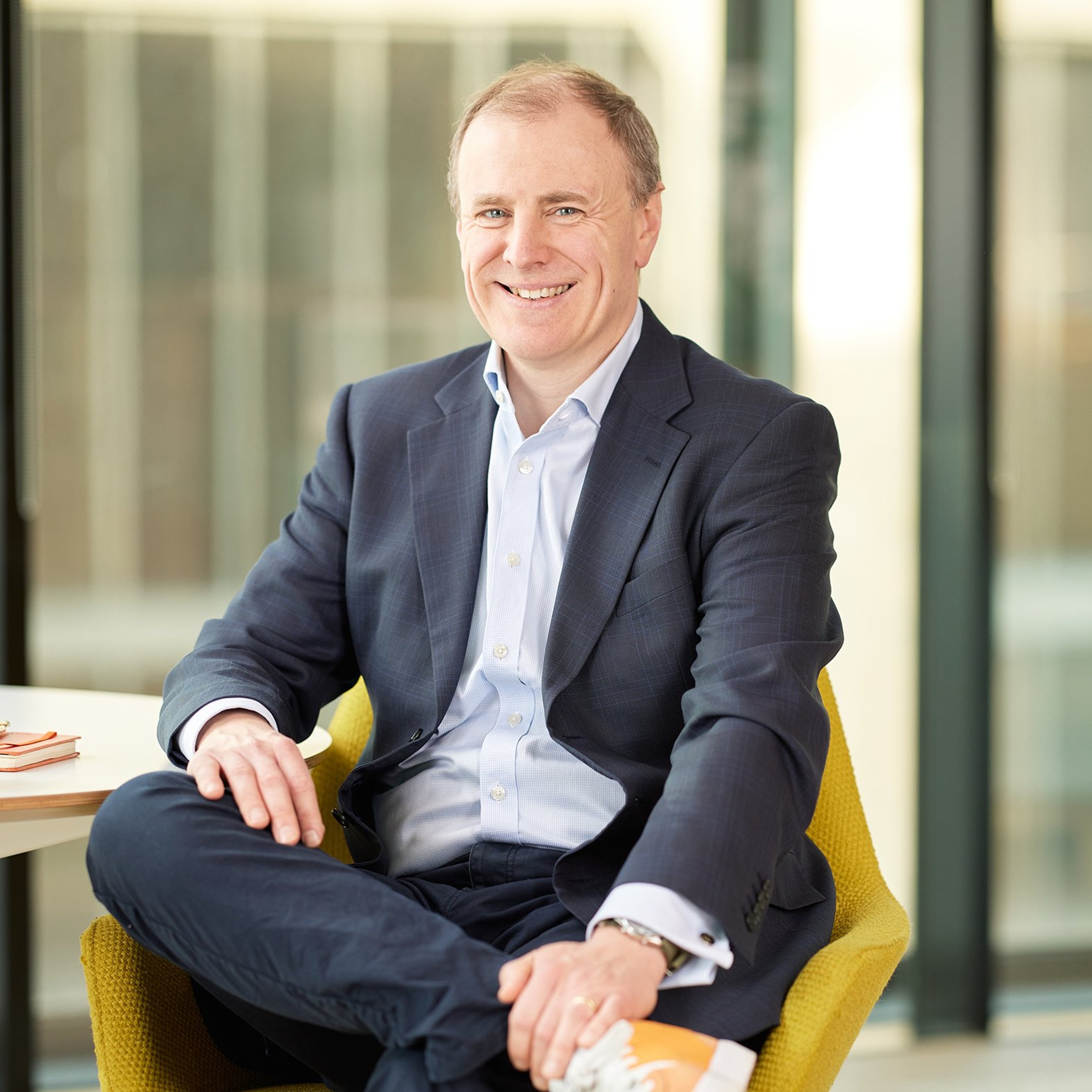
James is head of Global Income Growth and manager of the Scottish American Investment Company PLC (SAINTS). He joined Baillie Gifford in 2004 and became a partner in the firm in 2023. Prior to this he was an investment manager in our US Equities Team. Before joining the firm, he spent three years at the Scotsman, where he was economics editor. James is a CFA Charterholder. He graduated MA (Hons) in Economics and Philosophy from the University of St Andrews in 2000 and MSc in Development Studies from the London School of Economics in 2001.

Helen is an investment manager in the Global Alpha Team. She joined Baillie Gifford in 2008 and became a partner in 2020. In addition to Global Alpha, Helen has spent time working in our Developed Asia, UK, US Equity Growth, and Emerging Markets Equity teams. She graduated BSc (Hons) in Economics from the University of Warwick in 2007 and MPhil in Economics from the University of Cambridge in 2008.
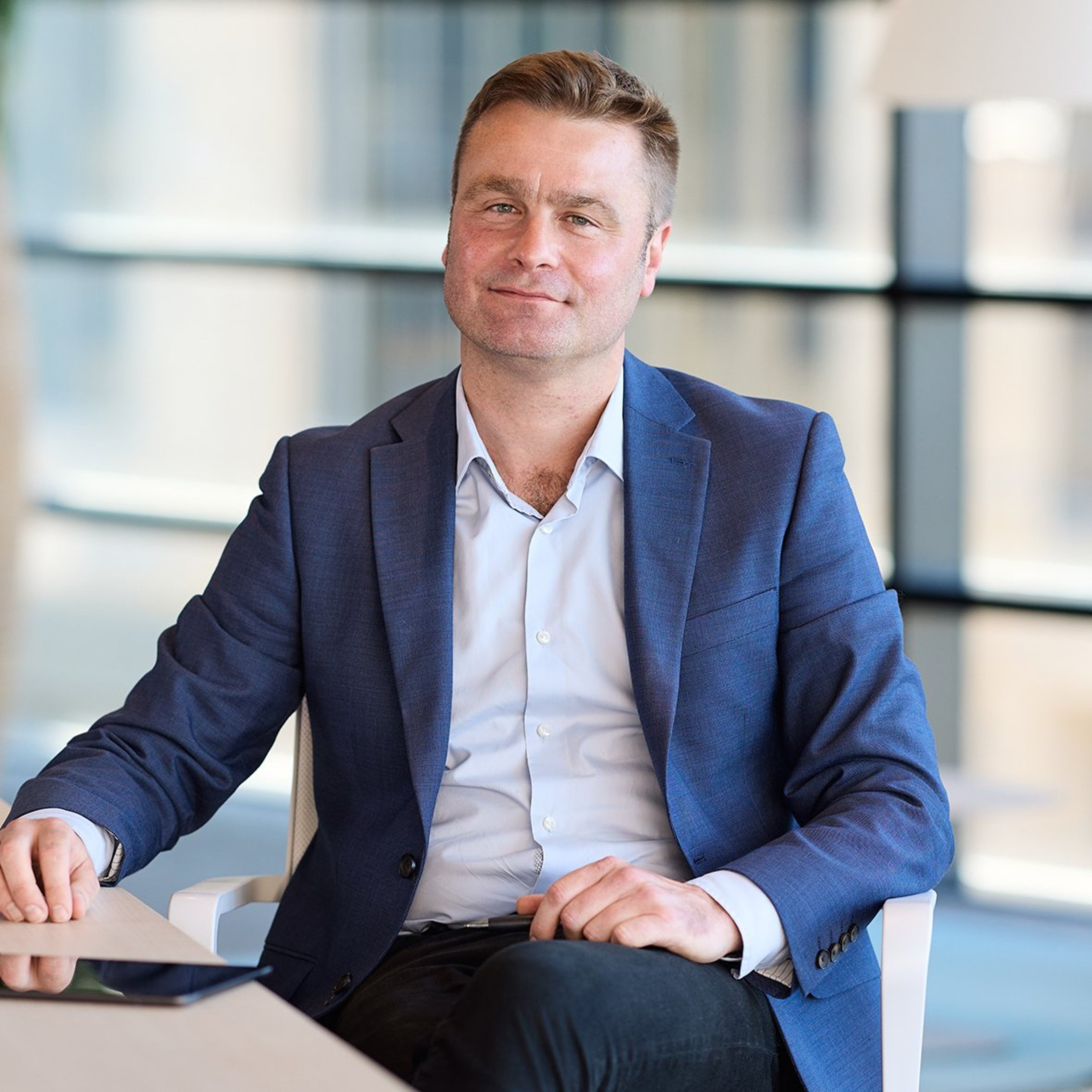
Will is head of our Emerging Markets Equity Team. He joined Baillie Gifford in 1999 and became a partner of the firm in 2010. Prior to joining the team in 2001, he also spent time working in our UK and US equity teams. Will graduated MA in History from the University of Glasgow in 1996.
Related insights

Fairytales and fundamentals revisited
Jonny Greenhill on Long Term Global Growth’s patient approach to backing transformative companies.November 2025
Webinar|32 minutes
The science behind investing
From nanotechnology to investing, Olivia Knapp explores the chemistry of good research.November 2025
Video|6 minutes
Profile of a returning industry veteran
After nearly 20 years leading global equity teams, explore why Alistair Way returns to Baillie Gifford.November 2025
Video|6 minutes
Related funds

Worldwide Long Term Global Growth Fund
The Worldwide Long Term Global Growth Fund aims to provide strong returns over the long term by investing primarily in a concentrated, unconstrained global equity portfolio.
Worldwide Responsible Durable Growth Fund
The Fund aims to achieve a higher level of income than global equities whilst, over the longer term, achieving growth in both income and capital by investing primarily in shares of companies anywhere in the world which meet the relevant environmental, social and governance criteria and will exclude companies from certain industries and companies which are inconsistent with the principles of United Nations Global Compact for Business.
Worldwide Global Alpha Fund
The Worldwide Global Alpha Fund aims to provide returns comprising capital growth and dividend income over the long term by investing primarily in global equities which are listed, traded or dealt in on Regulated Markets worldwide.
Related investment strategies

Global Alpha
Ambitious growth investing in exceptional companies, prioritising long-term sustainability and competitive advantages for lasting success.
Global Alpha Paris Aligned
Climate-conscious investing in exceptional growth companies worldwide, using investment floor insights to find diverse opportunities.
Global Income Growth
Balancing current income needs and long-term capital growth, aiming for comprehensive, enduring returns.