
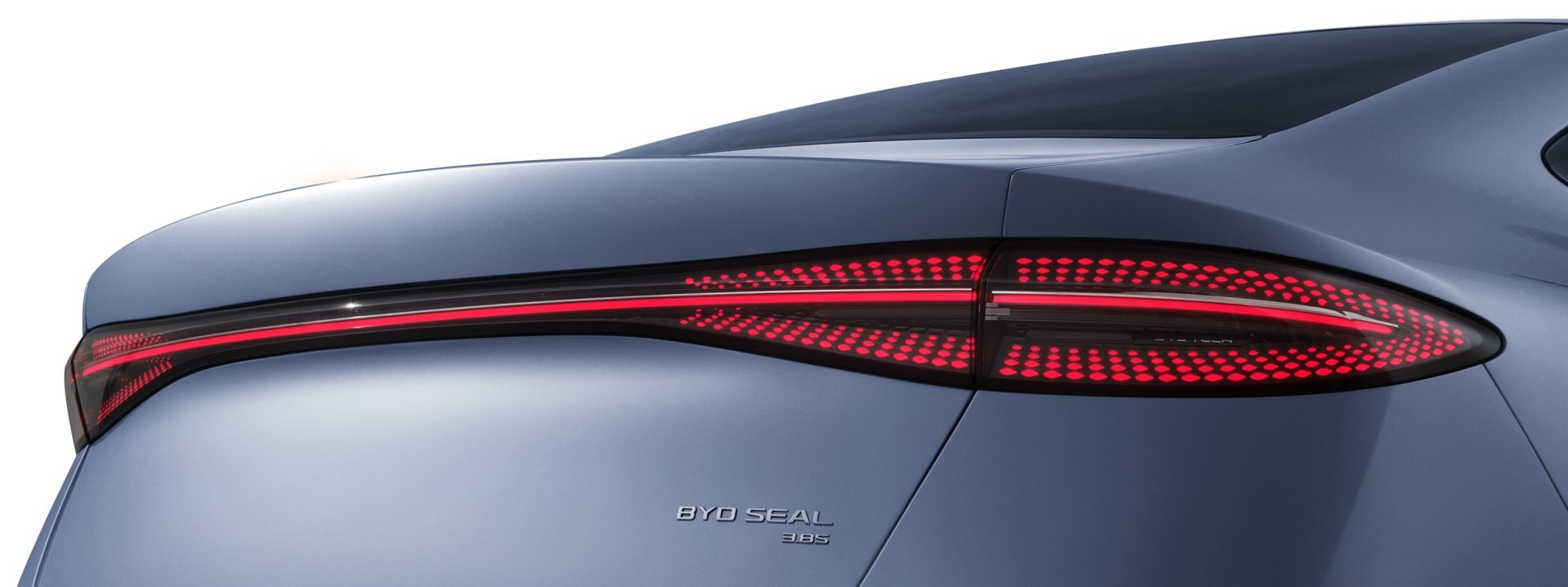
Photography courtesy of BYD
As with any investment, your capital is at risk.
Back in 2008, BYD founder Wang Chuanfu gave the Financial Times a rare interview. He predicted that by 2025 his company would lead the global market in ‘new-energy cars’ – battery-only and plug-in hybrid electric vehicles (EVs). He achieved that milestone nearly three years early and has consistently outpaced Tesla in battery-only models since late 2024.
While China’s massive domestic market has accounted for much of BYD’s success to date, Wang is focused on international expansion. Currently, the company sells about one quarter of its vehicles outside China, but BYD’s ambition is for that to be half by 2030. According to Baillie Gifford portfolio director Claire Shaw, the company has earned “the right to win” globally, though overseas sales are not essential to spectacular growth.
“BYD could achieve a share of China’s broader car market that matches that of Toyota in Japan – about 40%,” Shaw explains.
“China has the world’s biggest EV market, making the domestic opportunity huge. So the valuation works on that alone – it’s almost like we’re getting the benefit of its international growth for free.”
From consumer electronics to EVs
BYD’s remarkable trajectory stems directly from Wang’s humble origins. He grew up in Anhui, then one of China’s poorest rural provinces, one of eight siblings.
At 15, he was orphaned, and it was only thanks to an elder brother’s generosity and several scholarships that he could continue his education. He earned a master’s in metallurgical physics and chemistry and became general manager of a state-backed battery startup. But in 1995, he gave up this security to create his own business.
Today, BYD’s initials officially stand for “build your dreams,” but in the early days, Wang joked it was “bring your dollars.” The company started out making batteries for mobile phones and other consumer electronics. By the time it floated in 2002, Motorola, Samsung and Nokia were clients.
BYD’s prospectus did not mention car-making ambitions, so investors were shocked when Wang used the IPO’s proceeds to buy failing automaker Tsinchuan. The fact that he couldn’t actually drive added to concerns. But he convinced shareholders this wasn’t some harebrained pivot. Four years earlier, he had instructed engineers to secretly explore scaling the firm’s battery technology to power vehicles, and they had built a working prototype.
By embracing the mantra ‘reverse engineer, improve, make it yourself,’ they made further progress. And by 2009, BYD manufactured China's bestselling gasoline-powered car and a plug-in variant popular with taxi drivers and government fleets. Furthermore, it had gained US titan Berkshire Hathaway as its largest institutional investor.
“Warren Buffett and Charlie Munger gave BYD essential capital and elevated the firm as a forward-thinking business,” says Shaw. “Munger later described it as the best investment he ever made.”
Investing in innovation
In the shorter term, however, the financial and reputational shield that the legendary fund managers provided was vital. Rapid expansion, production problems and increased competition stalled BYD’s annual sales at about 500,000 vehicles for a decade. Throughout, the company increased spending on research and development, even when profits came under strain, a moment Wang later described as his “darkest moment.”
The strategy paid off in 2020, when BYD introduced two innovations. The first, a thin blade-shaped battery, extended the range of its EVs and was highly damage-resistant. BYD proudly put it through a nail-piercing test that made others explode. The second, a package of engineering improvements, radically improved its hybrids’ fuel efficiency.
These upgrades, coupled with government incentives to EV adoption, turbocharged sales, reaching 713,000 vehicles in 2021 and more than doubling the next year.
BYD expects to sell more than 5 million vehicles in 2025, including 800,000 outside China.
Powering up: BYD's total vehicle production
“BYD now has over 120,000 engineers and technicians. That’s more than the rest of the Chinese EV companies combined. And every year, the company has its pick of graduates.”
Its recent achievements include the ultra-fast charging Super e-Platform. It supplies BYD cars with 250 miles of range from a five-minute top-up. The first-of-its-kind service launched in March, when the firm announced it would build 4,000 compatible stations across China.
Additionally, it has made advanced driving assistance standard on all models. BYD’s sensor-enabled ‘God’s eye’ facility steers, brakes and parks but requires human supervision. Competitors often charge for such features.
BYD plans to expand its intelligent software team to 8,000 by 2027 and has partnered with other Chinese companies with self-driving expertise, including Horizon Robotics. These moves show that Chinese automobile firms are no longer playing catch-up in terms of AI, and, by forming alliances, BYD has the potential to develop more advanced features at speed.
Regarding costs, BYD’s ‘vertical integration’ gives it an edge: beyond batteries, the firm makes its own electric motors, power electronics, displays, software, LED lights and computer chips, among other components. Furthermore, it owns lithium mining rights in Brazil and the world’s largest vehicle-carrying ship, which lets it drive 9,200 vehicles on and off rather than having to pack them in containers.
“The automotive industry typically operates on thin margins,” says Shaw. “All this helps BYD maintain larger ones and represents the outcome of many years of supply chain investments, costly to replicate.”
An alignment of interests
Turning to decision-making, Shaw says Wang’s highly engaged leadership remains critical. Having a founder in charge, she notes, encourages far-sighted planning and embeds a healthy radicalism. Moreover, co-founder Lu Xiangyang remains involved as vice chairman.
“Together they own about a quarter of the company,” says Shaw, “creating the strong alignment we look for between executives’ personal wealth and a company’s long-term interests.”
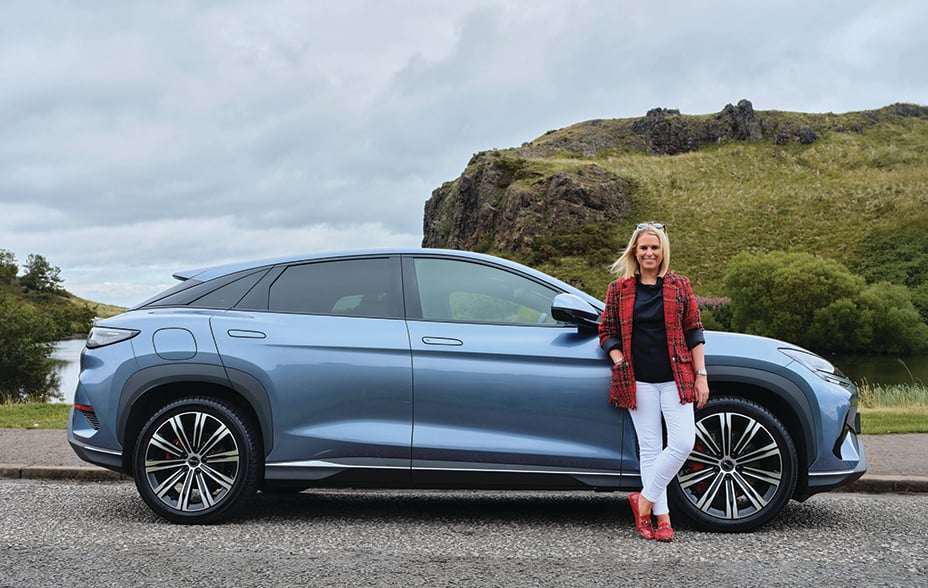
Investment specialist Claire Shaw put BYD’s SEALION 7 through its paces
Shaw notes this isn't a matter of switching from Tesla to BYD, but instead reflects where each company stands on its growth journey.
“Tesla is between two major growth waves,” Shaw says. “Tesla 1.0 was all about automotive and was driven by EV manufacturing, culminating in the Model Y becoming the world’s bestselling car in 2023. Tesla 2.0 will center on advances in autonomy, robotics and software, including its Robotaxis initiative. While Tesla’s progress in these is impressive, they remain nascent opportunities.”
By contrast, Baillie Gifford’s investment in BYD reflects excitement about the Shenzhen-based firm’s existing business and its commanding lead in the world’s second-largest economy.
“We’ve consistently invested in Chinese companies with Chinese founders, even when others declared the market uninvestable,” says Shaw.
“There are risks, which is why our bar for inclusion is higher than for other stocks, and we evaluate each company individually. But when you look at companies like BYD, the massive growth potential coupled with a low stock price relative to earnings suggests those risks are more than compensated for by the potential rewards.”
Wang once credited BYD’s success to the spirit of “dare to think, dare to act, dare to persevere.” Those daring to invest are plugged into the excitement of its global potential.
Expanding abroad
BYD’s international ambitions involve establishing local supply chains rather than simply importing cars from China.
In Europe, it is constructing a $4.5 billion factory in Hungary that will shortly produce 200,000 passenger cars a year. Efforts are also underway in Latin America, where its popularity with Uber drivers has made BYD Brazil’s bestselling EV, and in south-east Asia. However, the US and Canada do not figure into its plans for now.
BYD beyond China: overseas EV production facilities
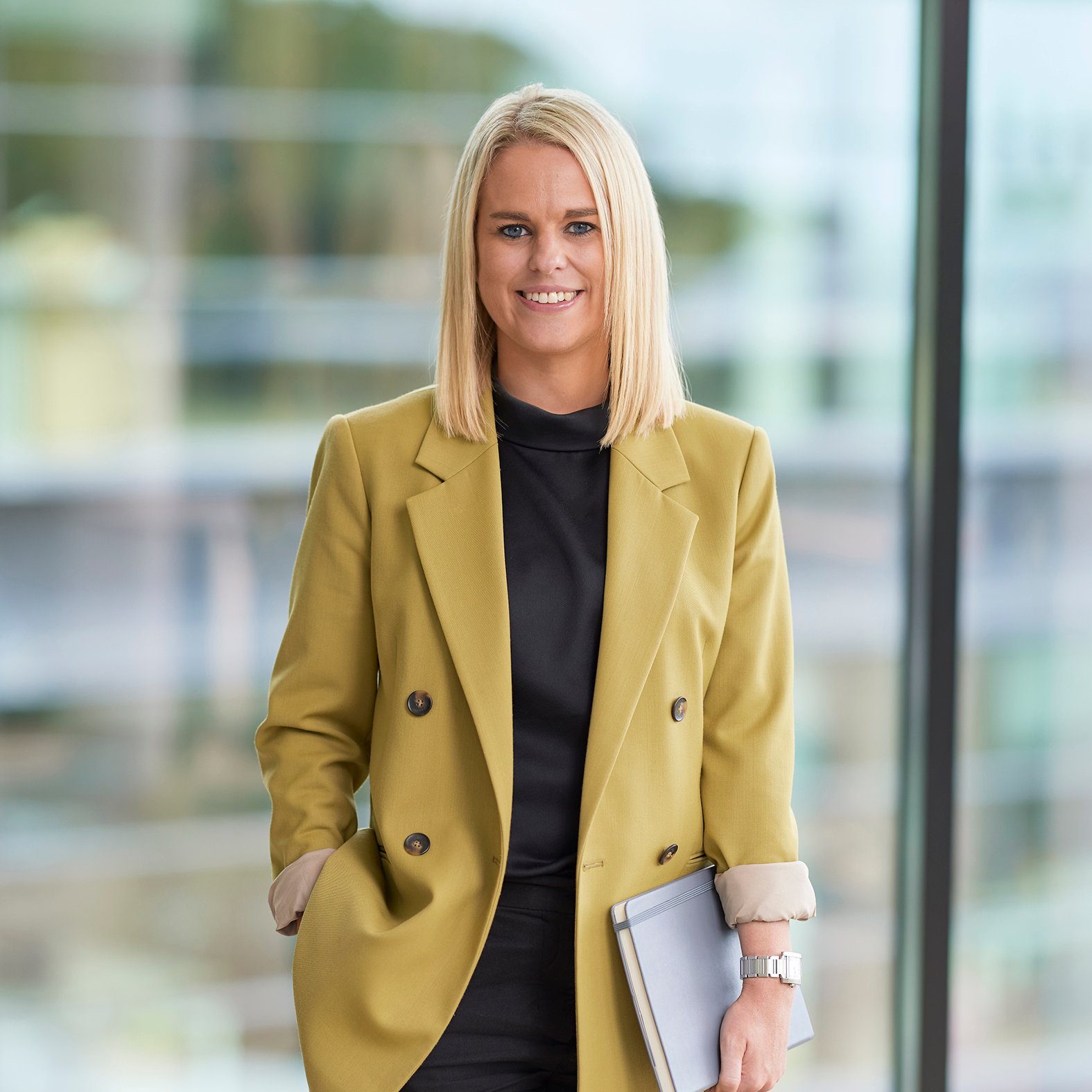
Claire Shaw
Portfolio Director
Claire is a Portfolio Director at Baillie Gifford, playing a prominent role in servicing the firm’s UK investment trust shareholders. She joined the firm in 2019. Before joining Baillie Gifford, Claire spent over a decade as a fund manager, focusing on managing European equity portfolios for a global client base.
Important information
Baillie Gifford & Co and Baillie Gifford & Co Limited are authorised and regulated by the Financial Conduct Authority (FCA). Baillie Gifford & Co Limited is an Authorised Corporate Director of OEICs.
Baillie Gifford Overseas Limited provides investment management and advisory services to non-UK Professional/Institutional clients only. Baillie Gifford Overseas Limited is wholly owned by Baillie Gifford & Co. Baillie Gifford & Co and Baillie Gifford Overseas Limited are authorised and regulated by the FCA in the UK.
Persons resident or domiciled outside the UK should consult with their professional advisers as to whether they require any governmental or other consents in order to enable them to invest, and with their tax advisers for advice relevant to their own particular circumstances.
Financial intermediaries
This communication is suitable for use of financial intermediaries. Financial intermediaries are solely responsible for any further distribution and Baillie Gifford takes no responsibility for the reliance on this document by any other person who did not receive this document directly from Baillie Gifford.
North America
Baillie Gifford International LLC is wholly owned by Baillie Gifford Overseas Limited; it was formed in Delaware in 2005 and is registered with the SEC. It is the legal entity through which Baillie Gifford Overseas Limited provides client service and marketing functions in North America. Baillie Gifford Overseas Limited is registered with the SEC in the United States of America.
The Manager is not resident in Canada, its head office and principal place of business is in Edinburgh, Scotland. Baillie Gifford Overseas Limited is regulated in Canada as a portfolio manager and exempt market dealer with the Ontario Securities Commission ('OSC'). Its portfolio manager licence is currently passported into Alberta, Quebec, Saskatchewan, Manitoba and Newfoundland & Labrador whereas the exempt market dealer licence is passported across all Canadian provinces and territories.
Author
About the author