


Images courtesy of Toss
As with any investment, your capital is at risk.
Most of us interact with our banks only when we have to, navigating systems that usually work OK, but rarely delight us.
When I heard about a South Korean financial app that users were opening nine times a day, I had to dig deeper. That curiosity eventually took me to Seoul, to spend time with Toss, the company behind that statistic.
Toss has become one of Korea’s most widely and frequently used consumer apps. Surprisingly, it’s not a messaging service or social network, but a one-stop financial platform. This exceptional engagement is not due to a single breakthrough feature, but a more fundamental rethinking of what a financial system can look like when it is built around the user, not the institution.
Through a single mobile interface, users can manage payments, bank accounts, loans, investments, insurance, credit scoring and tax returns, alongside dozens of other services. More than 70 separate financial products sit within the platform. By treating the user’s financial life holistically, Toss delivers a user experience that feels coherent rather than fragmented, personal rather than transactional.
The levels of engagement that Toss is achieving are closer to social media than traditional finance. It is also deeply habit-forming. Once users switch to Toss, they rarely leave. It doesn’t just sit in your phone’s app menu, it becomes the go-to place for anything to do with money.
Trust first, then revenue
Toss has already achieved remarkable penetration. Over two-thirds of Korean bank accounts are now connected. About 90 per cent of the country’s teenagers begin their financial lives on Toss, and almost all continue in adulthood. Stickiness is exceptional, suggesting that Toss becomes embedded early and stays relevant as customer needs evolve.
With numbers like these, it’s reasonable to ask: where will future growth come from?
The answer lies in how Toss was built. Early on, the company focused less on monetisation and more on trust, engagement and usefulness. Revenue followed, and when it did, the execution was exceptional. Today, revenues exceed $1.4bn. The business is profitable, but most of Toss’s growth potential still lies in the future.
- Toss continues to add new services, steadily expanding its role in users’ financial lives.
- Many services are early in their monetisation process, creating scope for new revenue streams over time. In three years, Toss has meaningfully expanded its revenue-generating product categories, each of which has scaled, leveraging the company’s already large user base.
- It’s building out its user base and is increasingly extending reach beyond consumers to merchants, embedding itself in payments and commerce infrastructure.
- Toss is beginning an international expansion in several new international markets.
With such a large and engaged clientele in place, new products scale quickly and experimentation is easier. Today’s scale isn’t an endpoint, it’s a launchpad to its future ambitions.
Culture you can feel
Much of what makes Toss work sits in its culture.
It was founded in 2013 by SG Lee, a former dentist inspired by stories from Silicon Valley about the impact of technology on users. Realising that South Korea had a unique set of problems, he applied technology to create change.
The company was built in deliberate contrast to the hierarchical, risk-averse structures that dominate Korean corporate life. That difference is immediately apparent when you spend time inside the business.
Two ideas surface repeatedly in conversations with the team. The first is autonomy. Toss operates through small, highly empowered units that function like internal startups. Decisions are pushed downwards and responsibility is real. People across the organisation consistently talked about products as if they were their own, not handed down from above.
The second idea is an obsession with data. Toss runs on experimentation. Product ideas are tested relentlessly through A/B trials – running two versions of a product simultaneously and seeing which attracts better engagement – and the company maintains a big internal library of past experiments. New features are judged not by who proposed them, but by user response.
If the data supports an idea, teams are encouraged to pursue it, even if it’s not yet part of the plan. Leadership stays out of the way, allowing evidence, not hierarchy, to determine outcomes.
The result is a consumer experience that feels unusually polished and intuitive. It stands out from other Korean fintechs, but Toss is also exceptional within the global fintech landscape. It’s this kind of creative and hard-driving culture, slow to build and hard to replicate, that often proves a durable competitive advantage.
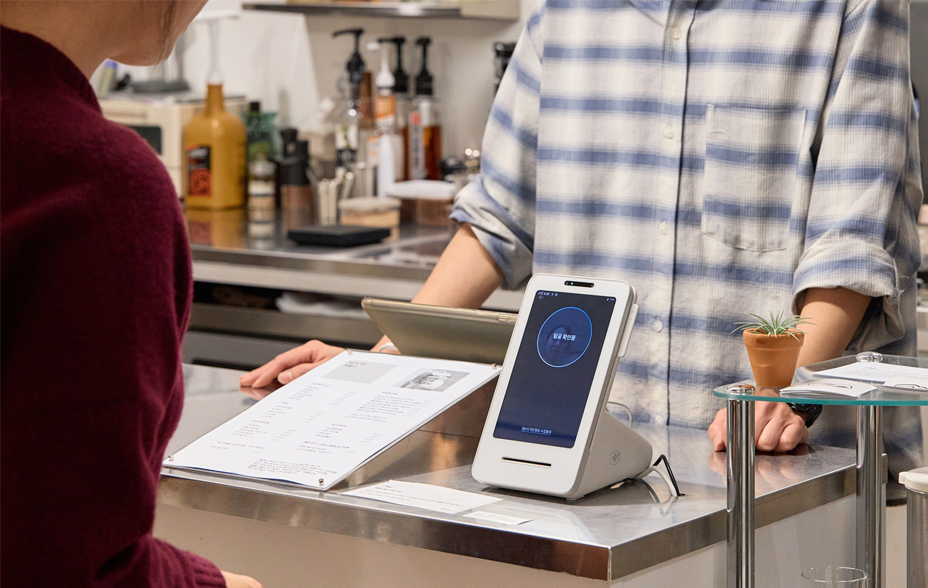
Toss’s Facepay allows customers to make payments using facial recognition technology
Not only does it drive great product development, but a magnet for the best entrepreneurial Korean talent. Toss is a uniquely empowering, high-performance, autonomous workplace that draws in talent. Being trusted with a role in the company means passing the notoriously difficult interview process. Fewer than one in every 150 applicants gets the job.
Why Korea matters
At first glance, Korea looks niche. In reality, it’s one of the largest financial services markets in the world, ranking sixth or seventh globally. Consumers here typically juggle multiple bank accounts, credit cards and insurance policies, while the digital experience at traditional institutions has lagged. A combination of market complexity and under-innovation has created fertile ground for a platform that simplifies and unifies financial life.
Toss has emerged as the clear leader. As more services are added, the platform strengthens. Switching costs rise, data compounds, trust deepens. It increasingly resembles a financial operating system rather than a collection of discrete products.
This is the kind of off-the-beaten-path opportunity that excites a long-term, global investor. It hasn’t emerged from Silicon Valley and doesn’t fit the mould of fintech in other markets, but it emerged from an alignment of local needs, founder ambition, culture and execution. It just happens to sit in Seoul.
Looking for outliers in non-obvious places
What makes Toss compelling isn’t any single feature or revenue line, but the way its parts reinforce one another. Engagement generates data. Data improves products. Better products deepen engagement. Over time, this flywheel has the potential to become self-reinforcing.
For those willing to spend time on the ground and look beyond the obvious geographies, Toss is a reminder of why a global perspective matters. The most interesting companies aren’t always in the most obvious places. It’s often necessary to look further to find companies that are simply getting on with building something exceptional.
Risk factors
The views expressed should not be considered as advice or a recommendation to buy, sell or hold a particular investment. They reflect opinion and should not be taken as statements of fact nor should any reliance be placed on them when making investment decisions.
This communication was produced and approved in January 2026 and has not been updated subsequently. It represents views held at the time of writing and may not reflect current thinking.
Potential for Profit and Loss
All investment strategies have the potential for profit and loss, your or your clients’ capital may be at risk. Past performance is not a guide to future returns.
This communication contains information on investments which does not constitute independent research. Accordingly, it is not subject to the protections afforded to independent research, but is classified as advertising under Art 68 of the Financial Services Act (‘FinSA’) and Baillie Gifford and its staff may have dealt in the investments concerned.
All information is sourced from Baillie Gifford & Co and is current unless otherwise stated.
The images used in this communication are for illustrative purposes only.
185430 10060129