

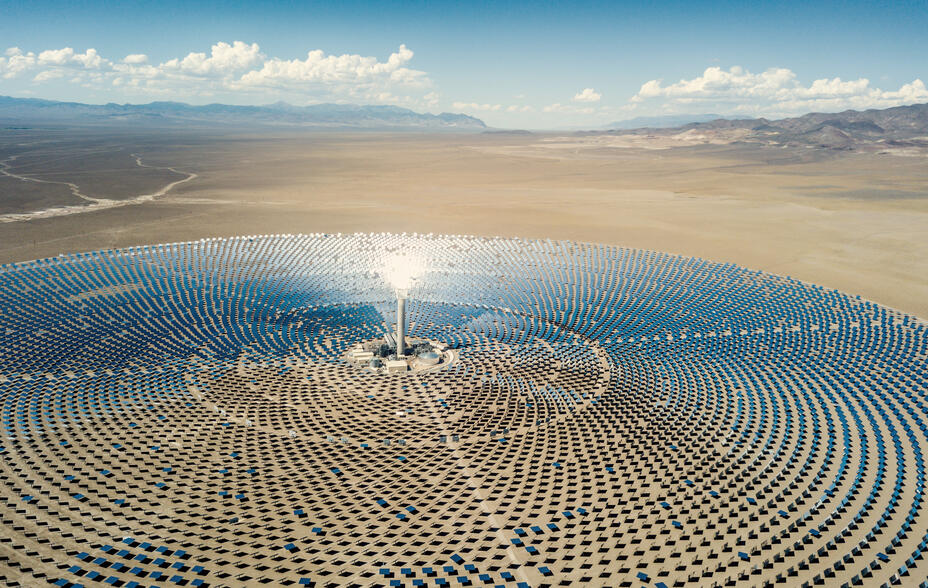
As with any investment, your capital is at risk.
Energy systems are transitioning. Fossil fuels remain an important input for the global economy, and some of our investment strategies have increased their exposure lately. But we still see a transition to electrified power systems and renewable energy as a key long-term trend.
This has been supercharged by datacentres and a greater focus on energy security. It’s also playing out in emerging markets, which provide many of the raw materials and equipment and are developing their own new energy infrastructure at pace. The changes afoot are throwing up opportunities. We remain discerning about finding companies with an enduring edge.
Shocks, security and scenarios
The 2020s have become the decade of energy shocks. Covid, Ukraine and now Iran have brought unprecedented disruptions to the energy status quo. Demand-side, supply-side, regional, global, environmental, political: each shock has had its own characteristics, but the unifying theme is the importance of resilience – and of choice.
Simultaneously, shifting geopolitics are breaking down the idea that resilience can be met through cooperative interdependence. Energy access is returning to the heart of national security – with the added complexity that competition between different energy systems is itself one of the drivers of that geopolitical tension.
In 2006, Al Gore named the foundational “inconvenient truth” linking global warming to fossil fuels. In 2026, two decades and tremendous technological progress later, we face the “inconvenience” that the choice between old, high-carbon and new, low-carbon energies has been intensely politicised – both within and between nations.
Amidst the noise, the connection between the energy transition and the emissions reduction we need to slow climate change has faded. This matters for investors: if carbon is not priced, new energy capacity will tend to add to total consumption rather than replace and reduce the old. Pro-climate investing can find some refuge in the secular themes of electrification and adaptation, but needs to be honest that timely real-world impact on emissions will struggle without directed policy support.
The likely disorderly adoption of new energy technologies, twinned with the increasingly obvious impacts of environmental stress, are themes we have explored in our Climate Scenarios series. The series sets out a range of plausible futures, each designed to challenge our assumptions and reveal the risks embedded in our stock research and portfolio construction.
2026 is not 1973: the transition will be accelerated
The 1973 oil shock is a case study in an energy transition that didn’t happen: it was too early. The initial response to supply disruption was a massive round of efficiency regulations, a nuclear construction boom and even (rather primitive) solar panels on the White House.
But the eventual outcome was entrenchment: the higher oil price level commercialised new production in the North Sea, Alaska, Russia and beyond, bringing super-normal profits to the Middle East, muting climate science and eroding the urgency for change.
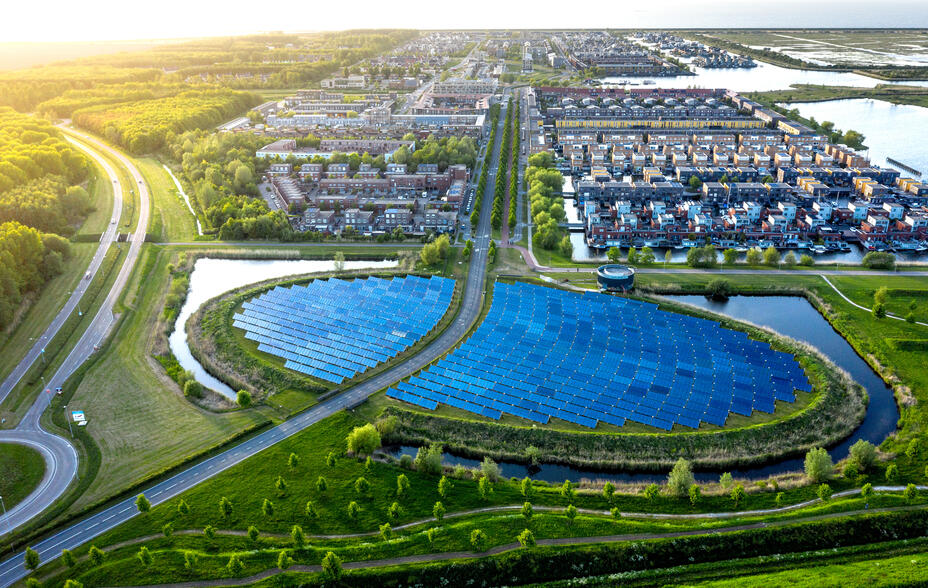
Falling costs and rising electricity demand are turning low-carbon infrastructure into a practical alternative at scale.
In 2026, the picture is different. Low-carbon electrification has reached critical mass, and demand for electricity – rather than other energy sources – is rising fast. Since 2019 alone, enabled by deep, sequential cost declines, global solar capacity has more than quadrupled, and the EV share of new car sales has jumped from 2.5 percent to more than 20 percent.
These numbers are material: solar and wind now displace the need for about nine Qatar’s worth of gas production for power generation every year. Even in Trump’s US, new solar added 85 terawatt hours (TWh) in 2025, while the volume of gas used for power generation declined.
Rationing-induced cuts to the working week in the Philippines, fights for diesel and cooking gas from Australia to India, echoes of the 2022 gas shock in Europe and $4 gasoline in the US all point in the same direction: consumers are unlikely to warm to the status quo. With battery-electric vehicles hitting an amazing 50 percent of China's truck sales in December, the (very) long-awaited arrival of the Tesla Semi might be well timed.
This is a growth setup that encourages us to pursue more energy transition investments. But we are conscious of the structural shift in the economics of value. Fossil fuel commodities are fundamentally about producer surplus: profits concentrate among exporters and producers, while higher prices are regressive for most.
New energy technologies run the other way: cost curves keep falling, benefits accrue to consumers and industrial users, and the kit is available to anyone who can build or buy it. What delights users can harm corporate returns even as volumes grow. As stock markets hail a secular shift from asset-light to asset-heavy, identifying a sufficiently durable edge to protect margins in this fast-moving area is the key challenge investors face.
You will find this focus echoed in our portfolios – a bias toward the enablers that help companies and consumers navigate the technology choices (such as Atlas Copco or DSV), and a very high-quality bar for the essential capital components of the transition (found in CATL’s technology and manufacturing moat).
We are not short of energy, but we are short of electricity
The Stone Age did not end for a lack of rocks. Until the Iran shock, coal, oil, and gas prices were weakening under the pressure of technological advances. From Texas to Saudi Arabia, producers are applying AI to increase production, while substituting solar and wind at home to free up fossil fuels for export.
Electricity is where the tightness lies, especially in developed markets seeking to supplement existing generation and grids. Electricity demand is rising in all regions: it is the future fuel for cars, homes, robotics and AI. Creating accessible supply is proving challenging, to say the least, against a backdrop of slow permitting, outdated market frameworks, volatile trade barriers and increasingly unstable geopolitics.
National security, defence budgets and AI-building hyperscalers have become the new patrons of energy technologies. These are deep pockets that not only fund innovation but also advance deployment and protect new supply chains where they support the national interest. Green premia have become security premia.
For now, developing economies would seem to have the edge: growth is new, not retrofit, infrastructure is popular, and there is a continued willingness to shop at China, the world’s lowest cost electrotech supplier.
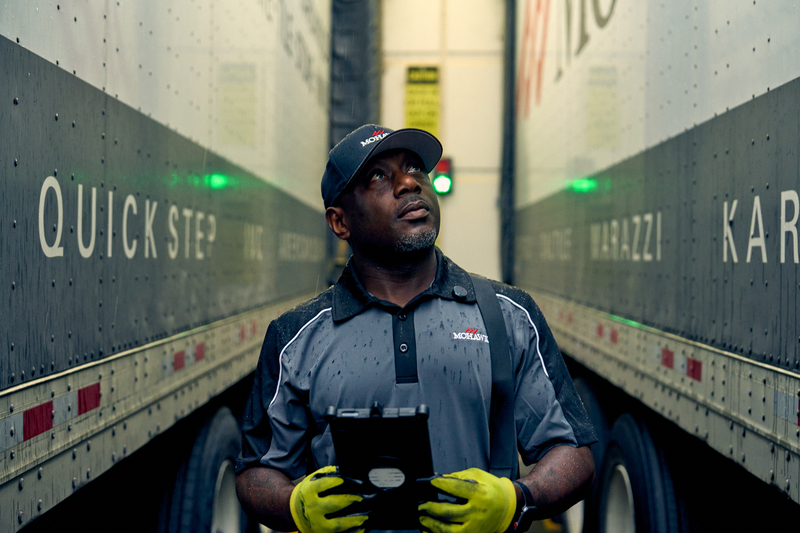
Digital tools are becoming part of the energy transition, helping companies optimise fleets, equipment and electricity use in real time. Image courtesy of Samsara.
For investors, this bifurcation creates some interesting opportunities. There’s still the simple capital goods and materials story (the more bottlenecked and complex the better). But there’s also an efficiency play.
Constrained capacity additions bring incentives to maximise what you have – often swapping prospective physical capex for smart, digital systems. We think this will drive the optimisation of grids and of electricity consumption itself. This underpins the investment case for companies like the disruptive utility Origin Energy/Octopus, equipment supplier Schneider, edge-compute champion ARM and internet-of-things pioneer Samsara.
Energy goes from global to local
The last century was the story of globalisation of the energy stack: coal, oil and gas moving across regions to provide the energy services any economy needs in a pretty similar fashion. The new story is one of regional differentiation: countries will choose energy sources that optimise their particular mix of cost, self-sufficiency and environmental preferences. It could be hybrid cars and gas turbines in the US, EVs and solar panels in Vietnam, green ammonia and agricultural waste-to-fuels in India, and nuclear fabs in Taiwan.
More immediately, the Iran shock will divert policy toward domestic fossil fuel support, deferring some climate ambition and creating near-term opportunities for domestic producers. Those with abundance will double down on production and hone their export sales pitch. But their target customers will be more hesitant. Importers will question the new reliance on foreign liquefied natural gas (LNG) for baseload power, accelerating the adoption of renewables and even extending the use of coal.
Outside of the US, Russia and the Middle East, we expect gas to migrate to higher-value, lower-volume uses: balancing renewable grids, fuelling ships and providing process heat in heavy industries. We think the future gas opportunity is more in turbines and engines than basic commodity production.
Looking even further out, South America is primed for expansion: strong renewable resources, critical mineral wealth in lithium and copper, growing electrotech manufacturing capability, and the geography to support climate resilience. The Positive Change holdings MercadoLibre and Nu bring broad leverage to this regional growth. Among our other portfolios, electric and materials specialists like WEG, Axia or SQM provide more specific exposure.
Climate change remains real
The latest data for April shows that 60 percent of the US is in drought. This is a post-2000 record and about twice the 25-year average. It offers little sign of relief to a national beef herd at record lows and reports of a poor-quality winter wheat crop.
US agricultural stress is just one of a number of anecdotes that show the natural world straining at 1.5C above pre-industrial temperatures. For all the progress in new energies, global emissions reached a new high in 2025. It has been a persistent challenge for climate action that headline economic metrics and stock markets suggest this is all still manageable. And, as we explored in our max energy, max adaptation scenario, it may well be that high energy availability and strong international cooperation could make it so (even as the Iran crisis undermines both).
For now, the greater investment certainty is that adaptation solutions can offer a strong thematic for returns. Climate defence must encompass a wide range of activities – not just infrastructure, but monitoring, design, intermediation and decentralisation. We see this in the Positive Change portfolio, with companies as diverse as Deere, Ecolab, Autodesk, Sandoz and Remitly, and it is a category that includes insurers and real estate in our other portfolios. Looking forward, adapting the planet is taking us into deep dives into many of the companies enabling the emerging space economy.
The other investment reality of climate change is that policy interventions against carbon emissions are more likely to return than remain in permanent retreat. Today may come to be seen as just another cyclical low in the implicit global cost of carbon. While the pace of decarbonisation is likely to be uneven, and the imposition of policy volatile and regional, we suspect that corporate awareness and adaptability will remain an enduring competitive edge.
Despite a period of strong turbulence, it’s no surprise to us that seven out of 10 of Baillie Gifford’s largest holdings for clients across the firm are, or are about to enter, our top climate ‘leading’ classification. The 2020s may show few signs of the global cooperation intrinsic to the goals of the Paris Agreement, but preparing for new energy technologies and physical climate change remains central to corporate strategy.
Glossary:
Producer surplus: the extra benefit producers receive when they can sell at prices above their costs.
Capital goods: equipment and machinery used to produce other goods or services.
Capex: capital expenditure: money spent on long-term assets such as buildings, equipment or infrastructure.
Green premia/security premia: the extra price or value investors attach to climate benefits or energy security.
Risk Factors
The views expressed should not be considered as advice or a recommendation to buy, sell or hold a particular investment. They reflect opinion and should not be taken as statements of fact nor should any reliance be placed on them when making investment decisions.
This communication was produced and approved in June 2026 and has not been updated subsequently. It represents views held at the time of writing and may not reflect current thinking.
Potential for Profit and Loss
All investment strategies have the potential for profit and loss, your or your clients’ capital may be at risk. Past performance is not a guide to future returns.
This communication contains information on investments which does not constitute independent research. Accordingly, it is not subject to the protections afforded to independent research, but is classified as advertising under Art 68 of the Financial Services Act (‘FinSA’) and Baillie Gifford and its staff may have dealt in the investments concerned.
All information is sourced from Baillie Gifford & Co and is current unless otherwise stated.
The images used in this communication are for illustrative purposes only.
Important Information
Baillie Gifford & Co and Baillie Gifford & Co Limited are authorised and regulated by the Financial Conduct Authority (FCA). Baillie Gifford & Co Limited is an Authorised Corporate Director of OEICs.
Baillie Gifford Overseas Limited provides investment management and advisory services to non-UK Professional/Institutional clients only. Baillie Gifford Overseas Limited is wholly owned by Baillie Gifford & Co. Baillie Gifford & Co and Baillie Gifford Overseas Limited are authorised and regulated by the FCA in the UK.
Persons resident or domiciled outside the UK should consult with their professional advisers as to whether they require any governmental or other consents in order to enable them to invest, and with their tax advisers for advice relevant to their own particular circumstances.
Financial Intermediaries
This communication is suitable for use of financial intermediaries. Financial intermediaries are solely responsible for any further distribution and Baillie Gifford takes no responsibility for the reliance on this document by any other person who did not receive this document directly from Baillie Gifford.