View transcript
<p><strong>Capital at risk.</strong></p>
<p class="MsoNormal"><strong><span style="mso-ansi-language: EN-US;" lang="EN-US">Leo Kelion (LK):</span></strong><span style="mso-ansi-language: EN-US;" lang="EN-US"> In the late 1960s, the New York Stock Exchange and other US markets cut their trading hours and began closing every Wednesday. It was an act of desperation caused by a flood of paperwork. Trading volumes had soared, and brokers were resorting to couriers, often retired police officers and firemen, to ferry suitcases of share certificates between offices. Many went missing. In 1973, the industry created the Depository Trust Company to fix this. It kept hold of the certificates and tracked ownership electronically.</span></p>
<p class="MsoNormal"><span style="mso-ansi-language: EN-US;" lang="EN-US">It worked, but ever since, the industry’s been burdened by middlemen and duplicate ledgers. Well, today, technology brings an alternative, blockchain-based tokenisation. It streamlines the system and enables new possibilities, such as 24/7 trading. And Baillie Gifford is among the first active managers to adopt it.</span></p>
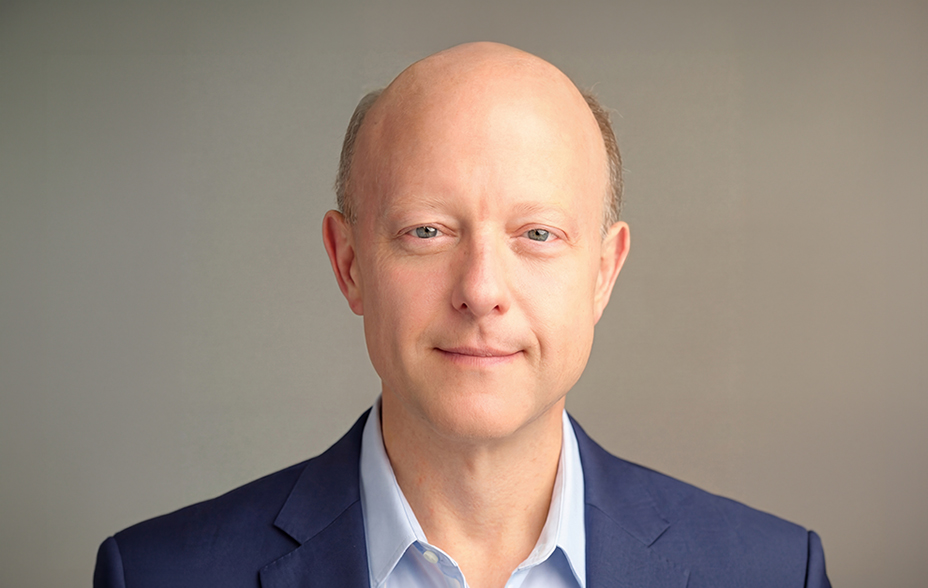
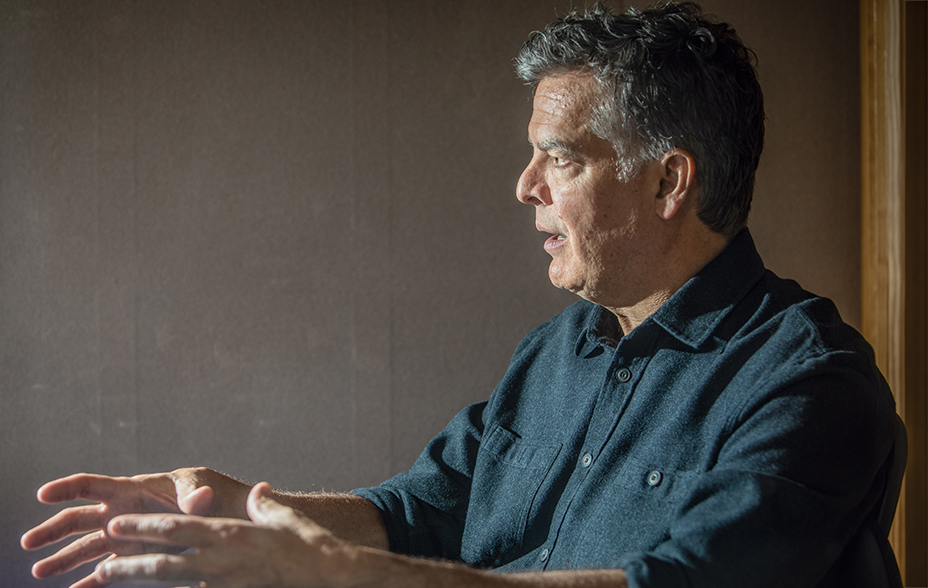
<p class="MsoNormal"><span style="mso-ansi-language: EN-US;" lang="EN-US">Welcome to Short Briefings on Long Term Thinking. I’m Leo Kelion, and I’m joined by Theo Golden, Baillie Gifford’s head of digital assets. Before we explain all, a quick reminder. As with all investments, your capital’s at risk, and your income is not guaranteed. Theo, welcome to the show.</span></p>
<p class="MsoNormal"><span style="mso-ansi-language: EN-US;" lang="EN-US">Thanks for having me. So, Theo, that history explains how the industry dealt with a paperwork problem by adding layers. So is tokenisation best thought of as stripping those layers back out to reduce friction?</span></p>
<p class="MsoNormal"><strong><span style="mso-ansi-language: EN-US;" lang="EN-US">Theo Golden (TG):</span></strong><span style="mso-ansi-language: EN-US;" lang="EN-US"> That is essentially at its core what we’re talking about. This is a rewiring of the financial system. It’s about creating a world with less friction, greater utility and simply better access for folks across the globe looking to access the world of savings and investments.</span></p>
<p class="MsoNormal"><strong>LK:</strong><span style="mso-ansi-language: EN-US;" lang="EN-US"> So Theo, I’m going to get you to do a lot of explaining on this podcast. But before you do, I just want to explore how you came to head up our tokenisation efforts. And I believe the initiative has got its roots in your family history. So can you tell us a bit about that?</span></p>
<p class="MsoNormal"><strong>TG:</strong><span style="mso-ansi-language: EN-US;" lang="EN-US"> Of course, I guess my interest in digital assets stems from a very personal experience. A lot of people get into digital assets and crypto for, I guess, speculation to an extent, but mine has always been rooted in use cases. My family history is one of slight disruption – in terms of my mother’s family fled Libya, fled Colonel Gaddafi, and were forced to go to Italy and then London. And my father’s family during the war, in the second world war, had to flee Thessaloniki in Greece after the Nazi invasion. And so on both sides of my family, there’s this trauma of having lost everything, your livelihoods and having to essentially start again.</span></p>
<p class="MsoNormal"><span style="mso-ansi-language: EN-US;" lang="EN-US">And there was a very, I guess, personal moment when I was around 14, 15. My grandmother on my mother’s side was towards the end of her life, and she turned around to me and she said something along the lines of, “Don’t make the same mistake that we did. Make sure that you always have a backup. Make sure you’ve got $200, $300 stashed under the bed. So if things go sideways – if, not when, but if – that you have a backup.”</span></p>
<p class="MsoNormal"><span style="mso-ansi-language: EN-US;" lang="EN-US">And now it’s quite a strong thing for a 14-year-old Theo to have heard. And also, I guess, a reflection that it’s quite hard to smuggle $200 past your parents and smuggle it under the bed. But luckily for me, I was a chronically online teen, and I was in the world of Discord and Reddit and whatnot, but had found out about this thing called Bitcoin and this idea that there was this asset which was decentralised in that no one person owned it, there was no central issuer, there was this asset which could be self-sovereign, I could own it and it could be mine, truly mine, I could custody it myself and not be reliant on any counterparties, and that asset could come with me wherever I had to go. And so I bought some Bitcoin. I bought some Bitcoin at 15 with one of my very first pay cheques.</span></p>
<p class="MsoNormal"><span style="mso-ansi-language: EN-US;" lang="EN-US">And I cannot claim to be some sort of inspired young investor where I knew it was going to go up or actually probably thought it was going to go down. But the one thing I knew was that it was a backup. It was something that could exist which would help me. And I probably wouldn’t have to explain it to my parents. In fact, I only told my parents about it a couple of weeks ago. And I started learning about the world of Ethereum, Solana and these blockchains, which could create new things.</span></p>
<p class="MsoNormal"><span style="mso-ansi-language: EN-US;" lang="EN-US">And I started kind of contributing anonymously to different projects, which are kind of well-known today in the world of crypto and digital assets. So for me, this has always been a personal story, but, most importantly, it’s always been use-case-driven. And that’s why I get so excited.</span></p>
<p class="MsoNormal"><strong>LK:</strong><span style="mso-ansi-language: EN-US;" lang="EN-US"> And then after university, this interest didn’t lead you directly to Baillie Gifford, did it? You were a journalist.</span></p>
<p class="MsoNormal"><strong>TG:</strong><span style="mso-ansi-language: EN-US;" lang="EN-US"> Yes, yes. I was a musician to start off with. I was a classical singer. And then I, yes, I ended up as a journalist. I did a stint at Bloomberg and then <em>Business Insider</em>. And I guess I like to say Bloomberg’s like the central nervous system of the financial world.</span></p>
<p class="MsoNormal"><span style="mso-ansi-language: EN-US;" lang="EN-US">Everything is the beating heart of, as you’ll know from your journalism days, of finance and business and just raw, naked markets, right? And I remember, sat in front of my terminal, my Bloomberg terminal, thinking, wow, this is an engine. This is the thing that’s powering the financial system. And then thinking, but it’s really, really quite clunky and essentially a plaster over a heavily intermediated world. All this stuff I’m talking about online with people in the crypto world tells me that there’s a better solution out here.</span></p>
<p class="MsoNormal"><span style="mso-ansi-language: EN-US;" lang="EN-US">I remember that moment kind of sticking with me. And when I got the opportunity to come to Baillie Gifford, that really stuck with me as I was sat on the Multi Asset Team. And I was covering all things from catastrophe bonds to infrastructure to private funds to FX rates, venture. And in time, I landed in corporate credit, which I just love maths and bond maths, so it was a very natural home. But I remember thinking, this is the use case.</span></p>
<p class="MsoNormal"><span style="mso-ansi-language: EN-US;" lang="EN-US">It’s about creating synergies across these asset classes. And most importantly, one of my first recommendations for Baillie Gifford was to go and buy Ethereum within the portfolios. Unfortunately, we couldn’t buy it. But me being me, I said, “Well, darn you, if you’re not going to let me buy it, I’m going to build on it.” And so the genesis of tokenisation started at Baillie Gifford.</span></p>
<p class="MsoNormal"><strong>LK:</strong><span style="mso-ansi-language: EN-US;" lang="EN-US"> So you were an investment manager, you’re now our head of digital assets as of May this year, and you’ve spent a lot of time working on tokenisation. So can we start with the basics? Can you just define exactly what tokenisation is?</span></p>
<p class="MsoNormal"><strong>TG:</strong><span style="mso-ansi-language: EN-US;" lang="EN-US"> Yeah, definitely. So it gets made complicated, but it’s actually an incredibly simple idea. The idea of tokenisation is the concept of simply taking an asset or the ownership rights of those assets and turning it into a line of code. And that line of code or series of lines of code – the technical term is a smart contract. Now, a smart contract is a very fancy way of saying a series of rules, a series of if-then statements.</span></p>
<p class="MsoNormal"><span style="mso-ansi-language: EN-US;" lang="EN-US">If user does this, what outcome is then generated? That smart contract is known as a token, and hence, you come to the world of tokenisation. So very simply put, it’s just a case of making the asset, whether it be financial or cultural or whatever it is, and turning it into a self-sovereign piece of code. Now, that piece of code lives on a wider essentially shared database, which is called a blockchain. And the reason I call it a shared database is because no one party owns it.</span></p>
<p class="MsoNormal"><span style="mso-ansi-language: EN-US;" lang="EN-US">No one party can control it. It’s about creating a shared record of ownership, asset type, etc, and rules. But every participant can be an active and gainful participant in the ecosystem. And so what that enables is for you to essentially be able to do a whole lot more. It means that when you own assets, when you hold assets, you’re not relying on an intermediary to tell you how to use it, nor are you kept within a walled garden when you are owning it. And so it opens up greater possibilities for folks who want to engage with the financial system.</span></p>
<p class="MsoNormal"><strong>LK:</strong><span style="mso-ansi-language: EN-US;" lang="EN-US"> So I’ve heard that there’s a kind of parallel with the shift from sending mail by post to sending it by email here, that what you’re getting is a system that’s faster, that’s lower cost, that’s just more efficient. Is that the right kind of metaphor?</span></p>
<p class="MsoNormal"><strong>TG:</strong><span style="mso-ansi-language: EN-US;" lang="EN-US"> Yeah, exactly. Ultimately, the words that you’re writing on the letter or the email don’t change. The asset doesn’t change. A fixed income fund, a growth equity fund, it’s still a fund, right? Or it’s still the same equities. But what is changing is the vehicle for transfer, the vehicle for ownership and the rails that they’re built on.</span></p>
<p class="MsoNormal"><span style="mso-ansi-language: EN-US;" lang="EN-US">The mental model you’re describing there is accurate. I also like the kind of idea that it’s like going from a cheque to mobile banking, because I think it’s a helpful explainer, because in a cheque, you’re basically just sending the asset and cashing it. There’s very limited utility. The next stage was you could essentially transfer money from one account to another and use it within the walled garden of that bank and the banking system. And that’s kind of what we have today, what people call Web2.</span></p>
<p class="MsoNormal"><span style="mso-ansi-language: EN-US;" lang="EN-US">And then what we’re moving towards with blockchain and tokenisation is this world called Web3, which is essentially that you aren’t reliant on the bank as the gatekeeper to then determine what you can go and do with that asset. Because code can talk to other code, you can then go and do more things with the asset that you own, and you don’t need to rely on a permission from a gatekeeper at the other end. That’s why we call it like an operating system upgrade because it’s ultimately an evolution rather than a complete revolution of how people interact and use assets. It’s just greater options available to them. </span></p>
<p class="MsoNormal"><strong>LK: </strong><span style="mso-ansi-language: EN-US;" lang="EN-US">What are the practical benefits of doing this?</span></p>
<p class="MsoNormal"><strong>TG: </strong><span style="mso-ansi-language: EN-US;" lang="EN-US">Maybe I’ll start with one which is particularly nerdy. As you can tell, I’m very passionate about this. But the first one is around the idea of record-keeping. And you alluded to this at the beginning, which is that record keeping is a relatively high cost, low reward process, which is we need to be able to track who owns what at different times to have a functioning financial system, to have investor discipline and to have line of sight to who our clients are. And that often relies on us essentially maintaining records of ownership.</span></p>
<p class="MsoNormal"><span style="mso-ansi-language: EN-US;" lang="EN-US">There is no central source of that. In the current financial system, we have Baillie Gifford’s source of truth. We have the custodian source of truth. There’s all this duplication. And within duplication, you have compounding cost, and you also have greater friction because we’re having to reconcile with each other. And every time you hear the word friction in financial system, you should immediately be thinking cost.</span></p>
<p class="MsoNormal"><span style="mso-ansi-language: EN-US;" lang="EN-US">And so what we’re doing with tokenisation is saying, look, we don’t need to have all these different records of ownership. We don’t need to have all of these different parties having to agree on one thing. We can simply have one record of truth, one golden source of truth, which is the blockchain. And the blockchain is a source of truth, which is also 24/7. Every transaction can be rules-based, but can be immediately recorded on the shareholder registry or the transfer agency register or whatever it is.</span></p>
<p class="MsoNormal"><span style="mso-ansi-language: EN-US;" lang="EN-US">And we as a whole financial system can look to that, and because we are all gainfully involved in that blockchain, in that system, we can all as a group, say this is true. What that enables is for the whole value chain of the investment and financial system to essentially take that duplication and friction out of the system and essentially reapply that time and effort spent to things which are genuinely and truly value-add, for example, like investment insight, which is important to us. But just to put some numbers on that, there are 15 intermediaries from pound sterling to product invested, according to Dr Ian Hunt.</span></p>
<p class="MsoNormal"><strong>LK:</strong> Who’s Dr Ian Hunt?</p>
<p class="MsoNormal"><strong>TG:</strong><span style="mso-ansi-language: EN-US;" lang="EN-US"> Dr Ian Hunt is a fantastic academic in the UK who’s specialising in tokenisation and the implications, and he’s done some fantastic work with the Investment Association and others. The kind of point that he makes is that that is a completely unnecessary stack, and each of them will have their own record of truth. And so what we’re basically saying is some of the roles can change in that stack. Some of them can be removed. But what you’re ultimately saying is the infrastructure that you all have is now shared rather than unique to each of you. And that can only be a positive thing for particularly cost, but also for client outcomes, because there’s less scope for error.</span></p>
<p class="MsoNormal"><strong>LK:</strong><span style="mso-ansi-language: EN-US;" lang="EN-US"> So you’ve described how you’re making the plumbing better for the industry and that costs come down. But for those in our audience who are thinking, OK, but what’s in this for me? What are the tangible benefits that we can offer to clients as a consequence of tokenisation?</span></p>
<p class="MsoNormal"><strong>TG:</strong><span style="mso-ansi-language: EN-US;" lang="EN-US"> It’s a bit like having an iOS update, right? It’s kind of like, what are the apps that get better for me once I upgrade the operating system? And it’s a very fair point. So obviously cost is one piece, and we’ve kind of gone through that. But once you essentially redefine the infrastructure that we all share, it starts to allow for a couple of other things.</span></p>
<p class="MsoNormal"><span style="mso-ansi-language: EN-US;" lang="EN-US">So to walk them through. So the first one is distribution and access. There’s a really interesting stat, which is that 40 percent of investors under 25 in the UK only hold cryptocurrencies and cash. They have essentially a bank account and a wallet, which they hold cryptocurrencies in. They don’t have investment platforms.</span></p>
<p class="MsoNormal"><span style="mso-ansi-language: EN-US;" lang="EN-US">They’re not looking to onboard with some of the traditional players that potentially you and I are using today. And the answer is that we need to be where they need us. They are the client. They determine how they want to buy things. And most importantly, we probably have a fiduciary duty to be there.</span></p>
<p class="MsoNormal"><span style="mso-ansi-language: EN-US;" lang="EN-US">We have a role to play in making sure that individuals are buying the right investment products for their risk appetite, risk profile and making sure that they have the savings they need in the future for retirement or whatever it is. And so tokenisation is essentially the means of getting there. It is the way of integrating with the place that clients currently are and want to be, and giving them a product which can perform like they expect, perform in a way which is built for the world of the internet. Those investors, in particular, have only ever known a world with the internet in it. And so it’s about making assets which have the finality, have the profile that we can deliver for them.</span></p>
<p class="MsoNormal"><span style="mso-ansi-language: EN-US;" lang="EN-US">The other side is around market structure and use case. People forget slightly that with a fund, we’ve taken a pool of assets and we’ve unitised it, right? But a lot of the time, that unit itself is what we call inert. It can’t be used. It can’t move.</span></p>
<p class="MsoNormal"><span style="mso-ansi-language: EN-US;" lang="EN-US">It’s often very hard to transfer. And so one of the really cool things about tokenisation is we can take high-quality assets like a fund, for instance, and we can make them active rather than inert. We can make them useful. And so a nice example I like to give of this, just because it’s probably alive for a lot of us in the recent past, was during the 2022 UK gilt government bond meltdown that happened post-Liz Truss’s mini-budget. Now, in that circumstance, UK funds were having to sell down government bonds, gilts, because they needed to meet, essentially, something called a margin call.</span></p>
<p class="MsoNormal"><span style="mso-ansi-language: EN-US;" lang="EN-US">So they need to post cash to meet demands from banks, etc. They had the ability to post funds, but they didn’t because it’s very hard to do. In the cases that you can do it, it’s very expensive, and there’s a lot of intermediaries and extraction taking place. Now, in a world of tokenisation, where you’re literally just saying this is a line of code, which can move to somewhere else or interact with another line of code, you have the ability to make these fund units much more transferable. And so what could have happened is that these, particularly money market funds, could be posted as collateral to meet these margin calls, which could have helped protect these pension funds, etc, and not force them to sell gilts in a falling market.</span></p>
<p class="MsoNormal"><strong>LK:</strong><span style="mso-ansi-language: EN-US;" lang="EN-US"> I think that’s fascinating, the idea of making assets more useful to their owners. I just want to pick up on something you said there. You talk about tokenisation being a line of code. Presumably that means then you can build hooks into it to let you do things with it that you wouldn’t be able to do normally. Can you give me an example of what one of those might be?</span></p>
<p class="MsoNormal"><strong>TG:</strong><span style="mso-ansi-language: EN-US;" lang="EN-US"> Yeah, of course. And the fancy technical term that we give here is something called interoperability and composability. What they basically mean is that assets can talk to each other for interoperability because they essentially have the same foundational language and they’re composable, which means that they can be built on top of each other. The mental model there is essentially assets as Lego bricks. You can build your Lego tower with them.</span></p>
<p class="MsoNormal"><span style="mso-ansi-language: EN-US;" lang="EN-US">What that means exactly, as you say, is that you can build hooks in a way that the archaic infrastructure that we use today can’t. Some of the major banks in the world are still using COBOL, which is a coding language from the 90s. And the answer is that that financial system isn’t built for what the next 10 years could look like. An example of that is the agentic economy. I think it’s a very, very underappreciated use case for blockchain is that when you put two agents together in a room, one of the first things they will do is come up with their own language.</span></p>
<p class="MsoNormal"><span style="mso-ansi-language: EN-US;" lang="EN-US">English is not a very efficient language for communication. And if you’re someone like me and you’re a portfolio manager, that sends off all the alarm bells around risk controls, that making sure that something is following a rules-based system, right? Because how on earth am I going to make sure that my agent is operating in good faith for the rules that I’ve set it if I can’t even read the language that it’s talking to the other agents with? One of the things that we think is fascinating about tokenisation and the blockchain more holistically is that it provides the rails for agents to talk to each other, both scalably and efficiently and quickly, but also in a way where you can have risk controls built in from day one. All of those smart contracts, all of those tokens are just rules embedded in code, and they set the guardrails, the parameters that your agent can work with.</span></p>
<p class="MsoNormal"><span style="mso-ansi-language: EN-US;" lang="EN-US">And as you say, it’s a hook for them to draw assets. Jeremy Allaire, the CEO of Circle, which we’re an investor, has done a lot of really interesting thought leadership on this around the payment space and agentic payments. I think the next stage of that is going to be around things like agentic wealth management and the idea that within your wallet you could have an agent which is building your financial life, monitoring your risk appetite and essentially using the blockchain as a rail to port that ideal portfolio for you rather than having to trust that the entity at XYZ has made sure that the asset is yours. So it’s about building that infrastructure where the agent can not just trust that it’s getting what it needs, but it can verify.</span></p>
<p class="MsoNormal"><strong>LK:</strong><span style="mso-ansi-language: EN-US;" lang="EN-US"> And just to be clear, that agent would be able to do this 24/7 because it’s tokenised rather than just when the markets are open.</span></p>
<p class="MsoNormal"><strong>TG:</strong><span style="mso-ansi-language: EN-US;" lang="EN-US"> Exactly, exactly. And because the asset itself is able to live and breathe in that internet-style regime, it can pull the asset when it needs it, not just when the market is open.</span></p>
<p class="MsoNormal"><strong>LK:</strong><span style="mso-ansi-language: EN-US;" lang="EN-US"> OK, so tokenisation brings us better record keeping, faster transactions, lower costs, and it’s better suited to AI. But I’m just curious as to why this is happening now. We’re not the only ones using tokenisation. You’ve got BlackRock, JPMorgan, Fidelity, other asset managers with tokenised products now as well. So what is it about this specific moment in time that we’re seeing so much activity?</span></p>
<p class="MsoNormal"><strong>TG:</strong><span style="mso-ansi-language: EN-US;" lang="EN-US"> Yeah, and you’re right to point out some of our esteemed peers who are doing a lot of fantastic work and being truly innovative. I think we’ve all been the nerds at the back of the room at our respective institutions for a while. Particularly in the case of Baillie Gifford, we are doing something which is truly unique in terms of really using the blockchain as the legal source of truth, creating an on-chain books and records. But to your point directly, why now? It’s a really good question because the technology’s been around for 10 years.</span></p>
<p class="MsoNormal"><span style="mso-ansi-language: EN-US;" lang="EN-US">What’s happened that people are suddenly going, oh wow, this could actually work? Well, I think there’s three main things. The first one is around rebuilding the on-chain economy and this idea of around defining what cash looks like. So in the last kind of 18 to 24 months, you’ve seen this amazing product-market fit of something called a stablecoin. And a stablecoin is just a digital version of a fiat currency, for instance, a dollar, a pound sterling, a yen or whatever it looks like.</span></p>
<p class="MsoNormal"><span style="mso-ansi-language: EN-US;" lang="EN-US">And it’s one-for-one backed if it’s a regulated stablecoin. So an example of that is USDC by Circle, which as I said, we’re an investor. You know, if you’re a Scottish Enlightenment folk like Adam Smith, and you’re trying to rebuild an economy or replicate an economy anew, you wouldn’t start with the most complicated real estate, for instance, or private assets, although the value-add for those assets might be the biggest. You would need to define the beginning of the risk curve. You would need to be able to define liquidity.</span></p>
<p class="MsoNormal"><span style="mso-ansi-language: EN-US;" lang="EN-US">And that’s what stablecoins have done. They have essentially created this foundational layer in the most commoditised thing, which is, for the most case, a digital dollar. But what that has allowed is essentially a foundation for other assets to be built upon, which has allowed for asset tokenisation. There’s a very commonly used phrase in trading, which is like liquidity begets liquidity. And what we mean is as one part of the market gets bigger, it means that other parts of the market can then engage with it, which then begets greater liquidity and greater liquidity, and you get this flywheel effect.</span></p>
<p class="MsoNormal"><span style="mso-ansi-language: EN-US;" lang="EN-US">And that’s what’s happening in this space. The second one is regulation. Obviously, you’ve seen this kind of vibe shift in the US around crypto and tokenisation and digital assets, which has been a headwind and turned it into a tailwind. Sometimes that’s overplayed to an extent because for the last five, six years, there has been absolutely incredible regulatory work that has been done across the globe. Singapore, Hong Kong, Luxembourg, but most importantly for us is the UK.</span></p>
<p class="MsoNormal"><span style="mso-ansi-language: EN-US;" lang="EN-US">The FCA has been a really progressive regulator in particular around tokenisation and has done a lot of thinking about what good looks like and has been very, very collaborative with both disruptors, so startups coming into the space, but also incumbents, about how they can safely adopt the technology. There’s not complete uniform rules across the globe, but what has basically happened is that folks have said, you can use this. You can use it safely. The technology is a place where you can build the controls that you have today on-chain and go forth and experiment. And so that kind of confluence has obviously also helped the stablecoin play.</span></p>
<p class="MsoNormal"><span style="mso-ansi-language: EN-US;" lang="EN-US">And the third piece, which as Baillie Gifford, we often think about culture. We often think about the companies and the people behind them. The other thing is, slightly crudely, we’ve got the right bums on seats at the entities that need to be doing the work to get this done. I remember when I was kind of looking at this space five years ago, you would be talking to key decision makers at the banks, at asset managers, but also at platforms, and they’d be like, well, this is fine. I don’t need tokenisation.</span></p>
<p class="MsoNormal"><span style="mso-ansi-language: EN-US;" lang="EN-US">And now you’ve got often either a new generation, but also people who have kids or whatever, who have realised that, well, actually it’s not good enough. People’s expectations for the financial system have overwhelmingly increased because they are used to the always-on economy. And we need to reset the fundamental infrastructure to do that at scale rather than at scaled cost. And so what you’ve seen across the financial system is people who understand that being in key decision-maker roles and having the mandate to go and get it done. And all of those three things interacting has created this very fertile ground for innovation, but also for the confidence level to just go and get it done.</span></p>
<p class="MsoNormal"><strong>LK:</strong><span style="mso-ansi-language: EN-US;" lang="EN-US"> You say you can do this safely, but crypto’s got a reputation problem. People will have heard about hacks, they’ll have heard about people losing their keys and therefore access to the underlying asset, and indeed they’ll have heard about scams as well. So how does that apply to tokenisation? What risks do investors still need to be aware of?</span></p>
<p class="MsoNormal"><strong>TG:</strong><span style="mso-ansi-language: EN-US;" lang="EN-US"> Look, there’s risks to every investment. And I think we all know that. But I think the most important thing to get across is that the technology itself is neutral. The technology that crypto and tokenisation share is neutral. There are good actors and there are bad actors.</span></p>
<p class="MsoNormal"><span style="mso-ansi-language: EN-US;" lang="EN-US">And the thing you’ve seen over the last five, 10 years is that we have had a good technology, but we’ve had a people problem. And I think the thing has changed here, as I say, you’ve got the right bums on seats, you’ve got the right institutions building, but also you’ve got the regulatory framework for people who are disrupting, who are startups coming to the space to have the models that they can build around to execute on best practice. And even over the last five, 10 years, you’ve had amazing, really high-value things being built, but often it’s been abstracted or cluttered because the headlines have been filled with bad actors. And so the first thing is to say the reputation issue for crypto is not a tech issue, it’s a people issue, and that’s being solved. To your point around how do we manage these risks, and I think that’s an important piece, is it’s about managing the risks, not about completely removing them, because you can never completely remove risks.</span></p>
<p class="MsoNormal"><span style="mso-ansi-language: EN-US;" lang="EN-US">But the key point here is that the technology itself is actually better for that in many regards. As I was saying, a smart contract is just a rules-based system. We can embed the controls that we want to have in code. We couldn’t do that before. And so it’s a lower-trust but a higher-execution environment.</span></p>
<p class="MsoNormal"><span style="mso-ansi-language: EN-US;" lang="EN-US">Now, we could spend a whole podcast talking about risks and every single one, but a neat example that I like to talk about is if you lost your wallet, for example. Say, if you threw away your wallet and in a dump, which has happened for some people, what do you do? With Bitcoin, there’s no central issuer. You can’t ring someone up and say, “Hey, look, I’ve lost my wallet. What do I do?”</span></p>
<p class="MsoNormal"><span style="mso-ansi-language: EN-US;" lang="EN-US">I need my assets back. You can’t do that. But with a tokenised fund, for instance, there is a central issuer, there’s Baillie Gifford. We’re here, we’re at the end of a phone, we’re using shared rails, which is more efficient and built on-chain, but the asset itself is issued by someone. And so, say, you lost your wallet, or you were hacked, or whatever happens, you can ring up the phone and you can say: “Look, can you help me?”</span></p>
<p class="MsoNormal"><span style="mso-ansi-language: EN-US;" lang="EN-US">And Baillie Gifford, for instance, might be able to essentially just go, “I’ll burn the token that’s been nicked, and we will remit it to the wallet of your choice.” So that’s a really neat example of saying we can manage the risks, and if anything, we can manage them in a way which is much more scalable, much more holistic than we can currently do today on the legacy architecture.</span></p>
<p class="MsoNormal"><strong>LK:</strong><span style="mso-ansi-language: EN-US;" lang="EN-US"> So you’ve described lots of ways that tokenisation can go right, but as our head of digital assets, what signals do you need to be watching out for that might tell you it’s not living up to its potential?</span></p>
<p class="MsoNormal"><strong>TG:</strong><span style="mso-ansi-language: EN-US;" lang="EN-US"> It’s a really good question because how do we monitor something? And the way I would throw it back to you is, essentially, like this is an investment thesis as well as an operational thesis, right? With any investment thesis we have at Baillie Gifford, we’ll have milestones, we will have sense checks along the way. And it’s the same here. And I think the thing that I’m most cognisant of is, does the technology become for technology’s sake rather than for clients?</span></p>
<p class="MsoNormal"><span style="mso-ansi-language: EN-US;" lang="EN-US">We have a very, very hard rule at Baillie Gifford that anything we do in the tokenised fund space should be the same but better, right? So it should have the same investor protections, but should have better outcomes. We shouldn’t just tokenise something for innovation’s sake. We have to keep the client outcome at heart. And I think the thing that I’m monitoring, what I’m looking out for, is when the on-chain equivalents are less good than the off-chain equivalents.</span></p>
<p class="MsoNormal"><span style="mso-ansi-language: EN-US;" lang="EN-US">Because if we start falling into that trap, it means that we’re telling clients that they need to accept worse structures for the same product. And so, we’re monitoring that very, very clearly. We’re in communication with a lot of different partners, peers and regulators about making sure that that doesn’t happen and the promise of tokenisation becomes distorted by, I guess, short-term commercial interest.</span></p>
<p class="MsoNormal"><strong>LK:</strong><span style="mso-ansi-language: EN-US;" lang="EN-US"> So you’re starting with fixed income, but to what extent can this then be grown to cover the other types of assets that we offer, in particular the growth equities and private companies that we more often talk about on this podcast?</span></p>
<p class="MsoNormal"><strong>TG:</strong><span style="mso-ansi-language: EN-US;" lang="EN-US"> The ambition is to tokenise the firm. This is an ability to essentially take the unitisation that has been so successful over the last few decades in the fund universe for things like equities and take that to the next day. We like to joke that it’s unitisation on steroids, right? It’s its ability to do that across all of our investment universe. To the point about starting with fixed income, I was at a talk from one of the co-founders of Nubank the other day, and they talked about that they started with credit and lending first as a neobank because it was the most difficult thing to do, and then everything else was easier from there.</span></p>
<p class="MsoNormal"><span style="mso-ansi-language: EN-US;" lang="EN-US">And we’re kind of doing that with tokenisation. Fixed income is actually one of the harder things to do because it is a much more technical asset class. And if we start there, if we get that right, if we build the right foundation and the operating model to deliver that well, everything else should be easier from there. And so we’re starting with the hard things. I’m going to sound like John F Kennedy, but we’re starting with the hard things first because they’re hard, right?</span></p>
<p class="MsoNormal"><span style="mso-ansi-language: EN-US;" lang="EN-US">And from there, we can build across the investment universe. So be ready for Baillie Gifford on-chain. It’s coming.</span></p>
<p class="MsoNormal"><strong>LK:</strong><span style="mso-ansi-language: EN-US;" lang="EN-US"> I know we’ve still barely scratched the surface of this topic, and listeners can find out much more about it from our website and, where appropriate, speak directly to their client contact. But I wonder if you could leave the audience with one final thought from this conversation, what would it be?</span></p>
<p class="MsoNormal"><strong>TG:</strong><span style="mso-ansi-language: EN-US;" lang="EN-US"> Tokenisation is an opportunity to do more with what we have. It’s an opportunity to rewire, evolve the financial world, to actually build a digitally native ecosystem that can match the expectations and demands of the modern world. The ethos that we have come down into is this idea of same but better. The ability to use a financial system that has less friction, because we’re all using the same rails, has greater utility because you can do more with your assets, and we’re democratising the access to services that have been heavily intermediated in the past. And the last thing is about being where people want us to be, not forcing clients to come to us, but meeting them where they are.</span></p>
<p class="MsoNormal"><span style="mso-ansi-language: EN-US;" lang="EN-US">All of those three things touch every single player in the financial system. And it’s about creating something that actually works for everyone rather than just some people.</span></p>
<p class="MsoNormal"><strong>LK:</strong><span style="mso-ansi-language: EN-US;" lang="EN-US"> This has been fascinating. Before I let you go, I always like to end this podcast the same way by asking my guests what book they’re reading or have recently finished to get an insight into their wider influences. So, what’s made its way onto your bookshelves?</span></p>
<p class="MsoNormal"><strong>TG:</strong><span style="mso-ansi-language: EN-US;" lang="EN-US"> I love reading. And I’ve been on a lot of planes recently, as I said, I’ve been travelling quite a lot and spending a lot of time in Asia. And I’m a musician, so I’m fascinated by the idea of time and rhythm. And so one book that I’ve been reading on my plane journeys has been a book called <em>Tokyo Express</em>, which is set in Japan, unsurprisingly. It takes the story of what appears to be a lover’s suicide, but it becomes a detective novel where that quickly starts to unwind.</span></p>
<p class="MsoNormal"><span style="mso-ansi-language: EN-US;" lang="EN-US">And it’s a beautiful story where that unwinding happens through the discovery of time. And in this case, the timetable for a train. And so it’s been a really nice book to read because it’s brought together all of these things that are defining my life at the moment and also just been a wonderful read. So I’d highly recommend it.</span></p>
<p class="MsoNormal"><strong>LK:</strong><span style="mso-ansi-language: EN-US;" lang="EN-US"> Excellent. I’m adding that to my summer reading list. Theo, thank you so much for coming on to the show. I hope we can get you back for a progress report soon.</span></p>
<p class="MsoNormal"><strong>TG:</strong><span style="mso-ansi-language: EN-US;" lang="EN-US"> For sure. Thank you for having me.</span></p>
<p class="MsoNormal"><strong>LK:</strong><span style="mso-ansi-language: EN-US;" lang="EN-US"> And I hope you enjoyed this conversation too. You can find out more about Baillie Gifford’s tokenisation efforts by visiting our website at bailliegifford.com/digitalassets. You can also find a write-up of this and past episodes on the site, as well as information about all our strategies. Subscribe via YouTube, Spotify or any podcast app to be the first to know when the next episode is live. But for now, that’s it. Thanks for listening. And I look forward to briefing you again soon.</span></p>
<p class="MsoNormal"> </p>
<p><strong>Important information</strong></p>
<p>The views expressed should not be considered as advice or a recommendation to buy, sell or hold a particular investment. They reflect opinion and should not be taken as statements of fact nor should any reliance be placed on them when making investment decisions.</p>
<p>This communication was produced and approved in June 2026 and has not been updated subsequently. It represents views held at the time of writing and may not reflect current thinking.</p>
<p><strong>Potential for Profit and Loss </strong></p>
<p>All investment strategies have the potential for profit and loss, your or your clients’ capital may be at risk. Past performance is not a guide to future returns.</p>
<p>This communication contains information on investments which does not constitute independent research. Accordingly, it is not subject to the protections afforded to independent research, but is classified as advertising under Art 68 of the Financial Services Act (‘FinSA’) and Baillie Gifford and its staff may have dealt in the investments concerned.</p>
<p>All information is sourced from Baillie Gifford & Co and is current unless otherwise stated. </p>
<p>The images used in this communication are for illustrative purposes only.</p>
<p>Baillie Gifford & Co and Baillie Gifford & Co Limited are authorised and regulated by the Financial Conduct Authority (FCA). Baillie Gifford & Co Limited is an Authorised Corporate Director of OEICs.</p>
<p>Baillie Gifford Overseas Limited provides investment management and advisory services to non-UK Professional/Institutional clients only. Baillie Gifford Overseas Limited is wholly owned by Baillie Gifford & Co. Baillie Gifford & Co and Baillie Gifford Overseas Limited are authorised and regulated by the FCA in the UK. </p>
<p>Persons resident or domiciled outside the UK should consult with their professional advisers as to whether they require any governmental or other consents in order to enable them to invest, and with their tax advisers for advice relevant to their own particular circumstances.</p>
<p><strong>Financial Intermediaries</strong></p>
<p>This communication is suitable for use of financial intermediaries. Financial intermediaries are solely responsible for any further distribution and Baillie Gifford takes no responsibility for the reliance on this document by any other person who did not receive this document directly from Baillie Gifford.</p>