

Why China is the world leader in electric vehicles and driverless cars
“If you want to see the future, you need to go to China”.
Although this quote was originally from the CEO of a European multinational company, it could just as well have come from one of our four Emerging Markets investors who recently returned from a trip to China very impressed by what they saw. Beyond my personal highlight – a yellow sports car with ‘go-faster’ stripes – the overall impression was of a Chinese automotive industry currently at the forefront of global innovation: driven by relentless competition, rapid technological advancement, and a decisive shift toward electrification and intelligent vehicles.
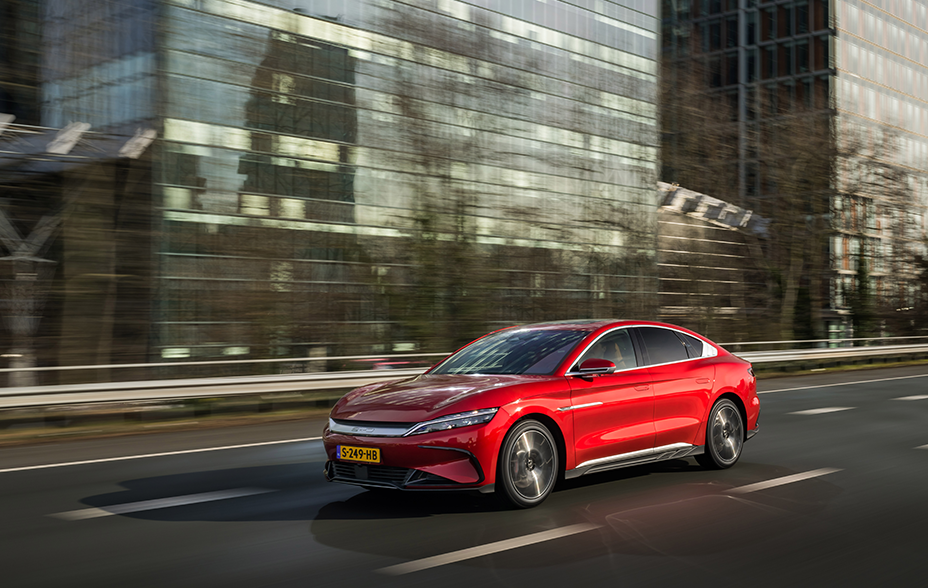
© BYD
Investors should consider the investment objectives, risks, charges and expenses carefully before investing. This information and other information about the Funds can be found in the prospectus and summary prospectus. For a prospectus and summary prospectus, please visit our website at bailliegifford.com/usmutualfunds Please carefully read the Fund's prospectus and related documents before investing. Securities are offered through Baillie Gifford Funds Services LLC, an affiliate of Baillie Gifford Overseas Ltd and a member of FINRA.
Times have changed significantly since Elon Musk belittled the design of a BYD car in 2011. China is now the largest car exporter in the world. BYD makes more electric cars than any other company. CATL is the world’s largest electric vehicle (EV) battery manufacturer. In contrast to the US, where EV penetration is barely 10 per cent, China has already made the energy transition with over 50 per cent of the 25m vehicles sold in the world’s largest car market expected to be electric or hybrid this year. That scale has delivered an automotive ecosystem that is second to none. And while this has helped global companies, with Tesla making more than half its cars in China, it has also supported the rise of a critically important, and increasingly world-leading, domestic industry.
Focusing solely on the volume of car production is missing the point. It isn’t the quantity, but the quality of cars produced in China, that is starting to turn heads.
China has an industrial policy that, by subsidising producers and flattening the supply curve, has spurred innovation, increased output and (if we’re honest) asked questions of industry profitability. But, in contrast to the popular perception in the West that balancing company profits with economic and societal developments is value destructive, it has turned China into an automotive powerhouse. Value is accruing to consumers as lower prices, higher quality and/or more innovative products and services. More broadly, switching to electric vehicles is also helping wean China from oil imports, lowering pollution levels, providing jobs for millions of new STEM graduates and creating ultra-competitive companies to compete in international markets.
Breakthroughs in battery technology, autonomous driving, smart connectivity, and software-defined vehicles are fuelling the industry’s innovation ecosystem, with companies rolling out features like advanced driver assistance systems and AI-powered vehicle platforms. The big question is where the value will accrue across the supply chain, particularly in fiercely competitive parts of the market.
Let’s take CATL, a company founded in 2011, whose products today power a third of the world’s electric vehicles (EVs) and a similar share of energy-storage systems for grids. Its scale and vertical integration have driven down costs and lowered prices to the point where competitors are struggling to keep up. And, at its Technology Day in April this year, it unveiled an ultra-fast-charging battery that can deliver 520km range in five minutes. It may be a company few have heard of but, having just completed the largest initial public offering in Hong Kong for a number of years, raising almost US$5bn, its international ambitions are clear.
But we can go one step further into the future: autonomous driving. A relatively new holding in portfolios is Pony.ai, a leading developer of autonomous driving technology, whose ecosystem of partners spans hardware, software, vehicle platforms, manufacturing, and cloud infrastructure. Pony.ai’s leadership in deploying robotaxis across China’s largest cities combined with China’s aggressive push toward mass adoption – projected to reach up to 1 million robotaxis by 2030 – signals a robust and transformative outlook for the country’s autonomous mobility sector.
And while not owned in portfolios, our search for where the value is likely to accrue across the automotive value chain has also led us to revisit the case for Didi: a ride hailing company shaking off geopolitical and regulatory challenges to become the world’s leading transportation platform. In China, Didi has already established itself as the dominant force in ride-hailing, capturing over 70 per cent of the domestic market and leveraging unique local conditions – such as densely populated cities and restrictions on private car ownership – to fuel its rapid growth. And now it is looking to Latin America, Africa and Europe.
We’re also looking at Zhejiang Sanhua, one of the world’s largest manufacturers of refrigeration control components and a global leader in automotive thermal management systems. The company is recognised for its technological leadership with robust research and development capabilities and a global footprint, including production bases in China, Mexico, Poland, Thailand, and the USA, and a customer list that includes Tesla, Mercedes, Hyundai, VW and Toyota. And if that’s not enough, it also makes the actuator modules for Tesla’s humanoid robot, Optimus – a high-value, high-volume component essential for robot function.
Together, these companies exemplify China’s leadership in the automotive revolution, driving the industry toward a future defined by intelligence, sustainability, and global competitiveness. No other country offers the scale advantages that China does. While we should expect volatility and a rapidly evolving competitive landscape – which can be brutal at times, hurt profitability, and raise questions about the longevity of competitive or technological advantages – one thing is clear when it comes to autos:
China is not just driving the market. It is steering us into the future.
Risk factors
The Funds are distributed by Baillie Gifford Funds Services LLC. Baillie Gifford Funds Services LLC is registered as a broker-dealer with the SEC, a member of FINRA and is an affiliate of Baillie Gifford Overseas Limited. All information is sourced from Baillie Gifford & Co unless otherwise stated.
As with all mutual funds, the value of an investment in the Fund could decline, so you could lose money. International investing involves special risks, which include changes in currency rates, foreign taxation and differences in auditing standards and securities regulations, political uncertainty and greater volatility. These risks are even greater when investing in emerging markets. Security prices in emerging markets can be significantly more volatile than in the more developed nations of the world, reflecting the greater uncertainties of investing in less established markets and economies. Currency risk includes the risk that the foreign currencies in which a Fund’s investments are traded, in which a Fund receives income, or in which a Fund has taken a position, will decline in value relative to the U.S. dollar. Hedging against a decline in the value of currency does not eliminate fluctuations in the prices of portfolio securities or prevent losses if the prices of such securities decline. In addition, hedging a foreign currency can have a negative effect on performance if the U.S. dollar declines in value relative to that currency, or if the currency hedging is otherwise ineffective.
For more information about these and other risks of an investment in the Funds, see "Principal Investment Risks" and "Additional Investment Strategies" in the prospectus. There can be no assurance that the Funds will achieve their investment objectives.
This communication was produced and approved in July 2025 and has not been updated subsequently. It represents views held at the time of writing and may not reflect current thinking.
This communication contains information on investments which does not constitute independent research. Accordingly, it is not subject to the protections afforded to independent research and Baillie Gifford and its staff may have dealt in the investments concerned.
As at July, 2025, Baillie Gifford held BYD, CATL, Didi and Pony.ai . A full list of holdings is available on request and is subject to change.