

Overview
From a New Zealand shed to challenging SpaceX: why Rocket Lab's remarkable journey captivates LTGG.
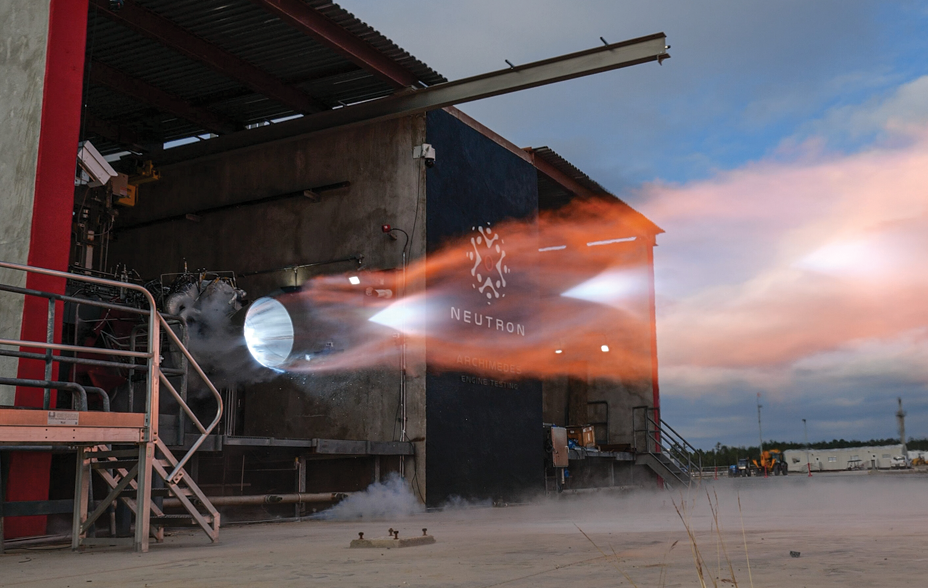
Image courtesy of Rocket Lab.
Investors should consider the investment objectives, risks, charges and expenses carefully before investing. This information and other information about the Funds can be found in the prospectus and summary prospectus. For a prospectus and summary prospectus, please visit our website at bailliegifford.com/usmutualfunds. Please carefully read the Fund's prospectus and related documents before investing. Securities are offered through Baillie Gifford Funds Services LLC, an affiliate of Baillie Gifford Overseas Ltd and a member of FINRA.
“Our Long Term Global Growth stock discussion on Rocket Lab made me realise that the conclusion from my research was too conservative and inconsistent with my instincts. Mea culpa. So, to make it official, I am banging the table on Rocket Lab, and I’d advocate us taking a holding for our clients.”
This was the first line from our updated research note on Rocket Lab, following our initial discussion of the company in May 2025.
It serves as a reminder that, for LTGG, there is little else as value-destructive as thinking small. Extreme long-term returns are only valuable if we’re willing to imagine them and invest in them with conviction for our clients. Failure to do so spells missed opportunities. But more on this later; first, let’s turn to rockets.
From appliances to aerospace
In the mid-1990s, in the workshop of a New Zealand appliance manufacturing company best known for its ovens, washing machines and dishwashers, something remarkable was underway. A young tool-and-die-maker apprentice who left high school at 16 used the workshop to experiment with rockets and propellants.
He became obsessed with them. Surrounded by tools and materials typically used for kitchenware, he taught himself to build a rocket bike, a rocket-attached scooter, and a jet pack. His name was Peter Beck.
After visiting NASA and several space companies in the US in the years that followed, Beck was disappointed to learn that many of the components he had been making from scratch in the workshop (and his garden shed on the weekends!) were of higher quality than those being made by the professionals. There was ample room to improve the status quo.
Yet without a university education, his dream of working in the US space industry never materialised. When he returned to New Zealand, he realised that his only route into the space industry would be to do what he did best: build it himself. Thus, he founded Rocket Lab in 2006.
Reaching orbit on a shoestring
Rocket Lab has since defied imagination. The fact that it was the first private company in the Southern Hemisphere to reach space is impressive in itself. It is even more remarkable when considering this happened on a shoestring budget amid the global financial crisis in 2009, in a country with no aerospace ecosystem, and situated thousands of miles away from traditional centres of rocket heritage.
Rocket Lab’s feats continued in the years that followed. Having raised capital in Silicon Valley in 2013, the company built its first small orbital-class rocket, ‘Electron’. It became the fastest commercial rocket to reach 50 successful launches and has made Rocket Lab the world’s second most active commercial launch company.
Nowadays, however, there is a raft of commercial entities looking to seize opportunities in the still-nascent space launch economy. What gives Rocket Lab an edge over its peers? And what about SpaceX, the elephant in the… low Earth orbit?
Trains v taxis
SpaceX’s phenomenal business has a very different model from Rocket Lab’s. Think of SpaceX as operating a train service. Available capacity is enormous, resulting in huge economies of scale for the company.
Customers, however, have to share that capacity with other customers. Moreover, a portion of the on-board capacity is consumed by SpaceX itself for its own Starlink satellites; hence, some customers have reportedly faced a wait time of around two years for a rideshare slot. Furthermore, SpaceX determines the launch timetable and orbit destinations.
In contrast, Rocket Lab provides an end-to-end service that is bespoke to its customers. It manufactures satellites/spacecraft tailored to their specific needs (all critical parts of which are built in-house). It then launches the satellites/spacecraft from its own launch pads (a rarity in the industry), giving customers control over the timing of launches. Rocket Lab then sends the satellites/spacecraft to whichever orbits have been specified and lets them monitor their performance with its in-house software.
Rocket Lab is more like a taxi than a train – less capacity, more expensive, but private, direct, and on your schedule. This business model was a savvy counter-position to SpaceX that purposefully avoided direct competition while still accumulating successful missions. Moreover, customers will likely want a number two for greater resilience in this market (after all, trains do sometimes face delays or breakdowns).
Reliability, heritage and vertical integration
Compared to its peers in the space industry beyond SpaceX, Rocket Lab has proven it can reliably deliver payloads into orbit time and time again. Not only is such heritage vanishingly rare in this industry, but it’s essential for Rocket Lab’s credibility, lowering insurance costs for customers and driving more demand.
While some other players, such as Jeff Bezos’ Blue Origin, may have very deep pockets, capital alone doesn’t guarantee success in this industry. In Beck’s words, “You can make bad decisions for a longer period of time if you have billions of dollars to put behind them. We’re proof that it doesn’t take billions. It just takes the right decisions at the right time.”
For instance, Rocket Lab’s early decision to embrace vertical integration has allowed it to innovate faster as the company is less likely to succumb to supply bottlenecks. This helps to explain the speed with which Electron went from concept to commercialisation in under three years, faster than any other rocket and at a lower cost than its peers.

Sir Peter Beck, CEO Rocket Lab. Image courtesy of Rocket Lab.
If the competitive edges stated above weren’t compelling enough in themselves, Rocket Lab continues to owe much of its success to the operational culture and depth of management expertise that Beck has imbued into the business for nearly two decades.
In our recent meeting with CFO Adam Spice, for example, it quickly became clear that he is comfortable talking about the big picture as well as the financials, doubtless helped by his background in semiconductors.
Meanwhile, Beck remains both the CEO and Chief Engineering Officer, spending 50 to 70 per cent of his time in a technical capacity. We suspect he is one of very few leaders of a multi-billion-dollar company commonly found on the production line with a wrench in hand.
Into the unknown
The challenge we faced in our stock discussion was how to think about a blue-sky upside scenario for a company where the sky isn’t the limit. Like the railroads and ships that underpinned the rise of global trade, large-scale space infrastructure may unlock entirely new markets.
While the size of these markets is estimated in the many trillions of dollars, it cannot be forecasted with any certainty at this early stage. If this industry is experiencing a sustained escalation in demand for communications and defence, as we suspect may be the case, then its growth is not simply nascent; it might be exponential. Such characteristics tend to defeat traditional financial models.
To make things more complicated, given the rapid rise in share price in recent times, it would be easy to infer that Rocket Lab’s valuation already looks optically expensive. There are grounds for yet more nervousness as Rocket Lab is poised to finally enter into (expensive) competition with the SpaceX behemoth – both in terms of capacity (Rocket Lab is expanding from the small rocket market to now develop a medium-sized rocket called ‘Neutron’) and business model (Beck aspires to deploy Rocket Lab’s own constellation infrastructure and run applications on top of it, akin to SpaceX’s Starlink).
Faced with analytical challenges such as those described above, we might easily have passed on Rocket Lab in our stock discussion. However, the obligatory optimism that characterises the first half of all LTGG stock discussions instead led us to enhance, not erode, our confidence in Rocket Lab’s potential upside.
Charting a bold trajectory
In summary, we developed a suitably high conviction scenario whereby Rocket Lab doubles revenues from its launch business alone, thanks to increasing the number of launches per year and pricing power.
And yet the lion’s share (about 70 per cent) of Rocket Lab’s revenue comes from ‘space systems’ (i.e. the design, manufacture and operation of satellites/spacecraft for its customers), which we expect will continue to grow rapaciously from here as demand accelerates.
Assuming the Neutron begins commercial operations in 2026 as planned, and even factoring in potential delays, we believe Rocket Lab should be on a trajectory for break-even soon after. The upshot could be $4bn of annual revenues by 2030 from launch and space systems alone, without having to ascribe much, if any, value to the longer-term vision for space applications.
Of course, we may be wrong. Rockets may fail, demand might disappoint, moats might erode, and so on. But there is more than enough in this business to fuel our conviction in our blue-sky thesis. We have therefore done what we have always sought to do in LTGG over the past two decades: optimise for optimism.
The Baillie Gifford Long Term Global Growth Fund
(Share Class K) as of June 30, 2025
| Gross Expense Ratio | 0.70% |
| Net Expense Ratio | 0.70% |
Annualised total return as of June 30, 2025 (%)
| 1 year | 3 years | 5 years | 10 years | |
|
The Baillie Gifford Long Term Global Growth Fund |
26.08 | 23.50 | 9.27 | 15.94 |
|
MSCI ACWI Index |
16.69 | 17.89 | 14.17 | 10.54 |
Source: Bank of New York Mellon and relevant underlying index provider(s). Net of fees, US dollars.
The performance data quoted represents past performance and is no guarantee of future results. Investment return and principal value of an investment will fluctuate so that an investor’s shares, when redeemed, may be worth more or less than their original cost. Current performance may be lower or higher than the performance data quoted. For the most recent month-end performance please visit our website at www.bailliegifford.com/funds/baillie-gifford-long-term-global-growth-fund/.
Returns are based on the K share class from 28 April 2017. Prior to that date returns are calculated based on the oldest share class of the Fund adjusted to reflect the K share class fees where these fees are higher.
The Baillie Gifford fund’s performance shown assumes the reinvestment of dividend and capital gain distributions and is net of management fees and expenses. Returns for periods less than one year are not annualised. From time to time, certain fees and/or expenses have been voluntarily or contractually waived or reimbursed, which has resulted in higher returns. Without these waivers or reimbursements, the returns would have been lower. Voluntary waivers or reimbursements may be applied or discontinued at any time without notice. Only the Board of Trustees may modify or terminate contractual fee waivers or expense reimbursements. Fees and expenses apply to a continued investment in the funds. All fees are described in each fund’s current prospectus.
Expense Ratios: All mutual funds have expense ratios which represent what shareholders pay for operating expenses and management fees. Expense ratios are expressed as an annualized percentage of a fund’s average net assets paid out in expenses. Expense ratio information is as of the fund’s current prospectus, as revised and supplemented from time to time.
The MSCI All Country World Index is a free float-adjusted market capitalization weighted index that is designed to measure equity market performance in the global developed and emerging markets, excluding the United States. This unmanaged index does not reflect fees and expenses and is not available for direct investment.
Legal Notices
Source: MSCI. MSCI makes no express or implied warranties or representations and shall have no liability whatsoever with respect to any MSCI data contained herein. The MSCI data may not be further redistributed or used as a basis for other indexes or any securities or financial products. This report is not approved, endorsed, reviewed or produced by MSCI. None of the MSCI data is intended to constitute investment advice or a recommendation to make (or refrain from making) any kind of investment decision and may not be relied on as such.
Risk Factors
This content contains information on investments which does not constitute independent research. Accordingly, it is not subject to the protections afforded to independent research and Baillie Gifford and its staff may have dealt in the investments concerned.
As with all mutual funds, the value of an investment in the fund could decline, so you could lose money.
The most significant risks of an investment in the Baillie Gifford Long Term Global Growth Fund are: Investment Style Risk, Growth Stock Risk, Long-Term Investment Strategy Risk, Non-Diversification Risk and Non-U.S. Investment Risk. The Fund is managed on a bottom up basis and stock selection is likely to be the main driver of investment returns. Returns are unlikely to track the movements of the benchmark. The prices of growth stocks can be based largely on expectations of future earnings and can decline significantly in reaction to negative news. The Fund is managed on a long-term outlook, meaning that the Fund managers look for investments that they think will make returns over a number of years, rather than over shorter time periods. The Fund may have a smaller number of holdings with larger positions in each relative to other mutual funds. Non-U.S. securities are subject to additional risks, including less liquidity, increased volatility, less transparency, withholding or other taxes and increased vulnerability to adverse changes in local and global economic conditions. There can be less regulation and possible fluctuation in value due to adverse political conditions. Other Fund risks include: Asia Risk, China Risk, Conflicts of Interest Risk, Currency Risk, Developed Markets Risk, Emerging Markets Risk, Equity Securities Risk, Environmental, Social and Governance Risk, Focused Investment Risk, Government and Regulatory Risk, Information Technology Risk, Initial Public Offering Risk, Large-Capitalization Securities Risk, Liquidity Risk, Market Disruption and Geopolitical Risk, Market Risk, Service Provider Risk, Settlement Risk, Small-and Medium-Capitalization Securities Risk, and Valuation Risk.
For more information about these and other risks of an investment in the fund, see “Principal Investment Risks” and “Additional Investment Strategies” in the prospectus. The Baillie Gifford Long Term Global Growth Fund seeks to provide long-term capital appreciation. There can be no assurance, however, that the fund will achieve its investment objective.
The fund is distributed by Baillie Gifford Funds Services LLC. Baillie Gifford Funds Services LLC is registered as a broker-dealer with the SEC, a member of FINRA and is an affiliate of Baillie Gifford Overseas Limited.
All information is sourced from Baillie Gifford & Co and is current unless otherwise stated.
The images used in this article are for illustrative purposes only.
Top Ten Holdings
|
Holdings |
Fund % |
|
1. Amazon |
6.10 |
|
2. Netflix |
5.32 |
|
3. NVIDIA |
5.25 |
|
4. Cloudflare |
4.84 |
|
5. Spotify |
4.67 |
|
6. Sea Limited |
3.88 |
|
7. Coupang |
3.61 |
|
8. MercadoLibre |
3.45 |
|
9. Tencent |
3.29 |
|
10. Adyen |
3.22 |
As at June 30, 2025
168521 10057188