


Investors should carefully consider the objectives, risks, charges and expenses of the Fund before investing. This information and other information about the Fund can be found in the prospectus and summary prospectus. For a prospectus or summary prospectus please visit our website at https://usmutualfund.bailliegifford.com. Please carefully read the Fund’s prospectus and related documents before investing. Securities are offered through Baillie Gifford Funds Services LLC, an affiliate of Baillie Gifford Overseas Limited and a member of FINRA.
There are many paths to outperformance in stock markets. We happen to be growth investors, but ‘growth’ is a broad church – it isn’t all about flying cars, revolutionary biotech and artificial intelligence. We have found over the years that some companies take rather a different path to creating value, namely by doing acquisitions. Some of International Alpha’s most successful long-term holdings have been acquisitive companies, like Canada’s Constellation Software which has returned around 1,100 per cent since our purchase in February 2015, or freight forwarder DSV, which has returned about 1,900 per cent since we initially bought shares in May 2009. They make it look easy, but the reality is that doing many acquisitions well over long periods is difficult. Companies that have defied the odds tell us something valuable about what is needed for serial acquirers (and their shareholders) to thrive.
I’ve seen more money lost to overenthusiastic acquisitions than to competition, regulation, and inflation combined. It’s human nature to overreach.
Why bother?
The prevailing wisdom seems to be that most acquisitions fail. This is understandable: spectacular failures receive far more attention than successes. Professor Robert Bruner’s amusingly titled Deals from Hell, a compendium of notoriously unsuccessful acquisitions, embodies the general feeling that acquisitions usually end in misery. He profiles such disasters as the 1994 acquisition of Snapple by Quaker Oats and the notorious merger of AOL and Time Warner in early 2001 (‘the worst deal in history’). Had he been writing the book today, Bruner might have included failed pharmaceutical giant Valeant’s aggressive roll-up strategy of the 2010s or Microsoft’s $7.2bn acquisition of Nokia’s mobile phone business in 2014 (which was almost entirely written off two years later). Interestingly, Prof Bruner has yet to publish Deals from Heaven.
Bruner isn’t the only one to warn of the dangers of acquisitions. In 1999 a KPMG study concluded that 83 per cent of mergers studied were unsuccessful in creating shareholder value. In 2011 Clayton Christensen – famous for The Innovator’s Dilemma – co-authored a piece in the Harvard Business Review suggesting that the typical mergers and acquisitions (M&A) failure rate may be in the range of 70-90 per cent. A 2016 meta-analysis of more than 55,000 transactions between 1950 and 2010, concluded that M&A transactions ‘predominantly do not have a positive impact on the success of a company.’

Acquisitions fail for many reasons. Cultural mismatch is a common one – combining two companies with little in common is a bit like organising a shotgun wedding between strangers who don’t speak the same language. It isn’t likely to end well. The litany of other reasons includes poor due diligence, lack of strategic sense, buyers paying too much or taking on too much debt, ego, integration complexities, talent flight and leadership turnover. I’m sure I’ve missed at least another ten.
But M&A isn’t all bad. Some companies actually seem to have made a good job of it, repeatedly. In addition to Constellation Software and DSV, Berkshire Hathaway and Danaher both come to mind. I call these companies ‘serious’ rather than ‘serial’ acquirers – the difference being that they have all built highly effective cultures and processes that enable the repetition of success from deal to deal, significantly reducing the risk of failure. These are companies that do acquisitions as a matter of course and use them to meaningfully boost their earnings power over time.
Nibblers and gobblers
As Leo Tolstoy wrote in Anna Karenina, ‘all happy families are alike; each unhappy family is unhappy in its own way.’ Much the same could be said about acquisitive companies. Successful ones tend to be more similar than unsuccessful ones, while failures tend to unravel in their own uniquely chaotic ways. I occasionally divide the successful serial acquirers into two crude typologies. ‘Nibblers’ make frequent, small acquisitions, while ‘gobblers’ do occasional large, transformative acquisitions that are rigorously digested. Nibblers might be likened to grazing herbivores, and gobblers perhaps to feasting pythons!
Our archetypal nibbler is Constellation Software. Founded by CEO Mark Leonard in 1995, Constellation operates in the large and highly fragmented vertical market software (VMS) sector. This is niche, tailored software designed for use in specific applications, like the management of golf courses, cemeteries, or lumber yards. This is mission-critical software, so customers are sticky and not very price-sensitive. Over three decades, Constellation has acquired more than 800 companies across dozens of markets. Revenues over the last decade alone have compounded at 20 per cent, mainly driven by acquisitions. The strategy has been rewarded handsomely: the price has risen over 26,000 per cent since the IPO in 2006! How has Constellation achieved this?
- First, the VMS market is huge and highly fragmented. Marc Andreessen wrote in 2011 that ‘software is eating the world’; Constellation’s banquet is far from over. In 2017 the company communicated that it had some 40,000 companies in its acquisition database, which has probably grown a lot since. The typical acquisition size is $2-4m, and it turns out there are an awful lot of these small software companies out there.
- Second, Leonard saw little competition for these smaller companies. Traditional venture capital firms seemed uninterested in them, so the competitive landscape has proven to be relatively benign.
- Third, the business model generates substantial amounts of free cash flow. Constellation has thus been able to continually reinvest in acquisitions without reliance on debt.
- Fourth, Constellation has been highly disciplined. It has strict return hurdles for acquisitions which are well above its cost of capital. Good investing is as much about what you’re not willing to do as what you are.
- Fifth, Constellation promises to be a ‘forever owner’. Where private equity typically makes time-limited investments (typical funds last 5-10 years), Constellation has no such limitations, making it an appealing buyer for entrepreneurs and founders to sell to. Why sell your life’s work to someone who only wants to own it temporarily?
- Finally, Constellation has a highly decentralised organisational structure. They believe in ‘delegation to the point of abdication’, pushing responsibility for acquisitions down through the organisation. This has enabled continued high growth. 100 acquisitions were completed last year alone – that’s hard to achieve if the head office has to look at them all.
© Shutterstock / Vytautas Kielaitis
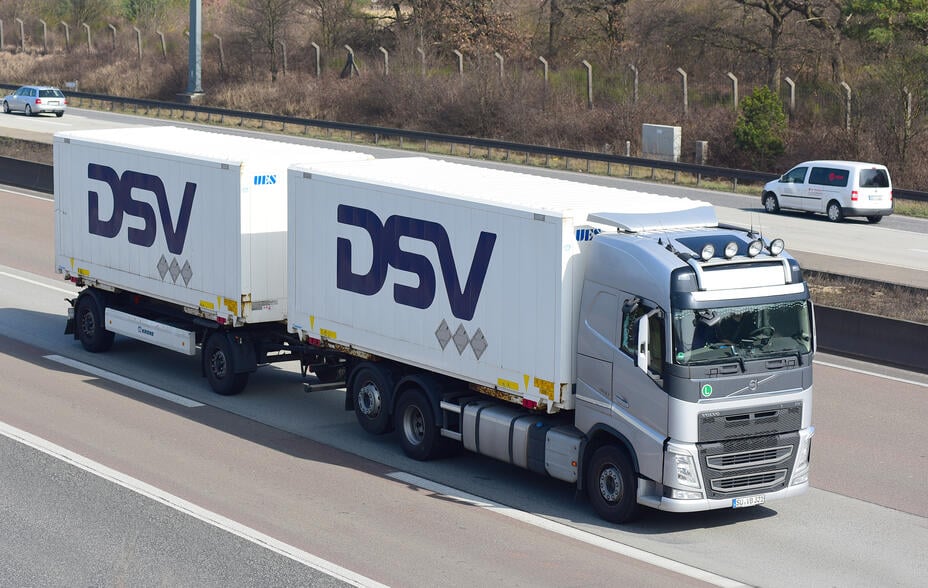
By contrast, Danish freight forwarder DSV is a gobbler. Originally formed in 1976 in a merger between three hauliers, it is a freight middleman, arranging the movement of goods for customers across modalities (air, sea and road) and borders, without owning the transportation assets. It has much in common with Constellation. Not only is it capital-light and cash-generative with minimal capital expenditure requirements, but it too operates in a highly fragmented market despite having just completed the largest acquisition in its history and becoming the largest freight forwarder globally in the process.
DSV’s approach to acquisitions is, however, markedly different. Rather than buying lots of small companies frequently, it gobbles up much larger ones periodically. Each acquisition therefore tends to have a transformational impact on the business, driving significant growth and often adding new capabilities to the organisation. The recent acquisition of DB Schenker, for example, has practically doubled the size of the company. While DSV is just as disciplined as Constellation and has delivered an impressive 20 per cent compound growth in earnings over the decade to 2024, its acquisition playbook looks quite different:
- First, DSV takes a ruthless approach to integration and centralisation. Acquired companies are switched over onto its own IT systems, powered by best-of-breed solution CargoWise, enabling better visibility and control across the group. Other back-office functions are consolidated too, and duplication removed, but this is all done without removing the ability of local managers to retain control over their operations.
- Second, DSV tends to imprint its own unique culture, characterised by radical transparency, high performance and strong financial discipline, on all companies it acquires. This isn’t for everyone, and they are quite happy to see some acquired personnel leave if they’re unwilling to subscribe to DSV’s way of doing things.
- Third, they impose their ruthlessness on customers too, focusing on business that fits well with the systems and capabilities they have, and meets their financial expectations.
- Fourth, they actively use their newly gained scale to extract better terms from the carriers they buy capacity from which helps lower their cost to serve and ultimately win more market share organically.
- Finally, as these acquisitions are large, DSV uses a mix of debt and equity to finance acquisitions but quickly reverses the effect of this by paying down debt fast and buying back shares to reduce shareholder dilution.
The next generation?
Admittedly Constellation and DSV represent two extremes. Several International Alpha holdings have added value by doing acquisitions over the years. Swedish compressor business Atlas Copco, for example, has done some nibbling and some gobbling. In 2014 it bought Edwards, a leader in vacuum products essential in semiconductor manufacturing, for nearly $2bn, adding a new division to a company with a penchant for reinvention over its approximately 150-year history. But it has also done lots of smaller acquisitions too, so-called ‘bolt-ons’ to complement its existing business in compressors and other industrial products. Last year alone it bought 33 companies. Atlas Copco has been one of the highest returning stocks since the inception of International Alpha.
IMCD, for example, is a Dutch chemicals distributor operating in the global specialty chemicals business. It has completed nearly 30 acquisitions in the past five years, but the market remains hugely fragmented. The rationale for acquisitions is compelling – the acquirer gains access to new markets, new chemicals suppliers, and new customers, and can remove duplicate costs. Asset utilisation can also rise as more volumes can be consolidated into existing distribution channels and under-utilised ones shut down. We’re also invested in Lumine and Topicus, two spin-offs from Constellation Software which focus respectively on acquiring VMS companies in communications/media and Europe, and Canadian trucking business TFI which acquires small trucking outfits across North America.
Our experiences with these companies have not only helped us identify lookalikes, but also the factors that must be monitored to judge success. While quantitative outputs matter, it is the qualitative inputs that determine them. Persistently high returns on capital – which we look for in all our companies – partly reflect the nature of the underlying business, but also the quality of the company’s culture. What a company decides to do – like the sorts of companies it buys or the price it pays for them – determines the quantitative outputs, so for us it is vital to assess the softer factors. As Peter Drucker allegedly said, culture eats strategy for breakfast. If anything, it is an appreciation of these incredible compounders’ cultures that have kept us invested.
The dangers of indigestion
In July 2018, Valeant changed its name to Bausch Health in a last-ditch attempt to distance itself from a period of intense negative publicity. The name was borrowed from Bausch & Lomb, a well-known eye health brand acquired by Valeant in 2013 under the disastrous 8-year tenure of CEO Mike Pearson, who spent more than $30bn gobbling up more than 130 companies. There was much wrong with his aggressive approach, from the slashing of Valeant’s research and development (R&D) budget to naked price gouging, but the addiction to acquisitions was undoubtedly a significant factor in its demise. For a time, Pearson’s actions were applauded by the market. The share price rose 26x between February 2008 when he took over as CEO and peak hype in August 2015. But the fall was spectacular, the shares falling nearly 90 per cent by the time he left. Valeant’s extreme focus on short-term performance and obsession with the share price were deeply unhelpful cultural inputs that ultimately led to its unravelling.
Acquisitions are not inherently good or bad – they serve as amplifiers. In good hands they accelerate growth sustainably, but in the wrong hands they magnify poor judgment. As Buffett famously pointed out, it is only when the tide goes out that you learn who’s been swimming naked. The safe pair of hands looks remarkably similar across successful serial acquirers: sound strategy, cultural alignment, the right incentives, a long-term focus, and perhaps most importantly the discipline to avoid overeating. Much as Valeant has taught us a great deal about what doesn’t work, Constellation Software and DSV have taught us a great deal about what does.
Risk factors
This content contains information on investments which does not constitute independent research. Accordingly, it is not subject to the protections afforded to independent research and Baillie Gifford and its staff may have dealt in the investments concerned.
As with all mutual funds, the value of an investment in the fund could decline, so you could lose money.
The most significant risks of an investment in the Baillie Gifford International Alpha Fund are Investment Style Risk, Growth Stock Risk, Long-Term Investment Strategy Risk and Non-U.S. Investment Risk. The Fund is managed on a bottom up basis and stock selection is likely to be the main driver of investment returns. Returns are unlikely to track the movements of the benchmark. The prices of growth stocks can be based largely on expectations of future earnings and can decline significantly in reaction to negative news. The Fund is managed on a long-term outlook, meaning that the Fund managers look for investments that they think will make returns over a number of years, rather than over shorter time periods. Non-U.S. securities are subject to additional risks, including less liquidity, increased volatility, less transparency, withholding or other taxes and increased vulnerability to adverse changes in local and global economic conditions. There can be less regulation and possible fluctuation in value due to adverse political conditions. Other Fund risks include: Asia Risk, China Risk, Conflicts of Interest Risk, Currency Risk, Developed Markets Risk, Emerging Markets Risk, Equity Securities Risk, Environmental, Social and Governance Risk, Focused Investment Risk, Geographic Focus Risk, Government and Regulatory Risk, Information Technology Risk, Initial Public Offering Risk, Large-Capitialization Securities Risk, Liquidity Risk, Market Disruption and Geopolitical Risk, Market Risk, Service Provider Risk, Settlement Risk, Small-and Medium-Capitalization Securities Risk and Valuation Risk.
For more information about these and other risks of an investment in the fund, see “Additional Information about Principal Strategies and Risks” in the prospectus. The Baillie Gifford International Alpha Fund seeks capital appreciation. There can be no assurance, however, that the fund will achieve its investment objective.
The fund is distributed by Baillie Gifford Funds Services LLC. Baillie Gifford Funds Services LLC is registered as a broker-dealer with the SEC, a member of FINRA and is an affiliate of Baillie Gifford Overseas Limited.
All information is sourced from Baillie Gifford & Co and is current unless otherwise stated.
The images used in this article are for illustrative purposes only.
(Share Class K) as of 31 July, 2025
| Gross Expense Ratio | 0.59% |
| Net Expense Ratio | 0.59% |
Annualised total return as of 30 June, 2025 (%)
| 1 Year | 3 Years | 5 Years | 10 Years | |
| The Baillie Gifford International Alpha Fund | 19.55 | 14.66 | 5.92 | 6.74 |
| MSCI All Country World ex US Index | 18.37 | 14.58 | 10.67 | 6.63 |
Source: Baillie Gifford & Co, Bank of New York Mellon, MSCI. Share Class launch date: April 28, 2017. Net of fees, US dollars.
The performance data quoted represents past performance and is no guarantee of future results. Investment return and principal value of an investment will fluctuate so that an investor’s shares, when redeemed, may be worth more or less than their original cost. Current performance may be lower or higher than the performance data quoted. For the most recent month-end performance please visit our website at www.bailliegifford.com/usmutualfund/internationalalphafund
Returns are based on the K share class from 28 April 2017. Prior to that date returns are calculated based on the oldest share class of the Fund adjusted to reflect the K share class fees where these fees are higher.
The Baillie Gifford fund’s performance shown assumes the reinvestment of dividend and capital gain distributions and is net of management fees and expenses. Returns for periods less than one year are not annualised. From time to time, certain fees and/or expenses have been voluntarily or contractually waived or reimbursed, which has resulted in higher returns. Without these waivers or reimbursements, the returns would have been lower. Voluntary waivers or reimbursements may be applied or discontinued at any time without notice. Only the Board of Trustees may modify or terminate contractual fee waivers or expense reimbursements. Fees and expenses apply to a continued investment in the funds. All fees are described in each fund’s current prospectus.
Expense Ratios: All mutual funds have expense ratios which represent what shareholders pay for operating expenses and management fees. Expense ratios are expressed as an annualized percentage of a fund’s average net assets paid out in expenses. Expense ratio information is as of the fund’s current prospectus, as revised and supplemented from time to time.
The MSCI All Country World ex US Index is a free float-adjusted market capitalization weighted index that is designed to measure equity market performance in the global developed and emerging markets, excluding the United States. This unmanaged index does not reflect fees and expenses and is not available for direct investment. The Fund is more concentrated than the MSCI ACWI ex US Index.
Top Ten Holdings
| Holdings | Fund % |
|---|---|
| 1. TSMC | 5.09 |
| 2. Tencent | 3.59 |
| 3. MercadoLibre | 3.56 |
| 4. Ryanair | 2.75 |
| 5. Deutsche Boerse | 2.38 |
| 6. Scout24 | 2.35 |
| 7. SAP | 2.33 |
| 8. Samsung Electronics | 2.31 |
| 9. CRH | 2.27 |
| 10. DSV | 2.23 |
Data as of 31 July 2025.
It should not be assumed that recommendations/transactions made in the future will be profitable or will equal performance of the securities mentioned. A full list of holdings is available on request. The composition of the fund's holdings is subject to change. Percentages are based on securities at market value.
Legal Notices
Source: MSCI. MSCI makes no express or implied warranties or representations and shall have no liability whatsoever with respect to any MSCI data contained herein. The MSCI data may not be further redistributed or used as a basis for other indexes or any securities or financial products. This report is not approved, endorsed, reviewed or produced by MSCI. None of the MSCI data is intended to constitute investment advice or a recommendation to make (or refrain from making) any kind of investment decision and may not be relied on as such.
167709 10057051