

Key points
- Asia's young workforce and expanding middle class are driving unprecedented consumer demand
- AIA and MakeMyTrip demonstrate how companies tap into Asia's massive consumer markets
- Patient capital allocation becomes essential as Asia reshapes global competition

Investors should consider the investment objectives, risks, charges and expenses carefully before investing. This information and other information about the Funds can be found in the prospectus and summary prospectus. For a prospectus and summary prospectus, please visit our website at bailliegifford.com/usmutualfunds Please carefully read the Fund's prospectus and related documents before investing. Securities are offered through Baillie Gifford Funds Services LLC, an affiliate of Baillie Gifford Overseas Ltd and a member of FINRA.
For much of recorded history, Asia has been the world’s economic centre of gravity. Only with the Industrial Revolution in the 19th century did Western nations briefly dominate manufacturing and technology. By the mid-2010s, this dominance had waned. The United Nations Industrial Development Organisation confirmed that global value-added production had shifted back East, with Asia once again accounting for the majority of global manufacturing. By the end of 2025, the region is expected to produce nearly 60 per cent of the world’s output.
This perspective reframes the postwar era of Western leadership as an anomaly rather than the norm. For long-term investors, the implications are significant. Asia is not only reasserting its position as a manufacturing powerhouse but is also shaping the future of technology, consumption, and financial services. The Asian Century is no longer a slogan; it is a structural reality.
Demographic and technological drivers
Two forces stand out. First, demographics: Asia is home to about 60 per cent of the world’s population, with a young workforce and a rapidly expanding middle class. South and Southeast Asia are witnessing strong income growth and urbanisation, driving long-term demand across financial services, consumer goods, healthcare, and leisure. While ageing populations in Japan and China present challenges, the region’s demographic weight is unmatched.
Second, Asia has shifted from low-cost manufacturing to innovation leadership. The region now leads in semiconductors, renewable energy, electric vehicles, ecommerce, robotics, and transport infrastructure. Firms such as TSMC exemplify this transformation, pushing technological frontiers and reshaping global supply chains.
The companies defining a rising Asia
The scale of Asia’s consumer base has been transformative for companies worldwide. Western firms that recognised these dynamics early have generated substantial growth by adapting to local preferences. Cosmetics leader L’Oréal, for instance, established operations in China in the late 1990s and today derives about a fifth of its revenues from the market. Its success rests on understanding local preferences, from prestige brands like Lancôme and YSL Beauty to tailored offerings in India designed for monsoon conditions. By balancing mass-market and luxury positioning, L’Oréal has built resilience and is well placed to capture long-term regional demand.
Financial services show another side of Asia’s transformation. Hong Kong-based AIA, the region’s largest independent listed life insurer, has built its business around closing the vast protection gap that accompanies rising incomes. Active in 18 markets, AIA combines a well-trained agency force with digital tools to reach millions of households. As families focus on healthcare costs and financial security, AIA stands to benefit from rising middle-class demand, particularly in China where new branch licenses are steadily expanding.
Alongside global firms, equally important are Asia’s homegrown leaders, many of which have leapfrogged traditional industries. India’s MakeMyTrip is a clear example. With a population of more than 1.4 billion, India is becoming the world’s largest emerging travel market. MakeMyTrip commands about half of the country’s online bookings and dominates bus ticketing through its redBus platform. By serving travellers across the socioeconomic spectrum and expanding into Southeast Asia and South America, it shows how Asian firms can build scale at home.
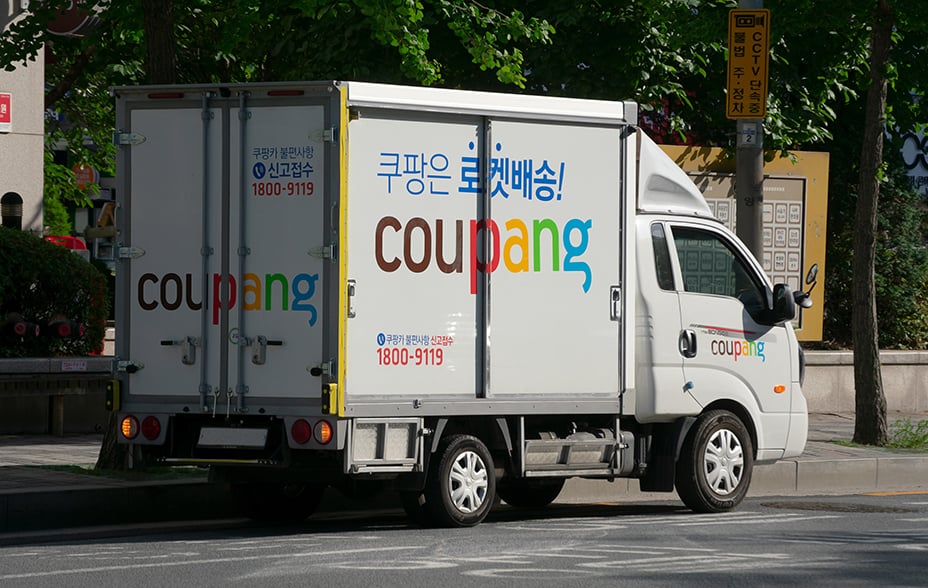
South Korea’s Coupang illustrates a similar theme in ecommerce. Commonly described as the “Amazon of South Korea,” it has built a vertically integrated platform and logistics network capable of same-day and dawn delivery. In one of the world’s most advanced online retail markets, Coupang has grown its share to approximately 30 per cent, with ambitions to exceed 40 per cent. With improving profitability and adjacent services in grocery, food delivery, and digital media reinforcing customer loyalty, Coupang is consolidating its status as a leading player in Asian e-commerce.
Risks, reality, and profound opportunities
The region’s long-term growth story is clear, but risks remain. Geopolitical tensions, especially between China and the United States, are a defining feature of the global order. Trade frictions, regulatory unpredictability, and environmental pressures add to the complexity. Yet by 2050, three of the world’s five largest economies are expected to be Asian, with Indonesia joining China and India. For companies, Asia is no longer optional – it is the core arena for global competition.
For international equity investors, the Asian Century highlights the need to free ourselves from Western-centric assumptions. At Baillie Gifford, our investment philosophy is built around identifying exceptional businesses and holding them for the long term. Whether Asian domestic champions or multinationals generating an increasing share of revenues from the region, our approach emphasises patient ownership and a willingness to embrace uncertainty – qualities essential when allocating capital to a region defined by both volatility and outsized potential driving structural change.
Risk factors
The Funds are distributed by Baillie Gifford Funds Services LLC. Baillie Gifford Funds Services LLC is registered as a broker-dealer with the SEC, a member of FINRA and is an affiliate of Baillie Gifford Overseas Limited. All information is sourced from Baillie Gifford & Co unless otherwise stated.
As with all mutual funds, the value of an investment in the Fund could decline, so you could lose money. International investing involves special risks, which include changes in currency rates, foreign taxation and differences in auditing standards and securities regulations, political uncertainty and greater volatility. These risks are even greater when investing in emerging markets. Security prices in emerging markets can be significantly more volatile than in the more developed nations of the world, reflecting the greater uncertainties of investing in less established markets and economies. Currency risk includes the risk that the foreign currencies in which a Fund’s investments are traded, in which a Fund receives income, or in which a Fund has taken a position, will decline in value relative to the U.S. dollar. Hedging against a decline in the value of currency does not eliminate fluctuations in the prices of portfolio securities or prevent losses if the prices of such securities decline. In addition, hedging a foreign currency can have a negative effect on performance if the U.S. dollar declines in value relative to that currency, or if the currency hedging is otherwise ineffective.
For more information about these and other risks of an investment in the Funds, see "Principal Investment Risks" and "Additional Investment Strategies" in the prospectus. There can be no assurance that the Funds will achieve their investment objectives.
This communication was produced and approved in October 2025 and has not been updated subsequently. It represents views held at the time of writing and may not reflect current thinking.
This communication contains information on investments which does not constitute independent research. Accordingly, it is not subject to the protections afforded to independent research and Baillie Gifford and its staff may have dealt in the investments concerned.
As at October 2025, Baillie Gifford held TSMC, L’Oréal, AIA, MakeMyTrip and Coupang. A full list of holdings is available on request and is subject to change.
177404 10058332