
Key points
- Europe harbours a diversified range of innovative growth companies with the potential to be the continent’s next generation of winners
- They include drug developer Sandoz, Polish retailer Dino Polska and semiconductor equipment maker ASM International
- While markets have underperformed recently, companies with strong differentiation and high growth potential offer long-term opportunities to patient investors
WATCH: Investment manager Christopher Howarth (right) explores Europe’s next generation of winning companies in his Disruption Week briefing
Your capital is at risk.
To the discerning stock picker, Europe offers richer pickings from a more diverse range of disruptive companies than might be apparent at first glance.
Yes, there are well-documented downbeat factors: heavy regulation, a war on the doorstep, a weak dollar and 15 per cent tariffs from the US. All help to crowd out the perception of the Continent as a home of world-beating innovation.
But Baillie Gifford investment manager Christopher Howarth spends his time looking through the negatives to find the future growth stars others miss.
“Europe may not sound as exciting as the tech-dominated US, but it has clusters of excellence. As an active manager, we seek out exceptional companies across sectors and give our clients exposure to them.”
Whether it’s looking at healthcare, small-town supermarkets or semiconductors, Howarth describes his task as identifying companies that have differentiated themselves from market peers. And the fact that the long-clouded macro picture is improving doesn’t hurt.
“It does now seem that Europe is starting to turn the corner. Germany recently amended its debt brake and established a €500bn extra-budgetary fund to accelerate investment, a shift that may encourage other European companies to do the same. This creates the potential for a rebound both in terms of the fundamentals for European businesses, as well as, hopefully, in their valuations.”
Leaders in biotech
Europe’s strength in key sectors such as biotechnology has provided fertile ground for Howarth and colleagues. Switzerland’s Sandoz is one example of a world-leading company he picks. It’s a pioneer in ‘biosimilars’ – similar, though not identical, variations of existing biological medicines used to treat diseases, from cancer to age-related eye disorders. Unlike simple molecule generics, biosimilars are made using biological processes such as yeast fermentation rather than chemical synthesis.
Howarth says Sandoz’s complex history – merged into a conglomerate before having its independence restored – prevents the market from recognising its strengths in this fast-growing field of pharmacology.
Sandoz has a long history in ‘generics’, the lower-cost copycat therapies produced when chemically created drugs come off patent.
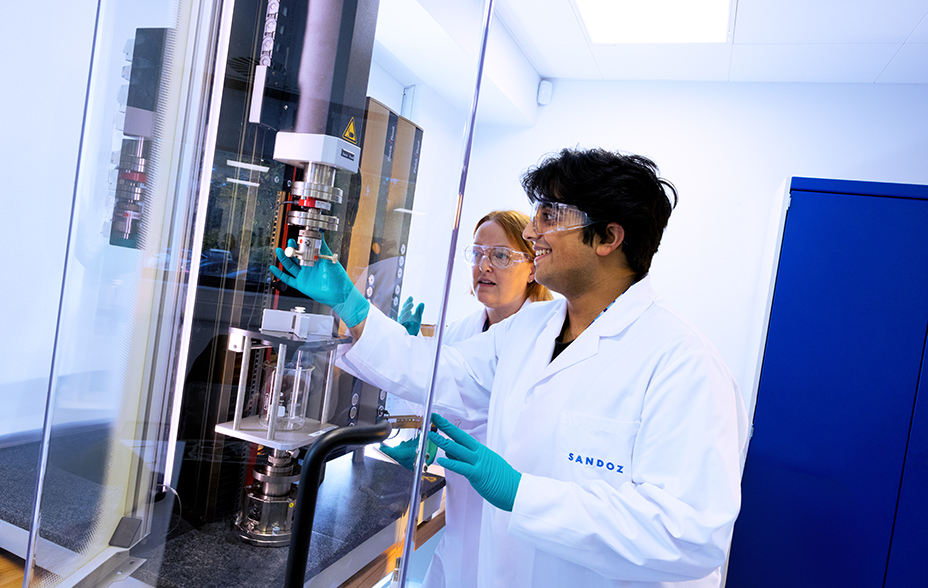
Sandoz initiated the biosimilar field with Omnitrope, a treatment for growth hormone disorders, in 2006. It is investing heavily to meet growing global demand.
© Sandoz / Geri Krischker
“Biosimilars are a lot harder to produce and more capital-intensive, and there are significant economies of scale to producing them,” Howarth says. “This is a relatively early technology. Biosimilars are not as well understood by the market as generics, and investing in them requires patience, which is often in short supply in the markets.”
Grass-roots grocery
Not all the best growth opportunities in Europe are at the cutting edge of science. Baillie Gifford makes a priority of meeting companies on their own turf, and Howarth recently returned from Poland, where, he jokes, he “felt like [he] visited every supermarket chain in the country”.
“We own one called Dino Polska, which isn’t even a household name in Poland, let alone the rest of Europe. The founder-run company operates only in small communities in Poland’s rural hinterlands. It’s opening a new store almost every single day, essentially replacing the large number of independent small grocers going out of business as their owners retire.
“One of Dino’s differentiators is that it operates a traditional, full-service meat counter and owns its meat processor Agro-Rydzyna. Most discount supermarkets in eastern Europe don’t offer that. They sell meat in plastic wrapping, which is not what rural customers want.”
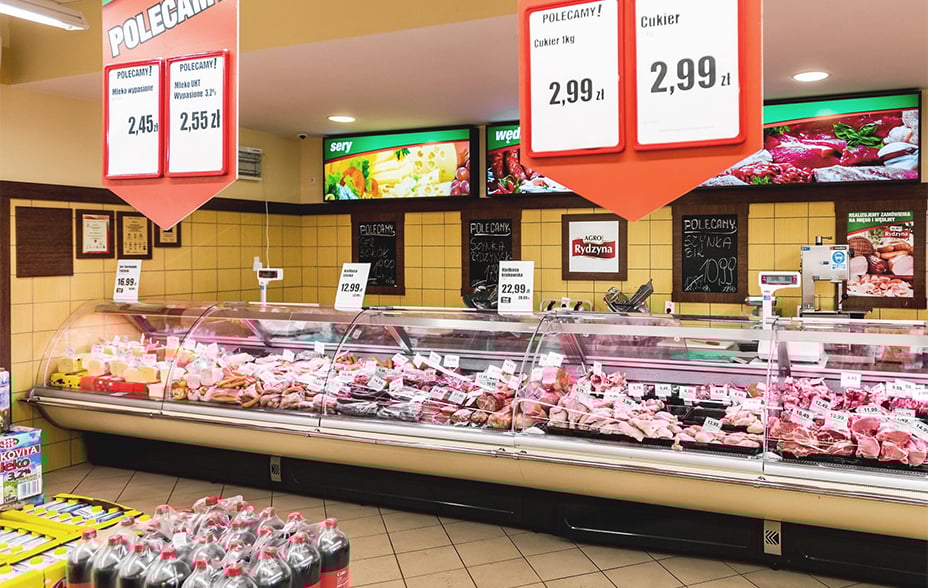
Dino Polska-affiliated Agro-Rydzyna supplies its stores with high-quality, locally-sourced, fresh pork, poultry and other meats.
© Dino
This simple factor helps the chain increase margins because data on levels of meat consumption helps reduce spoilage.
“Most of its stores are concentrated in the west of the country, where the company was founded. It’s not just that it has the east of Poland to expand into. Its growth rates in its most mature regions are still very healthy. That gives us a degree of conviction that Dino Polska can continue doing this for a very long time.”
From renters to owners
Another company with a highly involved founder that few in the UK have heard of is Hypoport. It operates EUROPACE, Germany’s largest home mortgage and property financing platform for transactions between banks and mortgage brokers.
"If you go to a mortgage broker in Germany and you want to buy a house, then there is a very good chance that your mortgage will be transacted over EUROPACE. It takes a small percentage of the fee that the mortgage broker charges, but from the bank, so the borrower doesn’t see any fee at all."
“Germany has one of the EU’s lowest homeownership rates, but that’s set to change because its rental supply is very constrained and buying a house is almost essential for families looking to upsize. But there’s also a significant growth from growing market share.”
Laying down layers
Europe also contains global leaders in what’s arguably the world’s most advanced technology: semiconductors. Howarth’s understanding of the shifting dynamics of the chip supply chain is bolstered by his team’s relationship with IMEC, a research and development facility in Leuven, Belgium that advises his team on how value is shifting.
That understanding bolsters his investment in ASM International, which is related to but distinct from the better-known chip equipment maker ASML.
Howarth is excited about ASM’s leadership in atomic layer deposition (ALD), a technology that enables ‘atom-thick’ layers of a substance to be deposited on semiconductor chips. The process takes place with a mind-bendingly microscopic degree of accuracy.
“ALD is essential in making the most advanced types of microchips,” he says. “And ASM has an effective monopoly in certain subsegments. It’s the market leader in ALD for logic chips – the brains of smartphones and datacentres – for example.

ASM International’s leadership in atomic layer deposition (ALD) enables it to manufacture increasingly complex and powerful computer processors
“We foresee that as chips get faster and artificial intelligence becomes more powerful, the number of ALD processes required will rise, which means increasing demand for ASM’s equipment.”
Turning tide
Howarth readily acknowledges that Europe’s returns, relative to the rest of the world, have disappointed over the past few years.
But he adds that this only adds to the potential upside now on offer.
“Growth investing in Europe is possibly the world’s most contrarian position at the moment. But of course, that’s also where the opportunity is.
What really carries stocks in the long run is long-run growth in earnings. And we believe that fast-growing disruptor companies will ultimately deliver the best returns for shareholders.”
Risk Factors
The views expressed should not be considered as advice or a recommendation to buy, sell or hold a particular investment. They reflect opinion and should not be taken as statements of fact nor should any reliance be placed on them when making investment decisions.
This communication was produced and approved in November 2025 and has not been updated subsequently. It represents views held at the time of writing and may not reflect current thinking.
This communication contains information on investments which does not constitute independent research. Accordingly, it is not subject to the protections afforded to independent research, but is classified as advertising under Art 68 of the Financial Services Act (‘FinSA’) and Baillie Gifford and its staff may have dealt in the investments concerned.
All information is sourced from Baillie Gifford & Co and is current unless otherwise stated.
The images used in this communication are for illustrative purposes only.
Words by Colin Donald
179441 10059000