As with any investment, your capital is at risk.
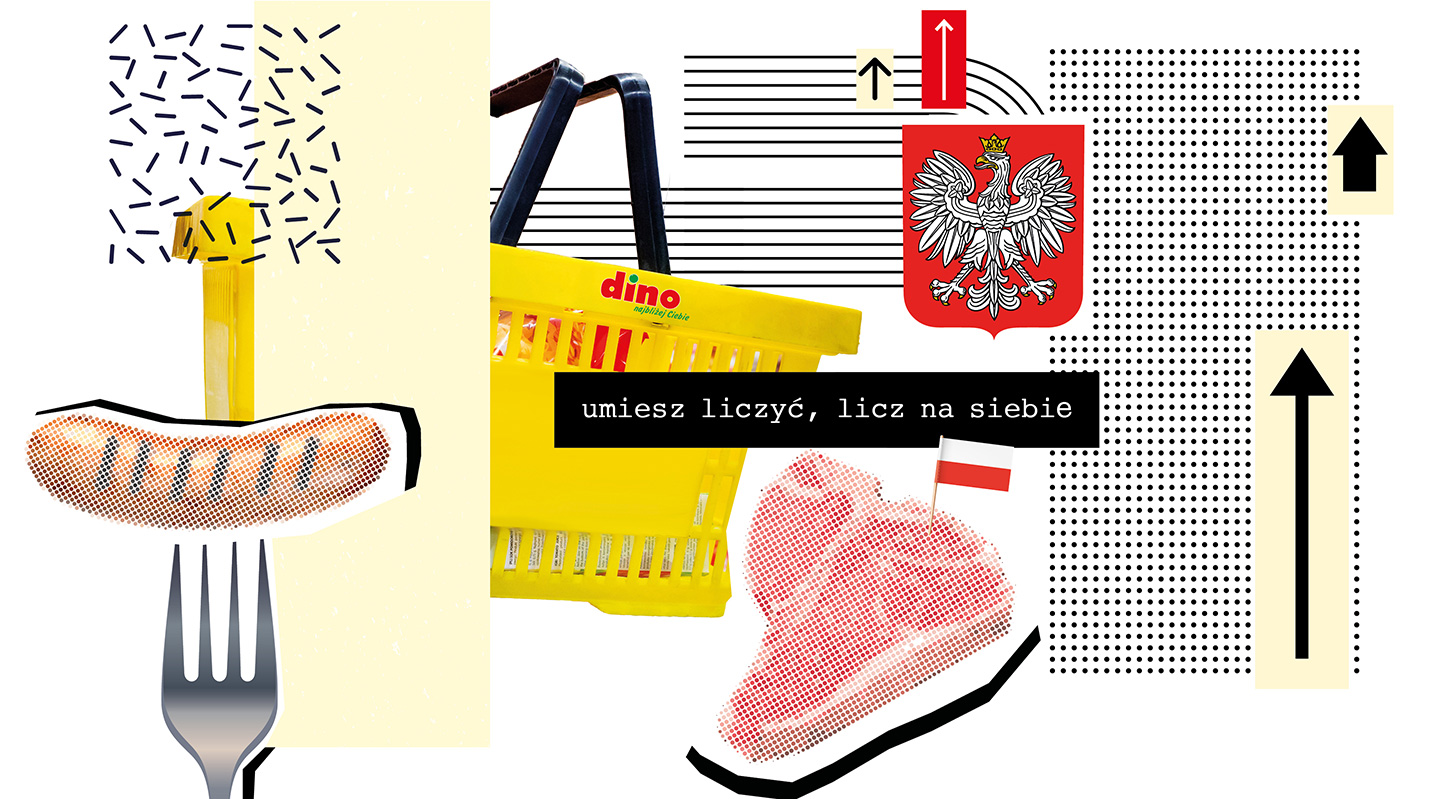
It’s one of Poland’s favourite sayings: ‘umiesz liczyć, licz na siebie’ – “if you need to rely on someone, just make sure it’s yourself”.
Tomasz Biernacki, boss of Dino Polska, became one of the country’s richest individuals by putting that proverb into practice. The provincial supermarket he founded in 1999 is set to open more than one branch a day over the next five years, thanks to his determination to rely on no one but himself.
“Dino Polska is a classic founder-run, high-quality growth story,” says Stephen Paice. “It flies under the radar of many investors even though it’s one of the largest companies in Poland.”
Dino’s ability to grow profits by an average of 30 per cent every year since 2019 rests on its ownership and control of key parts of the supply chain: the land on which its stores sit, the construction company that builds them, and the network of distribution centres and other logistics that supply them.
The power of being your own supplier
Then there’s the meat-producing subsidiary Agro-Rydzyna. Its slaughterhouses and processing plants supply ham and sausages to Poland’s meat-loving local shoppers. Rooftop solar panels power the coolers that keep the produce fresh, reducing reliance on the grid.
Paice has never met the reclusive Biernacki – very few have, even in Poland. But he credits him with creating an extraordinarily efficient money-making machine, with years of growth ahead. More stores, combined with more sales per store and disciplined control of every złoty, add up to compounding value as its network expands.
Biernacki hails from a family of farmers and meat processors in Krotoszyn, a small town in west-central Poland where the company still has its HQ. Colleagues tell tales of his epic frugality, demanding that lights be switched off and windows closed to conserve heat.
“Right now Dino has about 3,000 stores, and they’re targeting 5,000 within the next five years before they hit maturity, but I’d be surprised and disappointed if that were the limit,” Paice notes.
“It might then venture into adjacent markets – the Czech Republic would be a good fit. We think there’s plenty of growth left within Poland. It’s probably a €10bn company now. We just want it to keep doing exactly what it’s been doing. We don’t think its current valuation captures the growth opportunity from rolling out 400 stores a year for the next five years, improving margins as it goes along.”
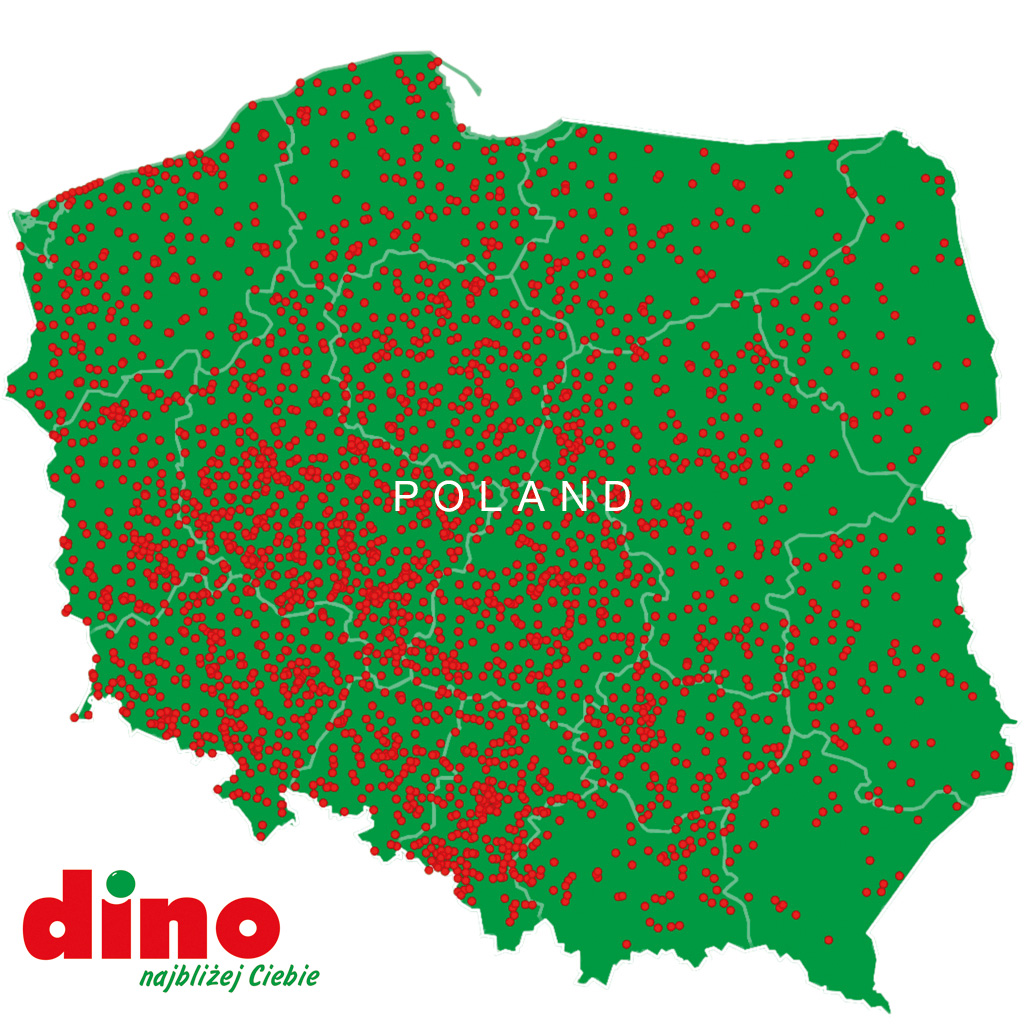
‘Closest to you’: Dino Polska’s store locations as of December 2025
Location, location, location
Paice likes the fact that Dino doesn’t just earn high profits, it recycles them quickly and efficiently, partly by doing its own construction. This maximises the added value of each new store.
Then there’s its genius for location. You’ll find its low-rise stores, with their bright red and green logos and ample parking spaces, dotted along the ring roads and outskirts of small towns and villages. The plots feed catchments too small for the country’s big cost-cutters, Biedronka and Lidl, to service profitably. It’s also where much of the 37 million-strong population lives, in one of Europe’s least urbanised countries.
These are often places where ageing traditional grocers and butchers have shut up shop. Not least because of the appeal of its meat counters – Poles expect a decent choice of fresh pork products – shoppers have little incentive to look beyond the well-stocked, modern Dino store for daily essentials. That makes them effectively local monopolies.
“It’s not the price leader,” says Paice. “You might be able to get cheaper elsewhere. It’s moving into ecommerce deliveries and other modernisations, but the main attraction is that it’s clean, efficient and convenient.”
Paice admires how Biernacki, who retains just over half of the shares, runs Dino “like a private business”, although it floated on the Warsaw Stock Exchange in 2017. By late 2025, its market capitalisation had increased by a factor of 12.
“I think the only reason it’s listed is that Biernacki wanted an opportunity for the private equity investors who owned the other half of it to exit. It works well as we trust him to do a good job and are satisfied with the alignment of his interests with those of our shareholders. If he started changing the model – opening in big cities and competing on price, for example – that would be a red flag.”
Poland’s under-the-radar growth
Dino is a big contributor to Paice’s view, formed over 12 years of visiting Poland, that stock pickers tend to underappreciate the dynamic entrepreneurship of its companies. There are plenty, he says, whose share prices don’t reflect their growth rate or how much money they’re making.
Other portfolio companies in this low-debt, high manufacturing-export economy include Allegro, ‘the Amazon of Poland’, and industrial metals firm Grupa Kety.
“It isn’t normally a market that European investors spend much time on as it’s still considered an emerging economy,” Paice explains. “Most are benchmarked against the main index, the MSCI Europe ex UK. Poland isn’t in that. But it’s a post-communist economy that’s transitioned rapidly and has a highly skilled workforce. GDP growth chugs along at about 3.5 per cent, much faster than the European average.
“Poland will hit the trillion-dollar GDP mark this year, according to the IMF, and it will overtake Switzerland as the world’s 20th largest economy, though Switzerland far exceeds it in GDP per person.”
Paice and his colleagues will, he says, continue to keep close tabs on Dino’s rollout, much of which will be in the underserved east and south of the country. They’ll also monitor competitors’ progress.
For now, the country’s growing prosperity feeds Dino’s aligned expectations of fuller, more value-laden shopping baskets. Firmly behind the scenes, Biernacki has fashioned a grassroots business with built-in continuous improvement. It’s only going to get harder for competitors to come between Poles in the provinces and the Dino on their doorstep.
Important information
The views expressed should not be considered as advice or a recommendation to buy, sell or hold a particular investment. They reflect opinion and should not be taken as statements of fact nor should any reliance be placed on them when making investment decisions.
This communication was produced and approved in March 2026 and has not been updated subsequently. It represents views held at the time of writing and may not reflect current thinking.
Potential for profit and loss
All investment strategies have the potential for profit and loss, your or your clients’ capital may be at risk. Past performance is not a guide to future returns.
This communication contains information on investments which does not constitute independent research. Accordingly, it is not subject to the protections afforded to independent research, but is classified as advertising under Art 68 of the Financial Services Act (‘FinSA’) and Baillie Gifford and its staff may have dealt in the investments concerned.
All information is sourced from Baillie Gifford & Co and is current unless otherwise stated.
The images used in this communication are for illustrative purposes only.