
View transcript
<div>
<p><strong><span lang="EN-US">The value of the trust's shares and any income from them can fall as well as rise. Capital is at risk.</span></strong></p>
<p> </p>
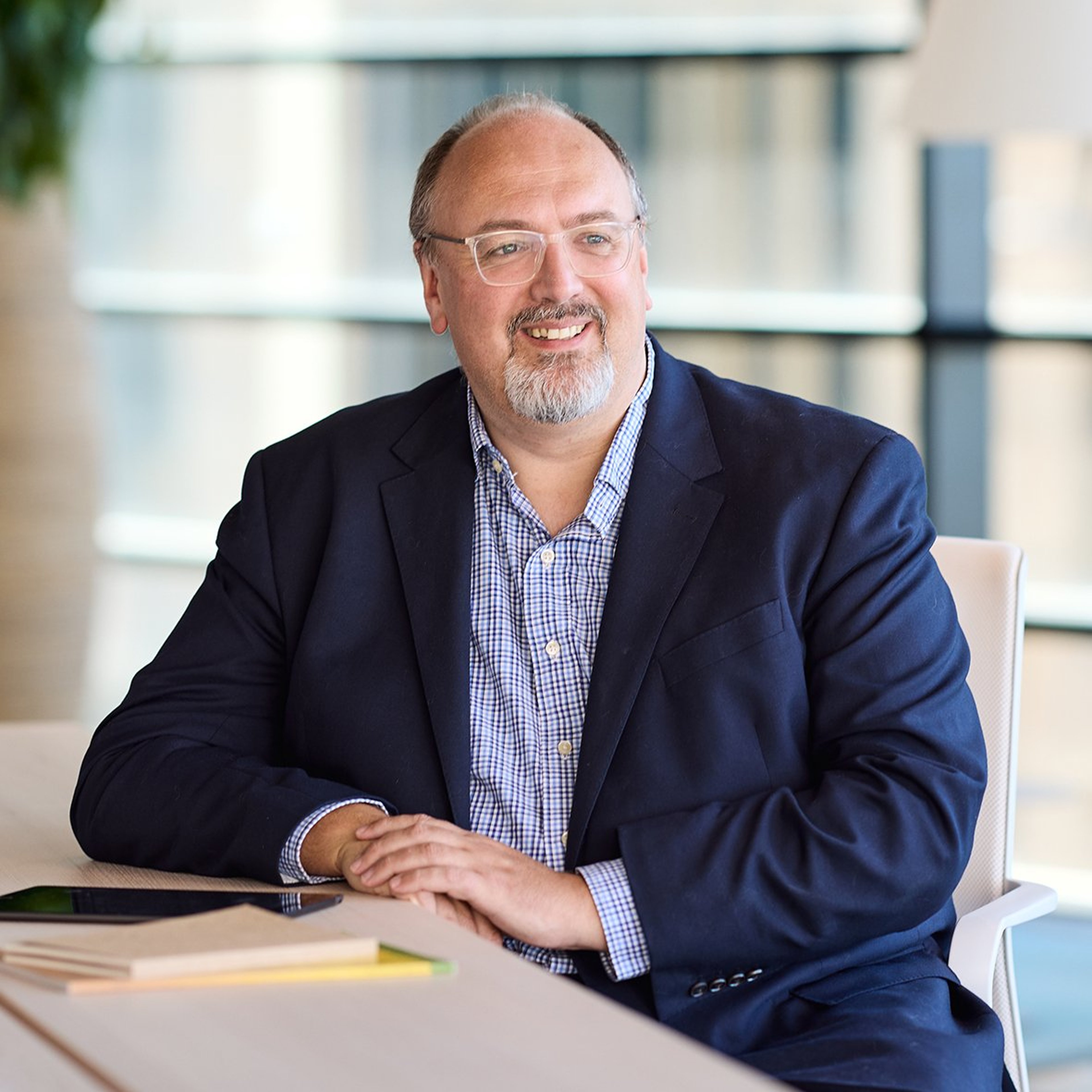
<p><span lang="EN-US">Gavin Lumsden (GL): </span><span lang="EN-US">Hello and welcome to the latest in our programmes in which we speak to managers of Baillie Gifford's different investment trusts. Today it's the turn of Monks. I'm pleased to have with us Spencer Adair, lead manager of the £2.5 billion portfolio, who's going to talk about the breadth of growth opportunities his team are finding, after a year in which so much attention has gone to artificial intelligence stocks. It's time to meet Spencer. Good afternoon, Spencer, how are you?</span></p>
<p>Spencer Adair (SA): I'm very good, how are you doing?</p>
<p>GL: Very good, thank you. Very good to see you. Let's start off with by remarking that Monks has had a good year. A strong recovery that we saw start at the end of 2023 has continued. Net asset value's up 24% over 12 months. Helped by a recent rally after the US election this month, but all this is a short time span of course. Looking back at the nine years the trust has been run by the Global Alpha team that you're a part of, how has the approach to growth investing evolved?</p>
<p><span lang="EN-US">SA: </span>Good afternoon, everyone. Monks is all about capital growth. We compound your capital as shareholders, by investing in companies that have got the ability to grow their own revenue and profits at above average rates of return over the long-term. Now, the share prices of those companies will be volatile in the short-term, but ultimately will come to reflect the real-world business fundamentals over time periods that matter. Such as nine years. Today, there's a team of three of us who harness those ideas from right across Baillie Gifford's research teams. And that's a change. So, we used to be three. We then went down to two after someone retired,<span lang="EN-US"></span></p>
</div>
<div>
<p><span lang="EN-US">Charles retired and then earlier this year, Helen Xiong formally joined Monks as a decision-maker.</span></p>
<p><span lang="EN-US">So, we've gone from three to two to three, and Malcolm and I have worked very closely with Helen as an analyst, as a scout, as a co-fund manager for most of her 16 years at the firm. So, I'm delighted that she's joining us formally and it restores Monks to having three decision-makers. The portfolio is split fairly evenly between the three flavours of growth that we've talked about in the past. That's the stalwarts that compound away like Mastercard and Disney. The rapidly growing companies such as the Al beneficiaries or Novo Nordisk and the anti-obesity treatments. Then finally, the cyclical growth capital allocators such as the infrastructure related companies. One change is that we are stricter about keeping a balance between the three.</span></p>
<p><span lang="EN-US">So previously we'd let quite a lot of flex happen. Now, if one of those buckets move by more than ten percentage points in a 12-month period, we stop, we reflect, we go to our risk team. So that's changed and become a bit stricter. The underlying theme across the portfolio is superior delivered earnings growth over time. We embrace companies across the globe. I'd love to have a stock on every continent if possible. We're looking for growth to be delivered in different ways. That creates a smoother result, but it also helps us look beyond where others are looking exclusively. It helps us get beyond the obvious. Some things which have changed there, we're always using data. We're always trying to improve our process. The philosophy remains unchanged, the process always gets tweaked and improved.</span></p>
<p><span lang="EN-US">We used to have four flavours of growth. The data said one didn't work, so now we've got three. We used to have a fairly loose plan for every single holding, now we've got more detail and I think we're tougher, less forgiving on companies that are not delivering. The converse of that is we're being happier to trim back, even when companies are working. But if valuations are a bit ahead of our degree of insight, we're happy to trim back, even if the fundamentals are still okay. Then we've got a deeper integration of data tools and at the point of dealing and for ongoing portfolio challenge, we slightly outsourced that in the past, to a risk team, now the fund managers are taking responsibility for that in the centre. Those are some of the changes.</span></p>
<p><span lang="EN-US">The other part to mention is that we have a strategic use of gearing. We're about 8.5% geared at the moment. We want to get to about 10% over time. That gearing is very, very low cost.</span></p>
<p><span lang="EN-US">We've locked in debts. The average cost is 3% and the longest dated debt we have is locked in at 1.8%. That's a great advantage. That was an advantage when rates were low, but become a much bigger advantage now. We're using that debt in order to grow the funds faster and we're buying back shares aggressively if we're trading at a discount. Over the last three years we've bought back approximately 20 % of the trust. That is very NAV accretive. That's some of the things which haven't changed and some of the things which have changed.</span></p>
<p>GL: <span lang="EN-US">That's really interesting to hear how some things stay the same, but some things are evolving as time goes by. Let me start with the obvious, then. How is the portfolio positioned to benefit from the growth of Al? At your financial year end in April, you reported you had 10% </span><span lang="EN-US"></span><span lang="EN-US">holding to semi-conductor manufacturers and suppliers like Nvidia, TSMC. Also, Texas, Samsung and ASM International. Has that increase I wondered?</span></p>
</div>
<div>
<p>SA: <span lang="EN-US">Yes, absolutely. We're just about to report some new figures. We've just had our half year end. These will all be updated so, I won't be too specific if you don't mind, because we haven't publicly announced them yet. If I go back in time, two or three years, during the post-Covid slump, a lot of semi-conductors were on their backs. A lot of these stocks were not doing very well and we were really quite aggressive. We had two holdings and as you say, today we've got over 10%. We've moved from two holdings to seven holdings. This has been an area of really active deployment of capital. If we find companies that we like, that are out of favour that we think the structural growth is intact, then we are going to buy and we're going to buy aggressively and that's what we have been doing over the last couple of years.</span></p>
<p><span lang="EN-US">Al accelerates things here. It's not the only driver. Helen, who I mentioned in the previous question, has written a good piece, I think. It's called 'Beyond Nvidia' and it talks about semiconductors. That's on our website. If you want somewhere to go, that's a good introduction to how we think about this broader area. Semiconductors are changing really, really rapidly.</span></p>
<p><span lang="EN-US">They are becoming, the scale of the companies and what's happening here is really staggering. I think 1.1 trillion chips are sold each year. People think of a semiconductor, and they think it's the devices that we're talking to. It's really high-end stuff. These are in your washing machines. They're in your car. They're in your microwave. Semiconductors are everywhere. So 1.1 trillion. I think that means there's 140 chips for every person on the planet if you look. In the west, we've got more than that. We're absolutely surrounded by chips.</span></p>
<p><span lang="EN-US">Historically Moore's Law has meant that transistors, which are these tiny little switches that can turn on and off billions of times a second, that was doubling approximately every 18 months. If I go back to the peak of the computer, the CPU market, central processing unit market, the computers brains improved 100-fold over a ten-year period. Incredible growth. But if I look at GPUs, which is the things that Nvidia makes, it's the graphic processing units, these are really good at Al tasks. Approximately, they've risen 1,000-fold in terms of performance, over the last eight years. If we thought things were going fast before with computers, they are growing much, much faster with Al.</span></p>
<p><span lang="EN-US">That is the fundamental basis why Ais taken off in lots of different directions. The ability to process and the cost of processing has radically changed and that's seismic. All of the growth of Al is based, essentially, on this foundation of structural advances in semiconductor manufacturing and that's critical.</span></p>
<p><span lang="EN-US">GL: </span><span lang="EN-US">That's the semiconductors, Spencer, where else is this very broad Al theme taking you?</span></p>
<p>SA: <span lang="EN-US">We're looking for bottlenecks. The big bottlenecks are, can you actually make the chips and it is increasingly hard to do this at scale. My personal favourite company in this whole area is the Taiwanese Semiconductor Manufacturing Company and it does exactly what it says on the tin and where it does it on the tin. You can work out what that company does. It is one of the core bottlenecks for growth and increasingly, its competitors are falling over because they </span><span lang="EN-US"></span><span lang="EN-US">cannot make these things. The latest Nvidia chips have got 208 billion transistors on each chip. 208 billion. The complexity of manufacturing something like that, it costs many tens of billions of dollars to setup and competitors have been slowly dropping out decade-after-decade leaving TSMC as really top in this area.</span></p>
</div>
<div>
<p><span lang="EN-US">That would be one. We also look at some of the physical constraints of actually building the datacentres. It's not just chips. It's can you get skilled labour for putting in air conditioning? Can you get the electricals attached up to the grid? Two of our holdings there would be Eaton in the US and Comfort Systems from Texas. They provide electrical engineering and air conditioning installation, and their order books have blown out because of a lot of this investment that's required. It's really broad and it's not just focused on chips.</span></p>
<p><span lang="EN-US">Finally, it's the companies that have got the data, that are thriving. It's the likes of Microsoft that has got all the data or Meta. The bottlenecks are data, some of the building and some of the core chips. Those are three areas that we're really seeing demand really inflect upwards.</span></p>
<p><span lang="EN-US">GL: </span>It's not all about Al of course. You're pursuing a broad range of growth themes. Could I ask you about one of those to start off with. You're enthusiastic about the long-term opportunity in infrastructure replacement and renewal in the US. We've heard a bit about that over the past couple of years. Where are we at with that?</p>
<p>SA: <span lang="EN-US">I am a terrible dinner party guest because I get super excited about gravel and cement and things like that and you can see people glaze over. I think that we are at a real tipping point for infrastructure in the west, broadly. I'll primarily talk about America, but it equally applies to the UK and to Europe. Before we even get there, companies like Martin Marietta who's gravel, aggregates. They have delivered a 15-fold total return over the last 20 years. I think infrastructure, in a way people think it's a bit boring because if it works it's invisible. The roads are there. You flick a switch and the light comes on. You turn a tap and the water comes out.</span></p>
<p><span lang="EN-US">But now, about 14% of Monks is invested in companies that bash metal, that pour concrete and install heating and air conditioning, that sell big wooden telegraph poles that hold up the grid. Our companies are quarrying, they're building, they're digging, they're sawing. It's grubby, it's heavy, but amongst all that grubbiness, we believe there's pure gold in there because you're had 40, 50 years of falling infrastructure spending and lack of maintenance. In the 1960s we used to spend 2.5% of GDP on infrastructure. It's now 1%. There's a huge mismatch. We're beginning to see things fail sadly. Half of all clean water in America, this is treated water, gets lost in leaks. We know all about the water scandals in the UK.</span></p>
<p><span lang="EN-US">These companies have not invested heavily enough, and we think they have to radically change. On top of that, climate change is coming along. You have the big storms, and you've got flooding. Again, companies, and the countryside is not coping with this. If there was no climate change, we'd have to spend a lot, but with climate change, we have to spend even more to get ourselves ready. Then finally, America in particular, is in competition with China. It is trying to onshore some of the really big industries. It's getting more manufacturing on shore, and it's fallen behind a bit in that degree of domestic manufacturing. So, it's catching up. I'll put </span><span lang="EN-US"></span>all that together. The American Civil Engineering Society thinks America needs to spend $5 trillion of capex to get up to speed.</p>
</div>
<div>
<p><span lang="EN-US">Currently American infrastructure is rated C minus. That is awful. To get it up to somewhere which is adequate, they have to spend $5 trillion. There's currently plans in place, albeit we've got a new president so, things will change. There's currently plans in place to spend about $2 trillion. Two trillion in today's dollars is the same as 14 Marshall Plans, where we rebuilt Europe after World War II. And that's converting 1945 dollars into 2024 dollars. This is a massive amount of spending that's coming and it's not even half of what they need to do. That's really exciting for us.</span></p>
<p><span lang="EN-US">So that's the demand side. On the supply side you've had a number of companies that have been existing on crumbs and therefore, have consolidated their industry. There's been nobody wants to set up a new gravel pit or a new cement kiln or a new pool treating facility. So many of these companies are really very dominant in what they do. We've got a drainage company, Advanced Drainage Systems. That's sexy. That companies got 50% market share in big plastic storm drains in North America. Absolutely dominant. We have a company in Canada called Stella-Jones, which makes the really long poles that hold up the grid. Telegraph poles. It's got about 50% of the market share. This growth is exciting, but we're finding it in bottlenecks where there's no supply side expansion and where companies have waited years, if not decades consolidating the industry, getting ready for this surprise. When that comes, my goodness, I think it's going to be incredible for shareholders.</span></p>
<p><span lang="EN-US">GL: </span><span lang="EN-US">That sounds truly enormous. You referred to Trump there, what might the impact be of his administration? Is he going to do even more of it or cutback?</span></p>
<p><span lang="EN-US">SA: </span><span lang="EN-US">Nobody knows exactly what Mr Trump has on his mind. He likes doing deals and he's shown an ability to change his mind, depending on what he's in front of. I think it's pretty hard to work out exactly what he wants to do. He has talked an awful lot about reshoring manufacturing on to North America. That will be very good for this. I think we have to think through global supply chains. We have to think through defence. International trade, energy policies. There's lots of things which are at play here. Very narrowly, I can look at what's performed well since his election and it's quite a lot of the infrastructure companies. Martin Marietta, the Advanced Drainage that I talked about. Builders FirstSource. The near-term market reaction is positive, suggesting that people think that this will at least continue. He will definitely repeal some of the Inflation Reduction Act, but only part, not everything perhaps.</span></p>
<p>We think infrastructure spending has to rise, irrespective who's in the White House. Republican states, in general, do better out of some of these plans. Locals want better roads. They want better dams. They do not want their bridges falling down. There's some very strong local activism there and I think this competitive piece with China is really critical. I don't think he's going to want to do anything which really hurts US onshore manufacturing. I think there's going to be some changes, definitely, but I think broadly speaking, there is a big problem that America has to address.<span lang="EN-US"></span></p>
</div>
<div>
<p><span lang="EN-US">GL: </span>More broadly than infrastructure, what about the impact of tariffs that he's talked a lot <span lang="EN-US">about? Against China, which could then have knock-on consequences around the world. How's your portfolio prepared for that?</span></p>
<p>SA: <span lang="EN-US">We've been preparing for a bipolar or a slightly deglobalised world for about three years. We've been pretty active in what we've been doing. One little stat here, I think if you look at our revenue across the whole portfolio, the amount of revenue that's Chinese companies selling into America is under 1%. We have tried to derisk that as much as we possibly could. In the last year I've been particularly active in looking at our western companies that sell into China.</span></p>
<p><span lang="EN-US">Where are the companies that we need to China to thrive, or they need China's sales to thrive in order to meet their long-term targets, and plans that we've got for each company? Frankly, I've been selling the likes of Addidas, the German apparel maker, shoemaker. Pernot Ricard, Tesla even.</span></p>
<p><span lang="EN-US">There are western companies that are active in China that we have said 'okay, the market's been really good at pricing in the risk for Chinese companies really quickly'. I think it's been quite slow to price in the risk for western companies selling into China. Therefore, we've been taking capital away from those exporters that depend on Chinese demand.</span></p>
<p><span lang="EN-US">GL: </span>You mentioned Tesla. We're talking about the aftermath of the US election. We can't ignore the presence of Elon Musk in helping Donald Trump getting returned to the White House. Tesla shares, as you know, are up 41% <span lang="EN-US">since the results. Do you regret selling the small holding you had?</span></p>
<p><span lang="EN-US">SA: </span><span lang="EN-US">The perfect hindsight question. Of course. Let me put this into context. Roughly speaking, I don't have the exact numbers in front of me, but roughly speaking our shareholders have a return of something like 80-fold from their holding in Tesla. It has been an extraordinary investment and added an awful lot of value. If I had not touched that holding, it would have been well over half of MONKS. It would have been huge, but we've consistently trimmed and reduced back. We have been waiting for a couple of reasons. One, we have been waiting for competition. Competition in the west has taken longer to appear than I thought. By now, I thought the likes of Mercedes and BMW and Volkswagen would be primarily electric. They're still early in making that switch. That's been much slower than we expected.</span></p>
<p><span lang="EN-US">The Chinese manufacturers though, have been much faster. Much, much faster. They provide significant challenge because suddenly, it means Tesla's opportunity growth is not perhaps fully global. It's probably going to be more limited to, at the moment, North America, Europe and currently China. It's going to be harder for Tesla to grow in the likes of Africa and Brazil and other places where Chinese EVs will be supplied. So there has been a shrinkage of the potential there for Tesla. Mr Musk and Mr Trump are remarkably successful, but they're definitely quite big on the ego. So, it wouldn't entirely surprise me that they're currently chums, but who knows. Those are two big personalities in the same room and they've both got a record of falling out with people. So, let's see how long the chumminess lasts for.</span><span lang="EN-US"></span></p>
</div>
<div>
<p><span lang="EN-US">We sold because we had fears around competition and we had fears around competition primarily in electric vehicles and ultimately, if there was to be some kind of retaliatory tariffs, you could see that actually a tariff around Tesla gets right to the heart of this administration. There's a greater risk of politics interfering with economics.</span></p>
<p><span lang="EN-US">DL: </span><span lang="EN-US">While we're talking about Musk, you've got a small weighting in SpaceX as well. That's reportedly seen its valuation go up to $250 billion. Are you excited by its prospects?</span></p>
<p><span lang="EN-US">SA: </span><span lang="EN-US">I'm much more excited about SpaceX. We've got a direct holding which is unlisted and, also, it's the largest holding in the Scheihallion fund. So, it's roughly 10% of that fund. Together just over 0.5% of Monks is in SpaceX. If I combine those two. That's the context.</span></p>
<p><span lang="EN-US">Unlike electric vehicles, the competitive position has got stronger at Space X. If anything, the company's gap over competitors has got broader, not narrower. We don't have that extra question mark, and the valuation can largely be accounted for by the communication network, Starlink, that he setup. You've also then got the space business in there as well.</span></p>
<p><span lang="EN-US">So, very excited about that. I think if that was a listed company, it would be one of the largest in the world. It is still growing. I would actually like it to remain private for as long as possible, but that's not always what we have there. I think it's great. It's a great example of backing an early company that's taking really huge engineering risks in order to build something physical and tangible. It is getting there. It's reached its own terminal velocity of funding, etc, and that's really exciting for us. Very excited about SpaceX.</span></p>
<p><span lang="EN-US">GL: </span><span lang="EN-US">Last question on Musk, if he can stay on good terms with the incoming president, how does Musk run these businesses and the new Department for Government Efficiency that he's been given? Has he got good teams around him?</span></p>
<p><span lang="EN-US">SA: </span><span lang="EN-US">He does. If you add in Twitter, xAI, he's doing a lot. His brain thrives on having difficult challenges and multiple challenges. He has got very good teams running Tesla and Space X. I don't know the team running Twitter very well, we haven't invested there. I think he will obviously have to get quite a lot of advisers around him for the Department of Government Efficiency. I think that's probably a task that's easier to be bombastic at the beginning and whenever you get down to the detail, that's going to be a real headache to try to do what he wants to do there. It's radical. I just think there's an awful lot of vested interest that will push back against some of this. But who knows.</span></p>
<p><span lang="EN-US">GL: </span><span lang="EN-US">Digital payments, that's another growing theme within the portfolio. Can you tell us about some of the holdings and what you find exciting about them?</span></p>
<p><span lang="EN-US">SA: </span><span lang="EN-US">Lots of holdings. Basically, we're going to continue to shift away from cash and away from physical cards into more digital forms of payment. They tend to be more secure. They tend to have network effects around them. The largest processors can do things cheaper, which gets more volumes, etc. So we tend to have a network effect, which leads to really great economics. And we're beginning to see other data businesses being built on top. If you know what people</span><span lang="EN-US"></span></p>
</div>
<div>
<p><span lang="EN-US">are spending their money on, that's an extremely valuable node to sit on in terms of data and insight. Therefore, you can do lots of interesting things there.</span></p>
<p><span lang="EN-US">We've got around 4% invested directly in digital payments. Mastercard, which is a long-term compounder would be part of the infrastructure, part of the rails of how payments are made in the west. We've got more rapidly growing companies such as Block and Adyen. They serve different parts of the digital payments space. Individuals versus enterprises. Block and Adyen have also both taken slightly more sober approaches to controlling costs. Their share prices have been really strong because you've had continued structural growth, but you've also had that being boosted by some cost-cutting as well. You've had a double kicker to profit. That double kicker does not last forever, but it's definitely a welcome form of discipline.</span></p>
<p><span lang="EN-US">Finally, we have a private holding in Stripe, about 50 basis points, when I look at both Scheihallion and directly at Monks. We like these businesses. They're growing. They may create the network of tight businesses. It reminds me a little bit of whenever people started thinking about user data network effects way back when the likes of Facebook and Google, etc. We're excited about where they can get to and it feels very early in that journey across most of those names.</span></p>
<p><span lang="EN-US">GL: </span>You've got 61% in North America and you've got four of the Magnificent Seven in your top holdings. What examples of innovative growth can you tell us about outside the US?</p>
<p>SA: <span lang="EN-US">Innovative growth outside the US?</span></p>
<p><span lang="EN-US">GL: </span>I think a lot of these companies we're talking about are in the US, not all of them. Any more who are non-US growth stories?</p>
<p>SA: <span lang="EN-US">Yes, lots. I'll give you a couple. Everything in the portfolio is growing structurally in an interesting way. The really innovative stuff would be Novo Nordisk, the Danish healthcare giant. It led the way in insulin and diabetes treatments for years. It invested really heavily at a time when no one else was investing and it pioneered a new class of drugs called the GLP-1s alongside Eli Lilly. The brand names here would be Wegovy and Ozempic. You've seen them commented on, I'm sure. They've built up ten years of data. Primarily treating type II diabetics. So, they've got about ten million patients that they've treaded with these drugs.</span></p>
<p><span lang="EN-US">They've got a really rich data source that they can talk about. How effective these things are, what other conditions improve, what are the side effects? Now, we're seeing a sharp acceleration in growth because these drugs don't just treat people with diabetes. They appear to cause the obese population to lose between 20% and 25% of their bodyweight and have a really big impact, roughly a quarter reduction in the risk of death and the risk of heart attack, stroke, cancer, even dementia. This is as close to a longevity pill or injection that I've seen. It's a really big impact on people's health outcomes. Some of that data is still coming through, but very few others have got the depth and the time series that Novo has. That's really critical.</span></p>
</div>
<div>
<p>So rather than the ten million people that are taking these drugs today, it's possible that this could be hundreds of millions of people taking the drug. There's roughly a billion obese people, globally. I think what people often get wrong is that these drugs will not be just taken to have a reduction in the weight. You'll be on these drugs or similar drugs for the rest of your life, to control or keep your weight at a low level. It's a little bit like high blood pressure tablets in the 1970s when they first came out. People were taking diuretics to reduce your blood pressure, but ultimately if you start taking blood pressure tablets, you take them for a long time because you want to keep your blood pressure low.</p>
<p><span lang="EN-US">I think the scale at Novo, the innovation that's been going on for decades, the data edge that they have, the manufacturing edge, the duration of treatment, the strength of the brands, all of that is really underpriced in a very strong innovative company from Europe.</span></p>
<p><span lang="EN-US">Switching gears a little bit, Mercado Libre, which is the Brazilian, South American, ecommerce and fintech leader. It's also got a payments business, which I should have mentioned in the previous question, which is why it came back to me. It has compounded its growth rates at 40% per annum in dollars over the past decade. 40% in dollars over a decade.</span></p>
<p><span lang="EN-US">That's despite extremely difficult politics. Near economic collapse. Very high inflation. If you think what's Mr Trump going to do, these guys have lived through Argentina and Brazil and they've managed to produce structural growth in dollars. They've also taken on and defeated Amazon, by the way. Not an insubstantial company. I would rate the team and the ambition at Mercado Libre and their ability to innovate, as being at the very, very top globally.</span></p>
<p><span lang="EN-US">GL: </span><span lang="EN-US">Two great examples. That sounds like a proper growth story. Going back to the team you talked about at the beginning. What is the division of labour between the three of you?</span></p>
<p><span lang="EN-US">SA: </span><span lang="EN-US">One person one vote. We are all generalists. We look at the whole portfolio. We've got different personality types. We've got different education. We're very different individuals and I think different bits excite and stress us at different times. That's the beauty of it. We do not divide the world up and say, this is Malcolm's bit, this is Helen's, this is Spencer's. We take all decisions equally. One person one vote and we make better decisions as a three than I would ever make as an individual.</span></p>
<p>GL: If two people like something and one person doesn't, it happens.</p>
<p><span lang="EN-US">Correct. There's always a majority. We can move quickly if we need to. I remember the day that ChatGPT-4 was announced. Which is the Al product. We sat down and we looked at the first demonstration and all three of us went, this is terrible for Chegg, one of our holdings. Terrible. We had the deal on within 30 minutes of seeing that demonstration. If we need to act. We're long-term investors, but if things change, we can act very, very quickly and we're not caught up by one person being the expert that has to write and have a view. We can be nimble if we need to be.</span><span lang="EN-US"></span></p>
</div>
<div>
<p><span lang="EN-US">GL: </span>Got a question here about performance. This year's seen a recovery. Previous two years were more difficult. Particularly 2022. We've got a viewer who's wondering if there is a connection with the merger that Monks did with Independent Investment Trust? Was there an element of indigestion going on there, absorbing that portfolio that has weighed on performance?</p>
<p><span lang="EN-US">SA: </span><span lang="EN-US">No. The majority of the assets from the Independent that we merged with came in the form of cash and we deployed that cash into either buybacks or buying fresh ideas. We did not inherit anything that we did not want and was a drag on performance. That's not the case. I would say it was more that growth investing fell out of favour. It was very much in favour 2021 and it fell out of favour in 2022, and it took us a while to get over that. We've got the portfolio in balance today. So, it's a third in each of the three growth buckets and we've produced now, strong absolute returns over the last 12 months. We will not always produce 25%-ish growth in NAV every year, but that's recovery.</span></p>
<p><span lang="EN-US">I think things bottomed roughly 12 months ago. I do not know why. I cannot explain it fully. This feels like we turned the corner. NAV growth has been remarkably strong now, for a while and last week, I haven't checked today, but last week we were getting close to our all-time high in terms of NAV per share. I think we were within 5% or 6% of that peak. The share price has not fully recovered because we've gone from trading at a premium, to a discount and that's why the buybacks are helping. Actually, this feels like we're through the worst of it. We're producing good results. It's nothing to do with the Independent.</span></p>
<p><span lang="EN-US">GL: </span><span lang="EN-US">Talking about the share price, that's interesting what you're saying about the portfolio asset value being at a high. The shares aren't and they're trading at 11% discount today or yesterday. How can the discount best be tackled? There are buybacks going on. The trust was a big issuer of shares in the past. It is now buying them back fairly consistently. Is that the best way of doing it?</span></p>
<p><span lang="EN-US">SA: </span>The very best way to get your discount to close is to have strong NAV growth which attracts new savers and encourages those who have saved with you to stay. The best way to do this is to get your performance going and to get absolute growth. Both relative and absolute growth. That's what's required. That's what we're working on. That's the task. The second way is to be consistent and clear in your capital allocation. The board and the managers will keep buying back shares aggressively if we are at a discount. We have bought back 20 % of the trust in the last two to three years. That is right up there in terms of how aggressive we've been.</p>
<p><span lang="EN-US">We've done it consistently. This is not lumpy. We're not trying to time it. Eventually people will realise that we're serious about this and we'll keep buying and eventually you shake any loose holders that are still there. We do not want big swings in our net asset discount to the share price. We will issue if we're at a premium. We'll buyback at a discount. I'll keep repeating that and repeating it and you can check my actions, but that is adding value for existing shareholders and trying to support the share price as much as we can.</span><span lang="EN-US"></span></p>
</div>
<div>
<p><span lang="EN-US">GL: </span><span lang="EN-US">What are the key differences between the investment strategies of Monks and Scottish Mortgage?</span></p>
<p><span lang="EN-US">SA: </span><span lang="EN-US">I guess they're sister trust in a way. One difference would be scale. Scottish Mortgage is several times larger than Monks. One difference would be around concentration. We've got more holdings. We're less concentrated. Our larger holdings tend to be 4% of the trust, not 8-9% that they would be at Scottish Mortgage. More diversified and smaller absolute holdings.</span></p>
<p><span lang="EN-US">One difference would be around the definitions of growth. Scottish Mortgage have got vast majority of their portfolio in the disruptors, the really rapid growth stuff. They produce fantastic returns. They are more volatile, but they produce fantastic returns overall.</span></p>
<p><span lang="EN-US">Our definition of growth is broader. We've got the steadier companies and the more cyclical companies as well. We've got that balanced out. Then finally, there is a difference when it comes to private company enthusiasm. We have got just between 4% and 5% in unlisted companies and the majority of that is in another investment trust that invests in unlisted companies. We've been a little slower to adopt or a little less aggressive in adopting some of the private companies. We're cherry-picking ones that we like, but we're happy to do that slowly, progressively and build up the unlisted weight over time. We're in no rush. We have a 10% limit there. There's no right or wrong answer to that stuff, you try to outline them and then shareholders can choose the ones they feel most comfortable with.</span></p>
<p><span lang="EN-US">GL: </span><span lang="EN-US">They are doing different things. Turning back to the USA, where we're talking about tariffs, the impact of tariffs. Do you hold small, medium-size companies in the portfolio? With the fact of tariffs and a Make America Great approach, the smaller cap and medium size stocks in the US have been going up since the election. Domestically focused stocks, is that an area that you're interested in?</span></p>
<p><span lang="EN-US">SA: </span><span lang="EN-US">We've been thinking heavily about domestic stocks. We own several, Eaton and Comfort and Stella-Jones, the ones I've talked about on this call. We're continuing to look. Generally speaking, we're looking for businesses that are local champions, that can really thrive. If we're looking at a company in China, it's a company that can thrive in China. If we're looking at a company in Brazil, it's a company that can thrive there. Nine, ten years ago, we would have been very keen on globalisation. Companies that can really dominate the world. We're now keener on companies that can dominate their area. You can define that geopolitically, broadly. Yes, not necessarily small-caps for the sake of being small, but focused on one geographic area, absolutely.</span></p>
<p><span lang="EN-US">GL: </span><span lang="EN-US">Following on from that, not focused just on the US, but what is the smallest company you can effectively invest in? Any examples of small-caps in the portfolio?</span></p>
<p><span lang="EN-US">Historically, we've invested in companies down to £100 million market-cap. A 0.5% holding, which would be the smallest I'd want to take, would be about £12 million. I wouldn't want to become a dominant shareholder in any company. £100 to 120 million would be a 10% to 14%</span><span lang="EN-US"></span></p>
</div>
<div>
<p><span lang="EN-US">holding in the company. We can and we have gone down that low in the past. It would have to be an exceptional company because once you own 10%, you're slightly locking yourself in.</span></p>
<p><span lang="EN-US">If you're going to do that, you're going to be really sure in your enthusiasm and what you want to do.</span></p>
<p><span lang="EN-US">GL: </span>On a similar point, but turning back to SpaceX. SpaceX is held by a number of trusts at Baillie Gifford, how are these balanced to avoid overconcentration?</p>
<p><span lang="EN-US">SA: </span>Firstly, it is a huge company now, Space X. Our proportion of the underlying company is really very small. As I said, I look at my see-through holdings, through both the direct holdings and other holdings and it's about 0.5% of Monks. I think, from an absolute proportion of the company we own, from a proportion of the trust, there's no problem. We're monitoring that stuff for all of our companies all the time. We've got a centralised dealing desk, who will limit the amount of equity we hold in any one company. I really value the ability to reverse, if I make a mistake. I want to know where the exit is.</p>
<p><span lang="EN-US">If I'm sitting in a room, I want to know where I can get out the door. For every company, I have a plan for why we hold it and what are the actions we need to see. I also need to know that I can sell it on a dime if things change or if I'm disappointed or if management changes. For every company I buy it with a size, knowing that I could sell it really quickly if I needed to. The largest companies in the trust today, if you look at the top, they're really big, really liquid. It's the likes of Microsoft, it's Nvidia. Those companies, I could sell that entire stake in about two minutes, it's that formal. I will not get us stuck into very illiquid things. That's not my style. If it is quite an illiquid company, it will be a small, small holding.</span></p>
<p><span lang="EN-US">GL: </span>After the strong year you've had at Monks, do you think we are seeing a broadening in stock market returns and what is your outlook for the future?</p>
<p>SA: It is unusual that we've had the Magnificent Seven being quite so dominant in share price <span lang="EN-US">returns last few years. It feels to me, that things are beginning to broaden. That is great because Monks is designed to capture growth, a broad type of growth. I don't like it if it's </span><span lang="EN-US">narrow in any one area. Even though we've had some of these big holdings, it didn't feel good to just be dominated by one thing. We've got Al, we've got infrastructure. We've got rising income levels in certain developing markets. We've got GLP-1s, we've got digital payments.</span></p>
<p><span lang="EN-US">We've got a lot of different drivers here.</span></p>
<p><span lang="EN-US">When I look at the holdings through the risk model lenses, our companies are growing their revenues twice as fast as the market average. They're growing earnings about a third faster than the market average. They've got very strong balance sheets. They are investing more in R&D and advertising than others. So, they're trying to grow faster. Yet, the valuation premium we're paying is about 20% compared to the average. I don't remember as favourable a forecast growth, ambition take, balance sheet take and valuation being in line with what we've paid historically. That feels really exciting to me.</span><span lang="EN-US"></span></p>
</div>
<div>
<p><span lang="EN-US">We're really confident in the portfolio's ability to deliver from here because of the summation of all of those different growth rates that we're seeing. Individual companies will obviously do better or worse than you think, but if the average comes in where we think it will, then we will continue to have really superior growth. Certainly, for the next three years, which is as far as consensus will forecast out.</span></p>
<p><span lang="EN-US">GL: </span><span lang="EN-US">Spencer, thank you very much. That's an encouraging note which to end. I'm afraid that's all we've got time for. Look out for more programmes about Baillie Gifford's trusts in the future. If you want a further update on Monks, they've got half-year results, I believe, next month. Look out for those as well. In the meantime, thank you very much to Spencer for his time and thank you for joining us. Good afternoon.</span></p>
<p> </p>
<p> </p>
<p>Glossary</p>
<ul>
<li><span lang="EN-US">Cyclical stocks have prices that often rise and fall with changes in the wider economy </span></li>
<li><span lang="EN-US">Capex refers to </span><span lang="EN-US">capital expenditure; funds used by a company to buy physical assets</span><span lang="EN-US"></span></li>
</ul>
</div>
<div>
<p> </p>
<h3><span lang="EN-US">Annual past performance to 30 September each year (Net </span>% )</h3>
<table border="1" cellspacing="0" cellpadding="0">
<tbody>
<tr>
<td width="142" valign="top">
<p> </p>
</td>
<td width="94" valign="top">
<p>2020</p>
</td>
<td width="95" valign="top">
<p>2021</p>
</td>
<td width="95" valign="top">
<p>2022</p>
</td>
<td width="94" valign="top">
<p>2023</p>
</td>
<td width="95" valign="top">
<p>2024</p>
</td>
</tr>
<tr>
<td width="142" valign="top">
<p><span lang="EN-US">Monks Ord</span></p>
</td>
<td width="94" valign="top">
<p>24.9</p>
</td>
<td width="95" valign="top">
<p>23.8</p>
</td>
<td width="95" valign="top">
<p>-30.1</p>
</td>
<td width="94" valign="top">
<p>-2.6</p>
</td>
<td width="95" valign="top">
<p>24.9</p>
</td>
</tr>
<tr>
<td width="142" valign="top">
<p><span lang="EN-US">Monks NAV</span></p>
</td>
<td width="94" valign="top">
<p>27.9</p>
</td>
<td width="95" valign="top">
<p>24.8</p>
</td>
<td width="95" valign="top">
<p>-23.6</p>
</td>
<td width="94" valign="top">
<p>1.7</p>
</td>
<td width="95" valign="top">
<p>22.7</p>
</td>
</tr>
<tr>
<td width="142" valign="top">
<p><span lang="EN-US">FTSE World Index</span></p>
</td>
<td width="94" valign="top">
<p>5.2</p>
</td>
<td width="95" valign="top">
<p>24.0</p>
</td>
<td width="95" valign="top">
<p>-3.0</p>
</td>
<td width="94" valign="top">
<p>12.2</p>
</td>
<td width="95" valign="top">
<p>20.6</p>
</td>
</tr>
</tbody>
</table>
<p> </p>
<p>Performance source: Morningstar, FTSE, total return in sterling</p>
<p><span lang="EN-US">Past performance is not a guide to future returns.</span></p>
<p> </p>
<p><span lang="EN-US">London Stock Exchange Group pie and its group undertakings (collectively, the "LSE Group").© LSE Group 2023. FTSE Russell is a trading name of certain of the LSE Group companies. "FTSE®" "Russell®", "FTSE Russell®, is/are a trade mark(s) of the relevant LSE Group companies and is/are used by any other LSE Group company under license. All rights in the FTSE Russell indexes or data vest in the relevant LSE Group company which owns the index or the data. Neither LSE Group nor its licensors accept any liability for any errors or omissions in the indexes or data and no party may rely on any indexes or data contained in this communication. No further distribution of data from the LSE Group is permitted without the relevant LSE Group company's express written consent. The LSE Group does not promote, sponsor or endorse the content of this communication.</span></p>
<p><span lang="EN-US">This communication was produced and approved in December 2024 and has not been updated subsequently. It represents views held at the time of recording and may not reflect current thinking.</span></p>
<p><span lang="EN-US">This communication does not constitute, and is not subject to the protections afforded to, independent research. Baillie Gifford and its staff may have dealt in the investments concerned. The views expressed are not statements of fact and should not be considered as advice or a recommendation to buy, sell or hold a particular investment.</span></p>
<p><span lang="EN-US">Baillie Gifford & Co and Baillie Gifford & Co Limited are authorised and regulated by the Financial Conduct Authority (FCA). The investment trusts managed by Baillie Gifford & Co Limited are listed on the London Stock Exchange and are not authorised or regulated by the FCA.</span></p>
<p><span lang="EN-US">A Key Information Document is available at bailliegifford.com.</span></p>
<p> </p>
<p>The specific risks associated with the Monks Investment Trust include:</p>
<ul>
<li><span lang="EN-US">The Trust invests in overseas securities. Changes in the rates of exchange may also </span><span lang="EN-US">cause the value of your investment (and any income it may pay) to go down or up.</span></li>
<li>The Trust invests in emerging markets where difficulties in dealing, settlement and custody could arise, resulting in a negative impact on the value of your investment.</li>
<li>The Trust's risk could be increased by its investment in private companies. These assets may be more difficult to sell, so changes in their prices may be greater.</li>
<li>The Trust can borrow money to make further investments (sometimes known as "gearing" or "leverage"). The risk is that when this money is repaid by the Trust, the value of the investments may not be enough to cover the borrowing and interest costs, and the Trust will make a loss. If the Trust's investments fall in value, any invested borrowings will increase the amount of this loss.</li>
<li>Market values for securities which have become difficult to trade may not be readily available and there can be no assurance that any value assigned to such securities will accurately reflect the price the Trust might receive upon their sale.</li>
<li>The Trust can make use of derivatives which may impact on its performance.</li>
<li>Share prices may either be below (at a discount) or above (at a premium) the net asset value (NAV). The Company may issue new shares when the price is at a premium which may reduce the share price. Shares bought at a premium may have a greater risk of loss than those bought at a discount.</li>
<li>The Trust's exposure to a single market and currency may increase risk.</li>
<li><span lang="EN-US">Share prices may either be below (at a discount) or above (at a premium) the net asset </span><span lang="EN-US">value (NAV). The Company may issue new shares when the price is at a premium which may reduce the share price. Shares bought at a premium may have a greater risk of loss than those bought at a discount.</span></li>
<li>The Trust can buy back its own shares. The risks from borrowing, referred to above, are increased when a trust buys back its own shares.</li>
</ul>
</div>
<p><span lang="EN-US">Further details of the risks associated with investing in the Trust, including a Key Information Document and how charges are applied, can be found in the Trust specific pages at </span><span lang="EN-US"><a href="https://protect-eu.mimecast.com/s/S_sVCZzG3I7Y1vmiK6j2K">www.bailliegifford.com</a>, or by calling Baillie Gifford on 0800 917 2112.</span></p>