
View transcript
<p class="MsoNormal"><strong>Your capital is at risk.</strong></p>
<p class="MsoNormal"> </p>
<p class="MsoNormal"><strong>Vineeta Tan (VT):</strong> Hello, and a very warm welcome. I'm Vineeta Tan, the Group Managing Editor and Director of REDmoney Group, an international Islamic finance media house, and the publisher of the world's longest-running Islamic finance news service, IFN.</p>
<p class="MsoNormal">I'm here today to learn about Baillie Gifford's Islamic Strategy, a strategy that seeks exceptional growth companies across the globe. To walk us through this approach, we have Tolibjon Tursunov and Saad Malik. Tolibjon and Saad, a pleasure to have you here with us. Perhaps we could start with both of you introducing yourselves.</p>
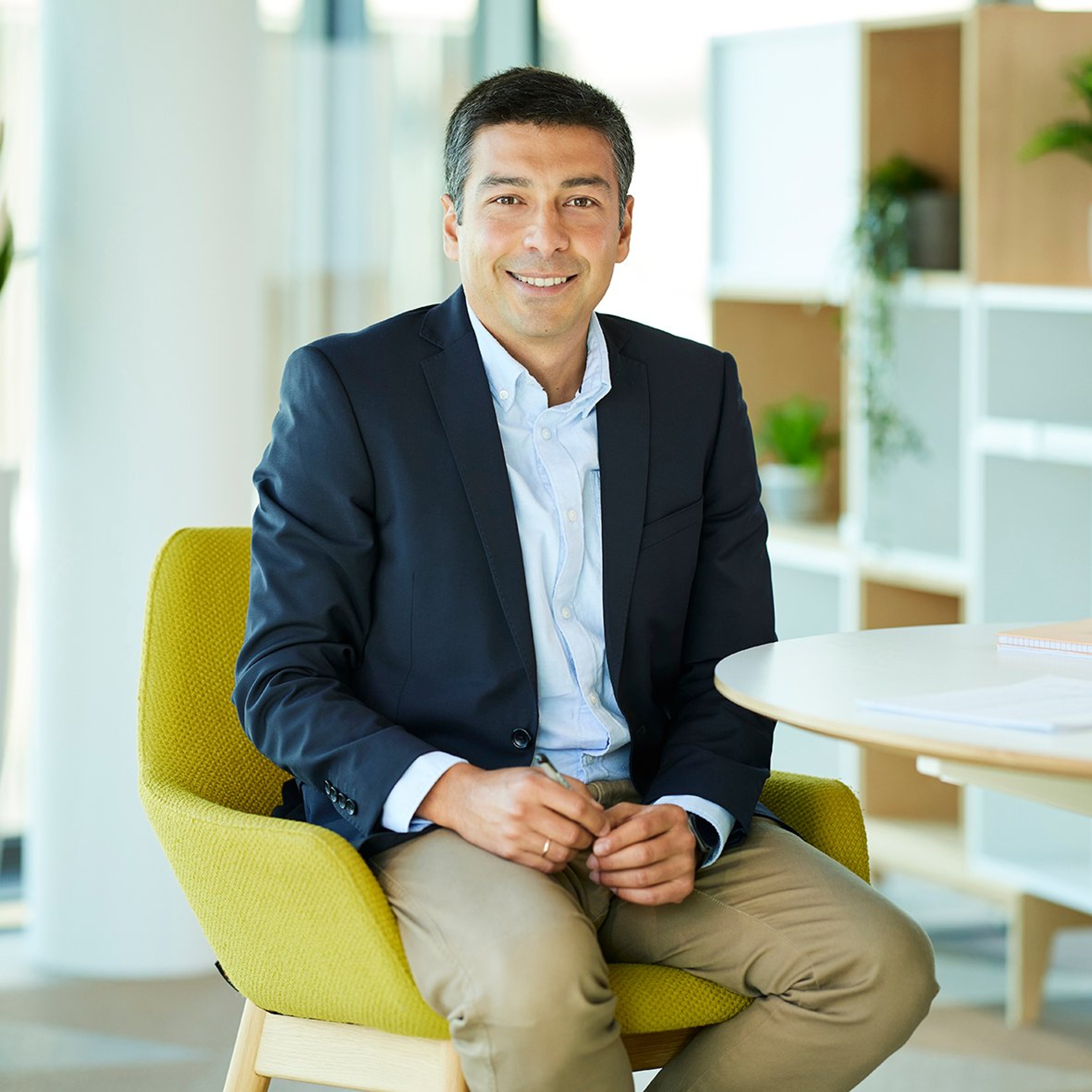
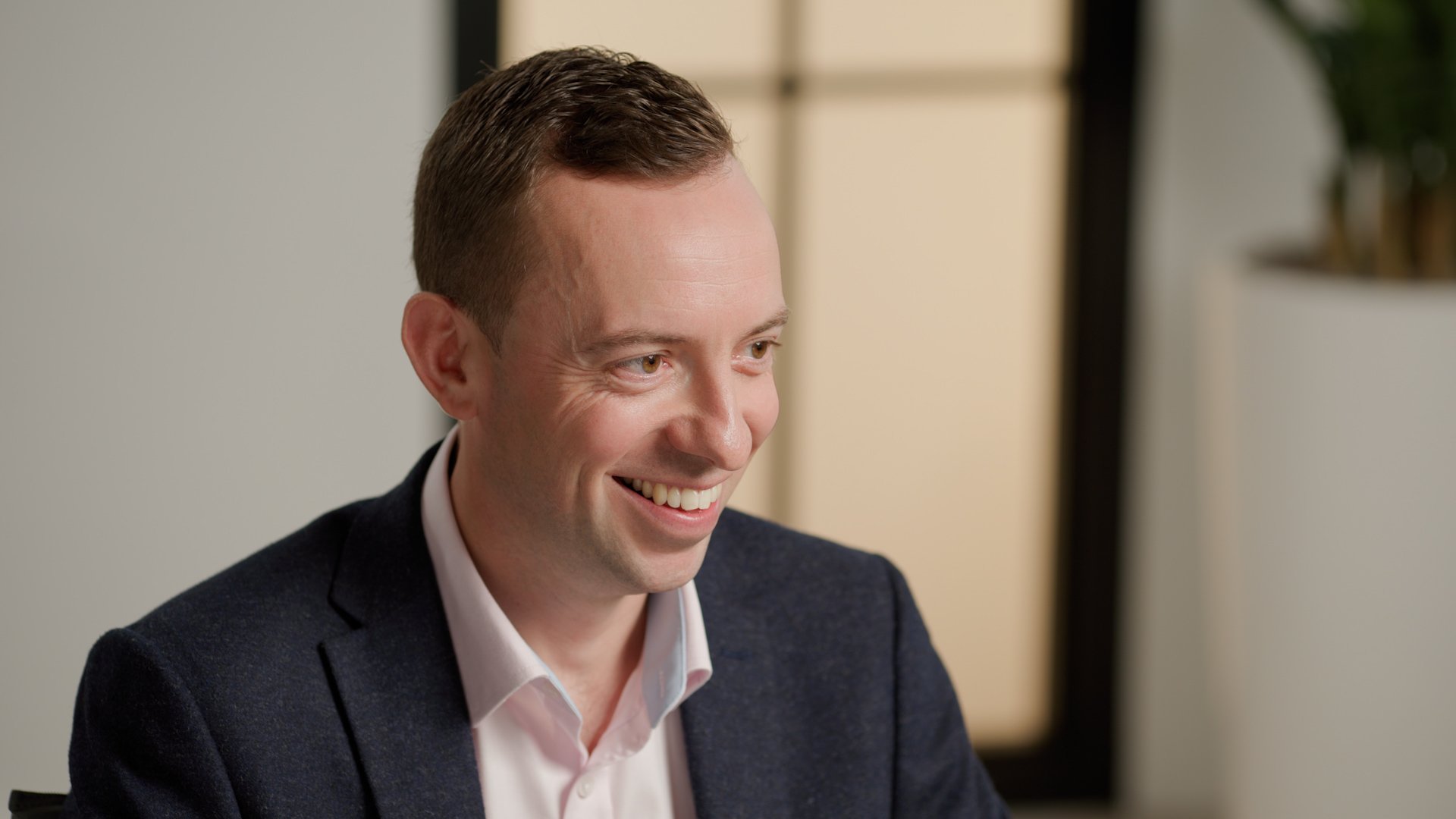
<p class="MsoNormal"><strong>Saad Malik (SM):</strong> Sure. My name is Saad Malik. I'm an investment manager here at Baillie Gifford and one of the co-managers on our Global Islamic Strategy.</p>
<p class="MsoNormal"><strong>Tolibjon Tursunov (TT):</strong> And I'm Tolibjon and I'm the founder and the head of Islamic equity strategy here at Baillie Gifford.</p>
<p class="MsoNormal"><strong>VT:</strong> Thank you both. So I think a good place to start is from the beginning. So, why don't we go back to the start of this journey, of Baillie Gifford's journey, into Islamic equities and investing?</p>
<p class="MsoNormal"><strong>TT:</strong> Sure, maybe I should take that. So, the journey starts in 2015, when I asked a rather simple question of: could I invest my pension pot and get similar exposure to long-term, patient growth investing that we offer to other clients here at Baillie Gifford? Not a watered-down version, not an existing strategy with an Islamic overlay bolted on top - the real thing. The answer was no. Not only the answer was no, but we didn't know how to build such a strategy.</p>
<p class="MsoNormal">So, from 2015 to 2018, I guess I immersed myself in the studies of Islamic finance: attending conferences, speaking to scholars, but also looking at the funds range within the market, speaking to the experiences and learning from the experiences of Muslim investors.</p>
<p class="MsoNormal">Between 2018 and 2021, we then took all the feedback that we learned externally about the fund development and the strategising, and then brought it internally, started to debate it, so as to design a product which will offer institutional-level quality features to the clients.</p>
<p class="MsoNormal">And in 2022, only then we felt ready that we could see that a product could be built, at which point the Baillie Gifford partnership had seeded the strategy. And, as of this year, 2026, we're making that strategy available to the broader investing community.</p>
<p class="MsoNormal">We hope that this will bring an institutional-level quality strategy, both in terms of the magnitude of the investment returns it seeks to bring to our clients, as well as the client servicing.</p>
<p class="MsoNormal"><strong>VT:</strong> You mentioned institutional-level quality. Can you tell us more about that and specifically what you set out to achieve?</p>
<p class="MsoNormal"><strong>TT:</strong> Sure, three things, really, what we've set out to achieve. First, and this has to be first, for clients, is offering exemplary investment returns. And everything else flows from that. We here, at Baillie Gifford Islamic, are similar in the way we approach investing: optimism, long-termism. We look to find and then invest in a handful of companies that can grow their cash flows and earnings over long periods of time. And once we find them, we invest in them, back them, with patience and conviction.</p>
<p class="MsoNormal">The second thing that we're trying to achieve here is a bit more ambitious. We've set out to help evolve the Islamic equities investing industry. So, if you take a step back and think about, globally, one percent of the equities universe is comprised of Islamic equity funds. And most of that one percent is run mechanistically through screens, where you go through a list and you take out, almost automatically, companies from a list. Now, that approach has its place, but it leaves a lot on the table. There's nobody, almost, who is looking at the substance of the businesses, the actual business activities of the companies, which are in those lists or outwith those lists.</p>
<p class="MsoNormal">Our approach is very different. We marry our approach of Baillie Gifford, where we look at the fundamental qualities of a business – we understand the business models, not only the current business model, but also directionality in those business models – and we co-work with our investment knowledge, with our Islamic scholars, where they bring the religious rigor and we bring the investment expertise. And the result is that we expand the investable universe, not only for our clients here at Baillie Gifford Islamic, but also for the broader Islamic investing community.</p>
<p class="MsoNormal">We have several examples where we've been successful. Shopify is one such example, where it's a company which we co-work with our Sharia scholars, where we work them through in terms of educating on the importance of Shopify for the small and medium-sized businesses in helping them digitise their operations, but also extend their reach. We worked our Islamic scholars through the financial profile of the company. As a result of that engagement, Shopify is now investable. Again, not only for our own clients, but also for any person within the Islamic investing community.</p>
<p class="MsoNormal">The other example I'm particularly proud of is Biotech, where it had been left out by these screens purely because it had a cash-heavy balance sheet. Now, it is true that it had a cash balance sheet, but going back to the earlier point, it is only once you start to understand what that cash is there for in the biotechnology companies. The cash is not there to earn interest, which is prohibited in Islam. It's there, ring-fenced, to sponsor various stages of research and development in some groundbreaking drugs that these companies are working for. That's another example where we've been able to whitelist and bring that to our investable universe. So, in a nutshell, that's the second thing that we're trying to do, which is helping evolve the Islamic investing industry by increasing the investable universe.</p>
<p class="MsoNormal">And thirdly, very quickly, if I may? I guess it's slightly personal in that, this project, when I look ahead, really excites me because it goes beyond anything I've done professionally. It's an opportunity for me and my team here, Saad and the broader team, to build a legacy for ourselves. There are two billion Muslim people in the world, with about 10 percent of the global wealth, and very little of that wealth invested in the ways which truly reflect their values. Now, we're not going to be able to close that gap fully, but we'll give our best shot. At the end of our careers, I hope that we will look back at this and say, absolutely, we've given everything for this project.</p>
<p class="MsoNormal"><strong>VT:</strong> I love that I can hear the passion behind this initiative, right? And you're absolutely right in that the industry, for the most part, when it comes to Islamic equity investing, they apply this exclusionary approach – whereas what you guys are doing here is proactively screening and including growth companies, which is great, which is also quite rare.</p>
<p class="MsoNormal">So, I think we can also agree that narrowing the supply and demand gap is quite a task. It's not easy, right?</p>
<p class="MsoNormal">So, Saad, perhaps I can turn to you: how does the team plan to achieve these targets that you've set for yourself, to reach these three objectives that you've outlined? What sets you, or rather the firm, apart?</p>
<p class="MsoNormal"><strong>SM:</strong> Yeah, absolutely. And you're right, Vineeta, to question not just what we've set out to achieve, but why we think we have a really good chance of doing this well. I'll start with some personal context. I joined the firm about a decade ago on the investment graduate scheme. Tolibjon here, joined 15 years ago. I'm rounding down for his benefit. What this graduate scheme does is instil a central foundation around investment excellence. And this is as true today as it's been for the firm over the last century. Now, what is this foundation? As Tolibjon alluded, it's backing world-class businesses in all their shapes and sizes.</p>
<p class="MsoNormal">We are bottom-up investors. We're constantly scouring the planet, looking for companies that will later go on to become extraordinarily important in their ecosystems and in broader society. And of course, Tolibjon and I are not just doing this by ourselves. We're two investors in a firm with over a hundred, and all of us are focused on this task. How do we build funds with exceptional world-class companies? So there's a tremendously rich pool of resources that we get to draw upon, and that we also contribute to.</p>
<p class="MsoNormal">I share this because I want to be clear, we're not changing how we're investing. We're taking an approach, a discipline to investing, which has served our clients for generations, and we're applying it to a Sharia-defined universe. The second point is really about the strength of this foundation towards Sharia integration. And for me, when you think about Sharia, as you've mentioned, Vineeta, there's an extraordinary emphasis on exclusion, negation.</p>
<p class="MsoNormal">And this is fundamental, right? There are sets of activities we cannot invest in, alcohol, gambling, interest, and we're rigorous there. But in my view, that's only half of it. The other half is affirmation. Islam affirms a type of business that is very much interested in contributing positively, that has a positive likely legacy in not just the lives of their customers, but also the ecosystems in which they operate.</p>
<p class="MsoNormal">I'll give you an example. We're investors in a company like Roche. They're a healthcare and life science business. Their customers are biotechs and large pharmaceutical businesses. Of course, Roche wants its customers to do well, but really, if the customers do well, there's life-saving medicine that is now being brought to the market. And Roche is very much an enabler of that.</p>
<p class="MsoNormal">Another example is a cybersecurity business, CrowdStrike. This is a business that is securing the digital services which we all take for granted and are heavily reliant on, on a day-to-day basis. So, it's not just the negation, it's also the affirmation.</p>
<p class="MsoNormal">Tolibjon mentioned a point as well here around, or distinction, I think is really worth reemphasising. For me, excellence around Sharia integration comes from this two-way dialogue with Islamic scholars. Where there's disagreement, we walk through our views around the fundamentals of a company, and they provide an extraordinarily important religious rigor, and it's only through that two-way dialogue can we go about expanding the universe for all Muslim investors, and that's extraordinarily worthwhile.</p>
<p class="MsoNormal">The final point I'll say, which is really essential to how we think about investing and core to our advantages, is our time horizon. Baillie Gifford has been around for over 100 years. We are run with partners that work full time within the firm. That partnership structure gives us a certain stability and ability to look over the long term. The bulk of the market, I've noticed, is only interested in what's going to happen over the next few quarters. And the challenge with that is that we're interested in societal contribution, we're thinking about positive legacies for a business.</p>
<p class="MsoNormal">If you're interested in the next few quarters, frankly, you're not invested in these names long enough for the answers of those questions to matter. We are. We're interested in what the most important companies could be over the next decade and what their lasting legacy will be.</p>
<p class="MsoNormal">So, it's really those points, Vineeta, I think, why we have an advantage. It's our research platform, we're doing something we've always done – we're applying it to a universe, the Sharia universe. It's our two-way dialogue and our integration of Sharia. And then finally, it's our time horizon.</p>
<p class="MsoNormal">I would add it's also a tonne of patience, a lot of hard work. But we think this is an essential foundation, frankly, to offer Muslim investors and savers a product that is deserving of a title of Global Islamic.</p>
<p class="MsoNormal"><strong>VT:</strong> Absolutely. Thank you so much.</p>
<p class="MsoNormal"><strong>TT:</strong> And Saad did an excellent job there in terms of setting out why we'll hopefully succeed in this task. I guess to answer your other question, which is about the gap is huge, the market is huge, and now we realise that we will not fully close that gap by ourselves, but we'll give our best shot to at least narrow that gap over our investing careers, so we look forward to that task. And as Saad says, we have so much hard work and a lot of hopefully positive future to look forward to.</p>
<p class="MsoNormal"><strong>SM:</strong> It's a great challenge.</p>
<p class="MsoNormal"><strong>VT:</strong> Yeah, and I personally look forward to that. I mean, if I may share some of my personal observation, I've been covering this market for the last 13 years or so, and I basically watched the industry swing between great promises and great frustration. Right? So, there's no doubt that the demand is there, but what we lack is great products to actually meet those demands.</p>
<p class="MsoNormal">So, for much of its history, we talked about, or you've alluded to how, Sharia equity investing has often come to mean settling, settling for a narrower universe, settling for perhaps underperformance against the conventional counterparts, right? And this really, I think, has created a quite damaging narrative. It tells us, or it suggests to us, that faith-based investing is inferior, which is not the case.</p>
<p class="MsoNormal">So, what strikes me from our conversation today, from what you've shared, is that Baillie Gifford has built something that directly challenges that narrative. And it does so with credibility. You talk about this 100-year legacy and expertise that's built over so long. And 10 years – 10 years to build this. Active engagement with scholars and expanding this investable universe case-by-case, I think that really tells us something about your strategy.</p>
<p class="MsoNormal">So, is it going to be challenging? Are there going to be challenges ahead? Absolutely. Because I don't think… I mean, convincing Muslim investors who perhaps were disappointed in the past is not an easy task. But I think from what you've shared today, patience is what you have in abundance. And I'm really looking forward to what you guys will bring to the table.</p>
<p class="MsoNormal"><strong>SM:</strong> Thank you so much, Vineeta.</p>
<p class="MsoNormal"><strong>VT:</strong> Thank you.</p>
<p class="MsoNormal"> </p>
<h3>Risk Factors</h3>
<p>The views expressed should not be considered as advice or a recommendation to buy, sell or hold a particular investment. They reflect opinion and should not be taken as statements of fact nor should any reliance be placed on them when making investment decisions.</p>
<p>This communication was produced and approved in May 2026 and has not been updated subsequently. It represents views held at the time of writing and may not reflect current thinking.</p>
<p>All investment strategies have the potential for profit and loss, your or your clients’ capital may be at risk. Past performance is not a guide to future returns. </p>
<p>This communication contains information on investments which does not constitute independent research. Accordingly, it is not subject to the protections afforded to independent research, but is classified as advertising under Art 68 of the Financial Services Act (‘FinSA’) and Baillie Gifford and its staff may have dealt in the investments concerned.</p>
<p>All information is sourced from Baillie Gifford & Co and is current unless otherwise stated. </p>
<p>The images used in this communication are for illustrative purposes only.</p>
<p><strong>Important Information</strong></p>
<p>Baillie Gifford & Co and Baillie Gifford & Co Limited are authorised and regulated by the Financial Conduct Authority (FCA). Baillie Gifford & Co Limited is an Authorised Corporate Director of OEICs.</p>
<p>Baillie Gifford Overseas Limited provides investment management and advisory services to non-UK Professional/Institutional clients only. Baillie Gifford Overseas Limited is wholly owned by Baillie Gifford & Co. Baillie Gifford & Co and Baillie Gifford Overseas Limited are authorised and regulated by the FCA in the UK.</p>
<p>Persons resident or domiciled outside the UK should consult with their professional advisers as to whether they require any governmental or other consents in order to enable them to invest, and with their tax advisers for advice relevant to their own particular circumstances.</p>
<p><strong>Financial Intermediaries</strong></p>
<p>This communication is suitable for use of financial intermediaries. Financial intermediaries are solely responsible for any further distribution and Baillie Gifford takes no responsibility for the reliance on this document by any other person who did not receive this document directly from Baillie Gifford.</p>