View transcript
<p><strong>Leo Kelion (LK):</strong><span lang="EN-US"><strong> </strong>Under normal circumstances, you wouldn’t want anything to do with an adenovirus. It causes fever, sore throats and pink eye. A nasty business. But recently, the microbe has taken on a new purpose; tackling bladder cancer in patients who’ve stopped responding to treatment. Scientists hijacked it to deliver a gene that makes the bladder lining produce a cancer-fighting protein.</span></p>
<p><span lang="EN-US">Then came the even harder part. Clinical trials for gene therapies are unusually difficult. Few firms could find the many dozens of patients required. Fewer still could train the caregivers involved to handle the virus safely. Medpace specialises in exactly this kind of work. It ran the trial, passed four FDA site inspections without fault, and the US medical regulator ultimately approved the drug for use.</span></p>
<p><span lang="EN-US">Such expertise is scarce. Welcome to Short Briefings on Long Term Thinking. I’m Leo Kelion, and I’m joined by Mike Taylor, Baillie Gifford partner, investment manager in our Global Alpha team and co-manager of the Monks Investment Trust. We’re going to discuss how enduring bottlenecks play to Medpace and other companies’ advantage. But before we begin, a quick reminder. Your capital is at risk, and your income is not guaranteed. Mike, welcome to the show.</span></p>
<p><strong>Mike Taylor (MT):</strong> Glad to be here.</p>
<p><strong>LK:</strong><span lang="EN-US"><strong> </strong>Mike, before we get to the topic in hand, I want to introduce you to our listeners. So you started at Baillie Gifford 17 years ago, and then most recently became one of the managers of The Monks Investment Trust, which is one of the bigger of the investment trusts that we manage. But if I look at your BG CV, there’s a gap between 2014 and 2022. So can you fill it in for us?</span></p>
<p><strong>MT:</strong><span lang="EN-US"><strong> </strong>I moved down to London, and I worked at another investment firm called Marathon Asset Management. Marathon did things in a slightly different way to Baillie Gifford, but there are important similarities too. Both firms are long-term investors, both are private partnerships, but the style of investing at Marathon was slightly different, slightly more focused on the ebbs and flows of capital, which is just a fancy way of saying competition. So I think a complementary skill set to the one at Baillie Gifford. So I’ve taken that experience with me, of course, and I returned to Baillie Gifford, as you mentioned, in 2022.</span></p>
<p><strong>LK:</strong><span lang="EN-US"> And so has that time away and then coming back influenced the types of companies that you’re interested in?</span></p>
<p><strong>MT:</strong><span lang="EN-US"> Of course it has. Yeah, it was a formative time for me. What that way of looking at the world encourages you to do is to focus on where the money is going. So if you consider a great opportunity, if you consider the demand available for a good or service, that’s one part of the equation. But then you have to consider, OK, who is trying to answer that need, to answer that call? Is there something special about the business that I am looking at that will allow it to make supernormal profits over the long term?</span></p>
<p><span lang="EN-US">It’s that focus on the supply side. It’s actually something that I think Baillie Gifford over time has done very, very well. So we were early investors in, say, the electric vehicle space, but we didn’t just invest in electric vehicles broadly. We identified the company that could resist the competition. We identified Tesla. And that’s where we put our clients’ capital. So I think it’s familiar territory to Baillie Gifford as well as Marathon.</span></p>
<p><strong>LK:</strong><span lang="EN-US"> OK, I want to move on then to our topic, bottlenecks. Can you define what you mean by the term and how it relates to long-term growth?</span></p>
<p><strong>MT:</strong><span lang="EN-US"><strong> </strong>Absolutely. So we are looking, when we consider bottlenecks, for areas where supply cannot expand at the rate of demand. Where is there a rate limiter? Where is there scarcity? Now, it could be in specific know-how. It could be in a cornered resource of some form.</span></p>
<p><span lang="EN-US">But it’s important because it is that bottleneck where value will accrue. If you have something that is needed, that the market needs to meet this demand, you can price for it. And that’s where we think long-term returns are going to accrue. So this bottleneck framework encourages you to think about those special situations.</span></p>
<p><strong>LK:</strong><span lang="EN-US"><strong> </strong>And if I turn back to that contract research organisation that I mentioned at the beginning, Medpace, can you tell us a little bit more then about how bottlenecks apply to it?</span></p>
<p><strong>MT:</strong><span lang="EN-US"><strong> </strong>Absolutely. So let’s use the framework. We’ll start with demand. Demand in this space is a product of the need for healthcare. And it’s true to say that the need for healthcare is only going up. It’s only going in one direction.</span></p>
<p><span lang="EN-US">And that is the result of the nature of the population. We are getting older in Europe, in America, in Asia, and older populations need more healthcare. They get sicker, it takes longer to recover, and old age care and so on. So there is demand growing over here. What about the supply side of the equation, our ability to meet those healthcare needs? That is also expanding.</span></p>
<p><span lang="EN-US">Specifically, our ability to, say, understand our own genetics is only improving. That is going to allow us to produce novel therapies, drugs, treatments and so on. So we’ve got supply rising, and we’ve got demand rising. Where is the bottleneck? Well, the bottleneck, as we see it, is in getting those therapies and drugs approved. This is a hard process.</span></p>
<p><span lang="EN-US">Getting a drug from discovery all the way to the market can take 10 years. It can cost hundreds of millions of dollars, even $1bn. And so this is this huge sort of bottleneck, it limits the rate at which supply can meet demand. Into that picture steps Medpace. Now Medpace’s proposition is: “We will design a trial for you, we will enrol the patients, we will implement it, we will analyse the data, and we will make that as easy as possible for our customers.” And consider that the customers here are often small biotechnology companies.</span></p>
<p><span lang="EN-US">Dealing with the FDA isn’t a core skill set of theirs. And let’s not downplay how difficult this is. It’s not just talking to a regulator. As you mentioned in your introduction, these can be quite obscure conditions. Finding the patients can be difficult. Enrolling them can be difficult.</span></p>
<p><span lang="EN-US">Ensuring that they adhere to the treatment programme, that can be difficult. Analysing the data, presenting the data in the right form, it’s all very difficult. So there is a real bottleneck there, and Medpace, we think, is a company that’s addressing it. And it’s also doing it in a way not common in the industry. Your competitors, your rivals, they’re often working with the large pharma companies that will do much of it themselves. They’re only doing little bits and bobs. Medpace works with small biotechnology companies, and they will do the whole thing.</span></p>
<p><strong>LK:</strong><span lang="EN-US"><strong> </strong>So it’s an uncommon company, and I think it’s got an uncommon founder-leader, August Troendle. Before he set up the company, he worked at the US Food and Drug Administration, then went on to one of the pharma giants, Sandoz, before setting up the company in 1992. So he was very early to spot this biotech bottleneck. What type of a leader is he?</span></p>
<p><strong>MT:</strong><span lang="EN-US"><strong> </strong>He’s a very credible one. Now, all of those facts that you’ve mentioned, they’re very important, it’s also important that he is a former physician. He has real medical experience. Now, why is credibility… why does it matter here? Well, consider this question from the perspective of the customer, the biotech.</span></p>
<p><span lang="EN-US">There is a lot at stake here. You might only have one or two drugs in your pipeline. Getting them approved, getting them to the market is absolutely critical. So his experience of the regulator, his medical background allows him to reassure those customers, and it allows him to build a culture that is science first. Now, culture is quite an interesting question with Medpace because as we go through our analysis of that company, the picture we get is that it’s quite a difficult place to work. There are long hours, there are high expectations, and at a junior level at least, perhaps people don’t stay as long as you might expect.</span></p>
<p><span lang="EN-US">But for us, that is actually the sign of an effective culture meeting the challenge for the customers. Now, I say that because consider the bottleneck. It is a question of time and money. Medpace needs to be quick, and it needs to be efficient. So it does work its employees hard. They rise up to that challenge because this is a customer-centric, science-first organisation.</span></p>
<p><span lang="EN-US">And then, as we do our channel checks, we look up at the senior level. Executives at that level do stay for longer than you would expect in the industry. So he’s a very credible leader, and he has built a culture that meets the demand of the client.</span></p>
<p><strong>LK:</strong><span lang="EN-US"><strong> </strong>But in your meetings with Medpace, do you stress test how narrow and enduring this bottleneck is? I ask because there’s been quite a bit of volatility in its share price this year. I think one of the reasons was a number of cancellations in trials from their clients.</span></p>
<p><strong>MT:</strong><span lang="EN-US"><strong> </strong>We absolutely do. It’s a key question for us. We are long-term investors at Baillie Gifford. And bottlenecks in various industries appear and disappear. If you’re taking a long-term view, you need to say that in five years’ time, this is still going to be there. Now, you said Medpace’s share price can be volatile.</span></p>
<p><span lang="EN-US">Absolutely, 100 percent yes. Shortly after we bought this company last year, the shares surged 50 percent because the market looked at the increase in the backlog, and they were impressed. Recently, the shares have been much weaker, fallen 20 percent-plus on results because the backlog growth has not been up to expectations. What we’re trying to do at Baillie Gifford is to say, do those moves in the share price reflect the fundamental story here? And I don’t think they do. So we’re stress testing, to use your phrase, the persistence of this bottleneck.</span></p>
<p><span lang="EN-US">So we’ll start with demand. Is demand going to be enduring in this industry? Well, I cannot think of a more dependable trend than demographics. Yes. What about supply? Are we going to get a continual development of new drugs, therapies?</span></p>
<p><span lang="EN-US">I think that’s going to accelerate. Part of the answer there is artificial intelligence. So I mentioned we understand our genetics better than we used to. So there’s raw data. But there’s questions about how we analyse that data. Much of the drug discovery process is trial-and-error.</span></p>
<p><span lang="EN-US">Will this work? Will this work? Will this work? What artificial intelligence can do is examine a massive amount of data and then make suggestions, potentially. So it’ll say, “OK, your problem is this. I have seen an example in some unrelated field that a protein of this shape might be the answer”, and therefore can suggest where your trial and error process might go next.</span></p>
<p><span lang="EN-US">Early days with that, but really promising. So yes, we think supply of novel therapeutics and drugs will continue to increase. There will be demand for it. Therefore, that bottleneck will endure. So our case for Medpace takes that into account. And therefore, we are willing to tolerate that short-term volatility.</span></p>
<p><strong>LK:</strong><span lang="EN-US"><strong> </strong>So Medpace is serving a broader industry need, but is it also possible for companies to benefit from bottlenecks of their own making? By that I mean a company creating a product category of its own and then acting as its pinch point.</span></p>
<p><strong>MT:</strong><span lang="EN-US"> Absolutely. And these are particularly attractive cases because that company you could almost characterise as being in control of their own destiny. If they have created the demand and they own supply, well, that’s pretty powerful. A good example here is a business called Games Workshop. This is a UK business based down in Nottingham. And what Games Workshop does, it owns the IP for something called Warhammer.</span></p>
<p><span lang="EN-US">And Warhammer is a tabletop game. Now, you might think it’s Monopoly or Snakes and Ladders. It’s not that. It is, to get a picture in your mind, a sort of landscape is placed on a table, and then little figurines populate that landscape, and they do battle. And these figurines are amazing. They’re so intricate.</span></p>
<p><span lang="EN-US">So often, the story that you are participating in when you play Warhammer is humans versus various malicious alien populations and so on. So you can imagine a figurine as human with a big helmet and armoured shoulders and a serrated sword, and they’re doing battle. Now what’s interesting about this to me, when you play Warhammer you are participating in a decades-long story, a canon, a lore. There are different chapters or episodes, almost, of that story that develop over time. There are books around it, novels. When you sit down with your friends on a Tuesday night, that one particular battle is not going to be part of the story, but you are participating in something much bigger than that one night.</span></p>
<p><span lang="EN-US">So when people play Warhammer, they’re participating in something bigger than themselves. Now, what has this got to do with bottlenecks? They’ve created demand for this game, there are about two million active players. Could anyone else supply Warhammer? Well, no for a sort of legalistic reason, they own the IP. But also, coming up with a rival game, and there are rival games like Dungeons and Dragons or Magic: The Gathering, but it’s going to take you a long, long time to replicate the richness, the depth of the Warhammer story.</span></p>
<p><span lang="EN-US">So they’ve created the bottleneck, and it is that that allows Games Workshop to produce the really attractive financials that it does.</span></p>
<p><strong>LK: </strong>And by IP, that’s intellectual property, right?</p>
<p><strong>MT:</strong> Absolutely.</p>
<p><strong>LK:</strong><span lang="EN-US"><strong> </strong>Excellent. Baillie Gifford’s got a long history with this company, doesn’t it? We first invested in it over 30 years ago, and we’re now its biggest shareholder on behalf of our clients. So let’s stick with it for a moment, because I want to talk about internal bottlenecks. And in Games Workshop’s case, it’s acknowledged that it sometimes struggles to make enough stock of its Warhammer miniatures, particularly at the time that it launches new game packs. So how do you consider that challenge?</span></p>
<p><strong>MT:</strong><span lang="EN-US"><strong> </strong>Well, first of all, this is a pretty good problem to have. There’s lots of demand there. That’s healthy. What we’re doing, we invest in Games Workshop, is trusting the management team to shepherd this business over the long term. Now, there are internal bottlenecks. One is production.</span></p>
<p><span lang="EN-US">And to answer that challenge, Games Workshop are building their fourth production facility, again, down in Nottingham. But it’s important to put that in context, because that facility is going to cost about £9m or £10m. Free cash flow, as in the money, the cash money generated by this business in any one year, is way more than that. £150m, I think, is roughly the ballpark. So it could build 15 facilities if it wanted to. It could flood the market with tiny orcs.</span></p>
<p><span lang="EN-US">But it doesn’t do that. And it doesn’t do that because of another internal bottleneck, which is their attitude towards growth. And the way they approach growth is such that they hope to protect the bottleneck. They don’t want Warhammer to become ubiquitous and to lose what makes it special. So the people that play this game, they’re enthusiasts, they’re hobbyists, they love it. If it became ubiquitous, what makes it special is put at risk.</span></p>
<p><span lang="EN-US">So they’re very careful stewards. Now, of course, it is a growth business. They are rolling out new stores across North America, but they’re doing it in a sustainable fashion. A really interesting expression of this is their approach to other forms of media outside the game itself. Historically, they’ve licensed intellectual property to video games. They are now doing that with a TV series with Amazon, but they’re doing it super cautiously because the risk is that ubiquity point, you destroy what makes it special if you don’t get to control the content of that show.</span></p>
<p><span lang="EN-US">They’ve always been very, very careful, and we trust them to do that. The temptation is always going to be for them to ramp up production too aggressively, flood the market, make great profits for a year or two, and then destroy the franchise. We’re not interested in that. We’re here for the long term, so we’re very supportive of how they shepherd their company.</span></p>
<p><strong>LK:</strong><span lang="EN-US"> Mike, I wonder if we can take a step back just to contextualise all this, because Medpace and Games Workshop are very different types of companies, bottlenecks aside. I think your strategy actually puts them into different growth categories. So when you’re looking at investing in a new company, are you not just thinking about what bottlenecks exist, but also that you’re getting a diverse mix of them as well?</span></p>
<p><strong>MT:</strong><span lang="EN-US"><strong> </strong>That is critical to what Global Alpha, to what Monks does. Medpace, Games Workshop, those are, I believe, fantastic investment cases, but they are stronger when considered together. So as you know, we on the strategy have a number of different types of growth. In fact, we have three. So we have our traditional rapid growers. These are businesses that are doing something fundamentally different to the status quo.</span></p>
<p><span lang="EN-US">They are creating markets. They’re disrupting. We’re looking for your visionary founders. And when we do that, we’re saying that the market underestimates how quickly this company can grow or how long that very rapid growth rate will endure for. But that’s not all of it. </span></p>
<p><span lang="EN-US">We’ll then have a steadier grower. That could be a Games Workshop. They will grow at a less dynamic rate, perhaps, but they’ll do it for an extremely long period of time. The market will look at that kind of company, and often they’ll say, OK, we’ll bend the growth rate down to something more normal in a few years’ time that seems conservative. And for most companies, that’s probably a realistic expectation. For a few special ones, the Games Workshops, that is not what will happen. The growth will endure. So that’s the next type. We often refer to those as our compounders or our stalwarts. </span></p>
<p><span lang="EN-US">Finally, we have our cyclical businesses. These are the Medpaces of the world. They’ll be very strong in some years, weaker in other years. The market will look at a Medpace and say: “I’m going to try and predict the strength in the coming quarter, the coming year, and I will buy out of the surges, and I’ll sell ahead of the dips.”</span></p>
<p><span lang="EN-US">We don’t try and do that. We say, what is the long-term structural growth here? Can I buy into that? And I’ll ride out these ups and downs. Hopefully I’ll buy at a down and get a good price. So we have those rapid growers, those compounders or stalwarts and those cyclical companies.</span></p>
<p><span lang="EN-US">But the beauty of the strategy is they are stronger, I believe, when put together, because a Medpace is going to move in a different way to a Games Workshop, which will move in a different way to a really rapidly growing business. And we hope that by putting them all together, you will benefit from the growth over the long term, but the ups and downs, the volatility would be more muted.</span></p>
<p><strong>LK:</strong><span lang="EN-US"> So let’s talk about some of the other companies that you’re adding to the mix, some of the newer companies that you’ve invested in. Can you give me an example of one and maybe the bottlenecks that are relevant to it?</span></p>
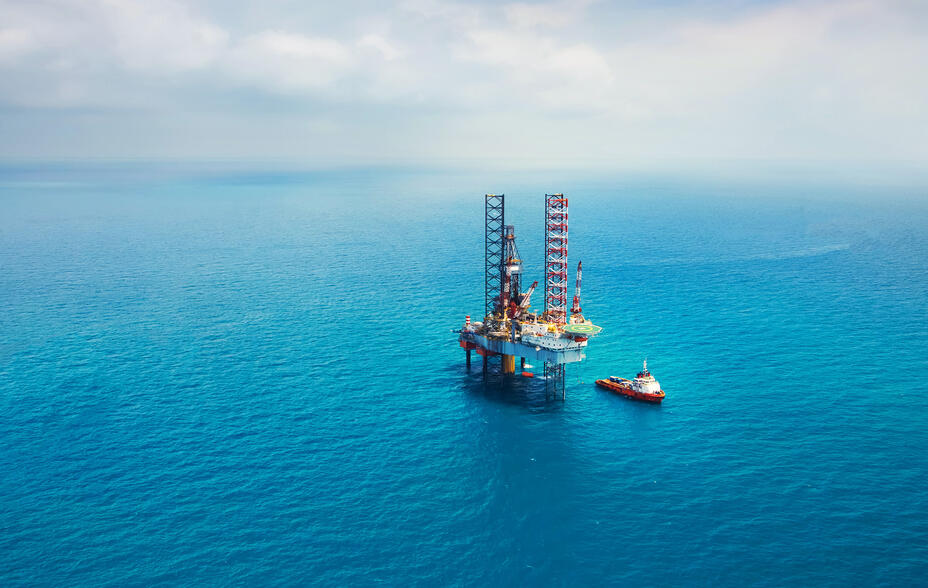
<p><strong>MT:</strong><span lang="EN-US"> So the one I’d like to highlight here is a company called Tidewater. And Tidewater operates in the oil and gas business. What it does is it supplies offshore support vehicles. These are little boats that help the operation of offshore oil rigs and drilling activities. If you can picture in your mind a nature documentary, and in the nature documentary, you’ve got a big whale or a whale, a huge fish. Around the big fish will be lots of little fish that are not commented on by the narrator.</span></p>
<p><span lang="EN-US">Tidewater makes the little fish. These are the supports. The whale is the oil rig, and you have the little boats around it. And these little boats will bring crew to and from the oil rig. They’ll bring supplies. They’ll do tugging to get the thing into place.</span></p>
<p><span lang="EN-US">Great. Why would we be interested in a little boat maker? Well, let’s use the bottleneck framework. I believe in the energy transition. But there’s still going to be powerful demand for oil and gas for a very long time. It’s not going to go away. And within that picture, is it sensible, we might ask, that we rely as much as we do on the Middle East?</span></p>
<p><span lang="EN-US">That can be a volatile region. So we think there’s probably a reason to invest in offshore activity outside of that region. So there is steady, if not spectacularly growing demand. What about the supply? Well, the oil and gas industry has not invested, perhaps as it may have done or should have done, over the last 10 years to meet that ongoing demand. In fact, oil and gas businesses have been very interested in buying themselves and consolidating and so on.</span></p>
<p><span lang="EN-US">So where is Tidewater within this? We think we have identified a really interesting, specific bottleneck. Our prediction is, our expectation, that offshore activity will pick up, probably next year and so on. If that happens, you are going to need more of these little boats. But Leo, there are no boats. There has been chronic underinvestment in this industry.</span></p>
<p><span lang="EN-US">Over a third of all of the little boats are over 25 years old. As activity has declined, they have been left to rust. We might say, OK, well, why won’t you just build more boats to meet the demand? We’ve also shuttered 60 percent of the capacity to build new ones. So there, we think, is likely to be a chronic undersupply of offshore support vessels. Enter Tidewater.</span></p>
<p><span lang="EN-US">Now Tidewater has the largest fleet going, there’s about 209 vessels. And they’re also, they’re comparatively young, they’re in quite good shape. In the last period, five years or so, Tidewater has been acquiring competitors at bargain-basement prices. So it has got some of the scarce supply. It has got an answer, a partial answer to this bottleneck. And what gets me really excited is when that demand hits that limited supply, the potential for pricing is explosive.</span></p>
<p><span lang="EN-US">And if the price of renting an offshore support vessel goes up, there are no additional costs required. So the growth for this business in what isn’t a particularly growthy industry, you would imagine, could be spectacular.</span></p>
<p><strong>LK:</strong><span lang="EN-US"> Mike, boats are one source of scarce supply, copper’s another, and potentially one that’s harder to fix. But I think you’ve got a new company in your portfolio that addresses that. What can you tell us about it?</span></p>
<p><strong>MT:</strong><span lang="EN-US"><strong> </strong>So you are referring to Freeport-McMoRan. This is a copper miner, one of the largest in the world, one of the very few large miners from the United States. So let’s again use our framework. What’s the demand for copper going to be like? Well, copper goes into electrification, wiring, transmission. Essentially, every big growth theme out there requires electrification, therefore requires copper.</span></p>
<p><span lang="EN-US">So electric vehicles is obvious, but also artificial intelligence, enormous power demands, robotics, defence. There’s this great demand story out there. </span></p>
<p><span lang="EN-US">What about supply? Well, supply in the industry is a function of the investment of the mining companies, and that has not been up to scratch for a very long period of time. The price of copper since about 2006 has averaged somewhere in the region of $7,000 to $8,000 per tonne. It’s gone up recently towards $13,000, but that’s still not at the level that would bring new copper supply on.</span></p>
<p><span lang="EN-US">So supply is inefficient. And even if you wanted to bring a copper mine on, it would take ages to get the permit, to understand the geology, to get it. So restricted supply, powerful demand, which brings us to Freeport. </span></p>
<p><span lang="EN-US">Now, there are two things to highlight here. One, this is a US company and copper is critical. It’s been actually classified now as a critical mineral. And the US requires its own supply. Now the world potentially could bifurcate between a US copper supply chain and a Chinese copper supply chain. So Chinese investment in Africa and so on. Freeport has US assets or owns assets in Indonesia. So it could be attractive from that point of view. And then there is its technological developments.</span></p>
<p><span lang="EN-US">We’ve done our due diligence in the company. We’re quite excited by its leaching technology. What do I mean by leaching technology? Well, without being too technical, it is chemistry rather than engineering. It’s essentially pouring powerful sulphuric acids into rubble so as to get more copper out of waste products. Freeport estimates that it can actually expand its own supply, wants to add volumes in the US of 60 percent, but it thinks it can do it partially using this technology, such that unit costs will fall 20 percent.</span></p>
<p><span lang="EN-US">So we’re very excited about demand. We’re very excited about Freeport-McMoRan’s position within the supply chain.</span></p>
<p><strong>LK:</strong><span lang="EN-US"> So Mike, you’ve mentioned AI a couple of times. Let’s address it head-on because your team recently came out with a paper that makes the point that this is a sector that’s rife with bottlenecks, not least in the amount of compute that’s available or the challenges in making the chips that run it, and providing power to the datacentres involved. So can you tell me a bit about some of the companies in your portfolios that sit astride these bottlenecks?</span></p>
<p><strong>MT:</strong><span lang="EN-US"> Absolutely. I’ll highlight two. We invest in a Japanese company called DISCO. This makes semiconductor manufacturing equipment. Essentially, machines that cut, grind, polish silicon dies, silicon wafers. And that might sound quite easy, but it is incredibly difficult to do. Semiconductors are getting more and more complex.</span></p>
<p><span lang="EN-US">The components within any chip are getting smaller and smaller, and they need to be stacked on top of one another and packaged. So to do that, you need to cut, grind, polish your silicon to very, very, very thin degrees. Way thinner than a human hair. And when you do that, you risk making your silicon very brittle. It might break. And every time you break something within this supply chain, one of these parts, it’s really, really expensive.</span></p>
<p><span lang="EN-US">So it’s incredibly difficult. To the extent that this one company, DISCO, controls 80 percent of the whole market. All roads in the semiconductor supply chain lead to this obscure one company in Japan. If you think AI will change the world, you’re going to need investment in datacentres. You’ve got lots of datacentres. And datacentres are going to be full of chips.</span></p>
<p><span lang="EN-US">But to get those chips, you need to use the equipment that DISCO supplies. So there, powerful bottleneck. And what’s attractive to us at the moment is there are actually quite a few of these bottlenecks. I’d like to highlight another one. This is in memory companies, specifically within those two businesses that make high-bandwidth memory. So Samsung Electronics and SK Hynix.</span></p>
<p><span lang="EN-US">These are two Korean businesses held at Baillie Gifford. Within my strategy, Global Alpha, we own Samsung. Why would we be interested in memory? If any listeners know much about the memory industry, they all know it’s viciously cyclical. It can be commoditised. We think something is changing or has changed within high-bandwidth memory.</span></p>
<p><span lang="EN-US">So first of all, demand. Artificial intelligence requires, as I think we all know, a huge amount of data, enormous amount of data to train an AI model. Increasingly, a very large amount of data is required to get them to work. They are reasoning models now, and what I mean by that is they move through different steps. And as you move through each step, you need to hold information in your mind, if it has a mind. And to do that, you need memory.</span></p>
<p><span lang="EN-US">Now, that’s the memory bit of high bandwidth. What about the high bandwidth? Well, this is getting the memory to the compute, to the intelligence bit. Recall that your graphics processing unit, your GPU that’s doing the thinking, is incredibly expensive. So a cutting-edge GPU from NVIDIA will cost you tens of thousands of dollars. A server unit will cost you hundreds of thousands of dollars.</span></p>
<p><span lang="EN-US">You don’t want that expensive kit sitting idle because it can’t get the memory. So you’re going to invest heavily in high-bandwidth memory. To do that, you’re going to have to purchase that kit from Samsung and SK Hynix. Why will that bottleneck endure? Well, high-bandwidth memory is really hard to make. It has to be packaged in a very sophisticated way.</span></p>
<p><span lang="EN-US">It’s very, very hard to do. Only these two companies can do it. And if you want your sunny uplands of the artificial intelligence-enabled future, you need high-bandwidth memory, you need Samsung, you need SK Hynix.</span></p>
<p><strong>LK:</strong><span lang="EN-US"><strong> </strong>So Mike, we’ve talked about bottlenecks in medicine, in entertainment, in shipping, mining and semiconductors. But I wonder if you can bring some of these strands together and just sum up how you distinguish between those bottlenecks you think are going to endure and those you think might be more fleeting.</span></p>
<p><strong>MT:</strong><span lang="EN-US"> That is the key question, right? And I’ll go back to that demand analysis, that supply analysis. So on the demand side, how big is the potential market? If you’re imaginative, if you step back and be optimistic and positive, how big could it be? Is it dynamic? Is it expanding? Then on the supply side, you can ask yourself, has an attempt been made to solve this bottleneck?</span></p>
<p><span lang="EN-US">Is there a challenger company? If I were to do it, if someone were to say: “Mike, here’s $100m, go and disrupt Warhammer.” How easy would it be? I don’t plan to do that because it would be so hard. So you look for testing of the case. Can I challenge my assumptions?</span></p>
<p><span lang="EN-US">And you do that on an ongoing basis. So you do that with the management team. You meet people that are trying. One of the real benefits of working for Baillie Gifford is we have such good access to management teams in the public and the private space. We can stress that question. We can find those innovative young businesses that are trying to solve the bottlenecks that we think we’re getting access to with our existing investments.</span></p>
<p><span lang="EN-US">So it’s that question of being imaginative about demand, thinking about the range of scenarios there and stress testing and challenging your supply bottleneck assumptions.</span></p>
<p><strong>LK:</strong><span lang="EN-US"> Mike, I always like to end this podcast by asking my guests what book they’re reading or have recently finished to get a window into their wider influences. So what new book has made it into your library?</span></p>
<p><strong>MT:</strong><span lang="EN-US"><strong> </strong>So I am currently reading SPQR by Mary Beard. That acronym is a phrase, Senatus Populusque Romanus, the Senate and the people of Rome, and it’s a history of the ancient world. Now, my training as an ancient historian, I’ve always been interested in this because it’s a fascinating period of history, Rome and also Greece. I also think it has interesting implications for my job. So when you’re doing ancient history, you are using ambiguous and incomplete information to build up a picture of a rich civilisation. So often it’s fragments of pottery and very specific bits of writing.</span></p>
<p><span lang="EN-US">So if you’re trying to build up an image of ancient Athens, say, you’re doing it on often comedy or tragedy plays and bits of pottery. Imagine trying to build up a picture of western civilisation using only bits of IKEA furniture and half an episode of The Office. So you’re piecing together. That is often what you’re doing in investment management. You’re using ambiguous and incomplete information. </span></p>
<p><span lang="EN-US">So you talk to management teams. Very useful. Great access at BG, but biased. Or experts that have their own agenda. And you’re talking about the future, which is inherently uncertain, of course. So there’s a similar skill set, I think.</span></p>
<p><strong>LK: </strong>And have you come across any Roman bottlenecks?</p>
<p><strong>MT:</strong><span lang="EN-US"> Absolutely. Land is one. If you own land in the ancient world, you’re in a pretty powerful position. And then some that you might not expect. There’s a couple of technology bottlenecks that have really fired my imagination. Let me give you one.</span></p>
<p><span lang="EN-US">The Romans came intriguingly close to developing a train. I’ve stretched that a little bit, to developing a steam engine. They in fact came up in the first century with a steam turbine, but the bottleneck was in a specific bit of technology. They couldn’t produce pipes that would be able to withstand the pressure that came with steam technology. They didn’t have the steel, they didn’t have the welding technology, and so they never took it anywhere. They relied on water power.</span></p>
<p><span lang="EN-US">But can you imagine a world in which the Romans had trains? I get fascinated about the Roman Empire in part because it’s so big. It would take months and months and months to get from Scotland to Persia. It takes months and months and months for communications. You don’t know you’ve been invaded for three months until after it’s happened. What if you had a train?</span></p>
<p><span lang="EN-US">What if you could move your army across? The whole world might be very different.</span></p>
<p><strong>LK:</strong><span lang="EN-US"><strong> </strong>That’s amazing. I didn’t think we were going to go there. Mike, thank you so much for coming onto the podcast. I hope we can get you back on again soon.</span></p>
<p><strong>MT: </strong>Pleasure being here. Thanks for listening.</p>
<p><strong>LK:</strong><span lang="EN-US"> And I hope you enjoyed this conversation too. If you want to read more from Mike, I recommend his article, Don’t burn your boats, which you can find in the Insights section of Baillie Gifford’s website. You’ll also find the research report I mentioned earlier, Valuing scarcity in the age of AI, as well as a write-up of this and past Short Briefings episodes. If you haven’t done so already, please subscribe to us via Spotify, YouTube or whichever podcast platform you prefer to be first to know when new episodes are released. But for now, that’s it. Thanks for listening, and I look forward to briefing you again soon.</span><span lang="EN-US"></span></p>
<p> </p>
<p><strong>Important information</strong></p>
<p>The views expressed should not be considered as advice or a recommendation to buy, sell or hold a particular investment. They reflect opinion and should not be taken as statements of fact nor should any reliance be placed on them when making investment decisions.</p>
<p>This communication was produced and approved in May 2026 and has not been updated subsequently. It represents views held at the time of writing and may not reflect current thinking.</p>
<p><strong>Potential for Profit and Loss </strong></p>
<p>All investment strategies have the potential for profit and loss, your or your clients’ capital may be at risk. Past performance is not a guide to future returns.</p>
<p>This communication contains information on investments which does not constitute independent research. Accordingly, it is not subject to the protections afforded to independent research, but is classified as advertising under Art 68 of the Financial Services Act (‘FinSA’) and Baillie Gifford and its staff may have dealt in the investments concerned.</p>
<p>All information is sourced from Baillie Gifford & Co and is current unless otherwise stated. </p>
<p>The images used in this communication are for illustrative purposes only.</p>
<p>Baillie Gifford & Co and Baillie Gifford & Co Limited are authorised and regulated by the Financial Conduct Authority (FCA). Baillie Gifford & Co Limited is an Authorised Corporate Director of OEICs.</p>
<p>Baillie Gifford Overseas Limited provides investment management and advisory services to non-UK Professional/Institutional clients only. Baillie Gifford Overseas Limited is wholly owned by Baillie Gifford & Co. Baillie Gifford & Co and Baillie Gifford Overseas Limited are authorised and regulated by the FCA in the UK. </p>
<p>Persons resident or domiciled outside the UK should consult with their professional advisers as to whether they require any governmental or other consents in order to enable them to invest, and with their tax advisers for advice relevant to their own particular circumstances.</p>
<p><strong>Financial Intermediaries</strong></p>
<p>This communication is suitable for use of financial intermediaries. Financial intermediaries are solely responsible for any further distribution and Baillie Gifford takes no responsibility for the reliance on this document by any other person who did not receive this document directly from Baillie Gifford.</p>