


Overview
ISIN
GB0006667470SEDOL
0666747Investment proposition
Share price and charges
Price
1070.00pNAV at fair
1177.07pPremium (+) or discount (-) at fair
-9.1%Ongoing charges*
0.75%Fund facts
Active share
62%*
Fund launch date
1989
AIC Investment Sector
Asia Pacific
Benchmark
MSCI All Country Asia Ex Japan Index
*Relative to MSCI All Country Asia Ex Japan Index. Source: Baillie Gifford & Co, MSCI.
The Company’s portfolio is increasingly focused on the effect of technological change on economies and existing businesses.
Meet the managers


Meet the directors
Regulatory news announcements
Regulatory news announcements which are released to the London Stock Exchange can be accessed via their service.
The Association of Investment Companies
Further information on investment trusts and the investment trust sector can be found on The Association of Investment Companies website.
Risk Warnings
Risk Introduction
The investment trusts managed by Baillie Gifford & Co Limited are listed UK companies. The value of their shares, and any income from them, can fall as well as rise and investors may not get back the amount invested. The specific risks associated with the Trust include:
Currency
The Trust invests in overseas securities. Changes in the rates of exchange may also cause the value of your investment (and any income it may pay) to go down or up.
Emerging Markets
The Trust invests in emerging markets where difficulties in dealing, settlement and custody could arise, resulting in a negative impact on the value of your investment.
Investing in China
The Trust invests in China, often through contractual structures that are complex and could be open to challenge, where potential issues with market volatility, political and economic instability including the risk of market shutdown, trading, liquidity, settlement, corporate governance, regulation, legislation and taxation could arise, resulting in a negative impact on the value of your investment.
Private Companies
Unlisted investments such as private companies can increase risk. These assets may be more difficult to sell, so changes in their prices may be greater.
Gearing
The Trust can borrow money to make further investments (sometimes known as "gearing" or "leverage"). The risk is that when this money is repaid by the Trust, the value of the investments may not be enough to cover the borrowing and interest costs, and the Trust will make a loss. If the Trust's investments fall in value, any invested borrowings will increase the amount of this loss.
Liquidity
Values for securities which are difficult to trade such as private companies may not be readily available and there can be no assurance that any value assigned to such securities will accurately reflect the price the Trust might receive upon their sale.
Concentration
The Trust's risk is increased as it holds fewer investments than a typical investment trust and the effect of this, together with its long term approach to investment, could result in large movements in the share price.
Derivatives
The Trust can make use of derivatives which may impact on its performance.
Premium Risk
Share prices may either be below (at a discount) or above (at a premium) the net asset value (NAV). The Trust may issue new shares when the price is at a premium which may reduce the share price. Shares bought at a premium may have a greater risk of loss than those bought at a discount.
Buy-backs
The Trust can buy back its own shares. The risks from borrowing, referred to above, are increased when a trust buys back its own shares.
Income Secondary
The aim of the Trust is to achieve capital growth. You should not expect a significant, or steady, annual income from the Trust.
Regulation of Investment Trusts
The Trust is listed on the London Stock Exchange and is not authorised or regulated by the Financial Conduct Authority.
Index disclaimer
Fund performance
Periodic Performance
As at: 30 June 2026
1 Year | 3 Years | 5 Years | 10 Years | |
|---|---|---|---|---|
Share Price | 92.2% | 119.5% | 40.2% | 538.6% |
NAV | 94.5% | 121.4% | 69.2% | 527.7% |
Index* | 51.2% | 86.6% | 51.4% | 192.4% |
Discrete Performance
As at: 30 June 2026
30/06/2021 – 30/06/2022 | 30/06/2022 – 30/06/2023 | 30/06/2023 – 30/06/2024 | 30/06/2024 – 30/06/2025 | 30/06/2025 – 30/06/2026 | |
|---|---|---|---|---|---|
Share Price | -27.9% | -11.4% | 17.4% | -2.7% | 92.2% |
NAV | -14.9% | -10.2% | 18.4% | -3.8% | 94.5% |
Index* | -14.4% | -5.2% | 13.9% | 8.4% | 51.2% |
Performance
As at: 30 June 2026
Source: Morningstar, MSCI.
Performance figures appear in GBP. Please bear in mind that past performance is not a guide to future returns. The value of your investment may go down as well as up, and you may not get back the amount you invested.
Comparative index data is limited to a 5 year period from the current date.
The graph is rebased to 100.
Discount/premium history at fair
As at: 30 June 2026
Source: Morningstar. Premium/Discount of share price to NAV at fair.
If the graph shows negative figures this means that the share price is lower than the NAV at fair – this is known as trading at a Discount.
If the graph shows positive figures this means that the share price is higher than the NAV at fair - this is known as trading at a Premium.
Active Share
As at: 30 June 2026
Relative to MSCI All Country Asia Ex Japan Index. Source: Baillie Gifford & Co, MSCI.
Fund portfolio holdings
The list of top 10 holdings that this fund invests in.
As at: 30 June 2026
| # | Holding | % of total assets |
|---|---|---|
| 1 | Samsung Electronics | 14.0% |
| 2 | TSMC | 13.5% |
| 3 | SK Square | 8.5% |
| 4 | SK Hynix | 4.8% |
| 5 | MediaTek | 4.3% |
| 6 | Montage Technology | 3.6% |
| 7 | ByteDance Ltd. | 3.5% |
| 8 | Tencent | 3.3% |
| 9 | EO Technics | 2.4% |
| 10 | Accton Technology | 2.2% |
Insights
Key articles, videos and podcasts relating to the fund:
Filters
Insights

Pacific Horizon: dragons and salamanders
Beyond the index ‘dragons’, the rewards may lie in the quieter ‘salamanders’ others miss.
Stock story: Sea Limited
Amy Leishman examines Sea’s role in Southeast Asia’s changing digital economy.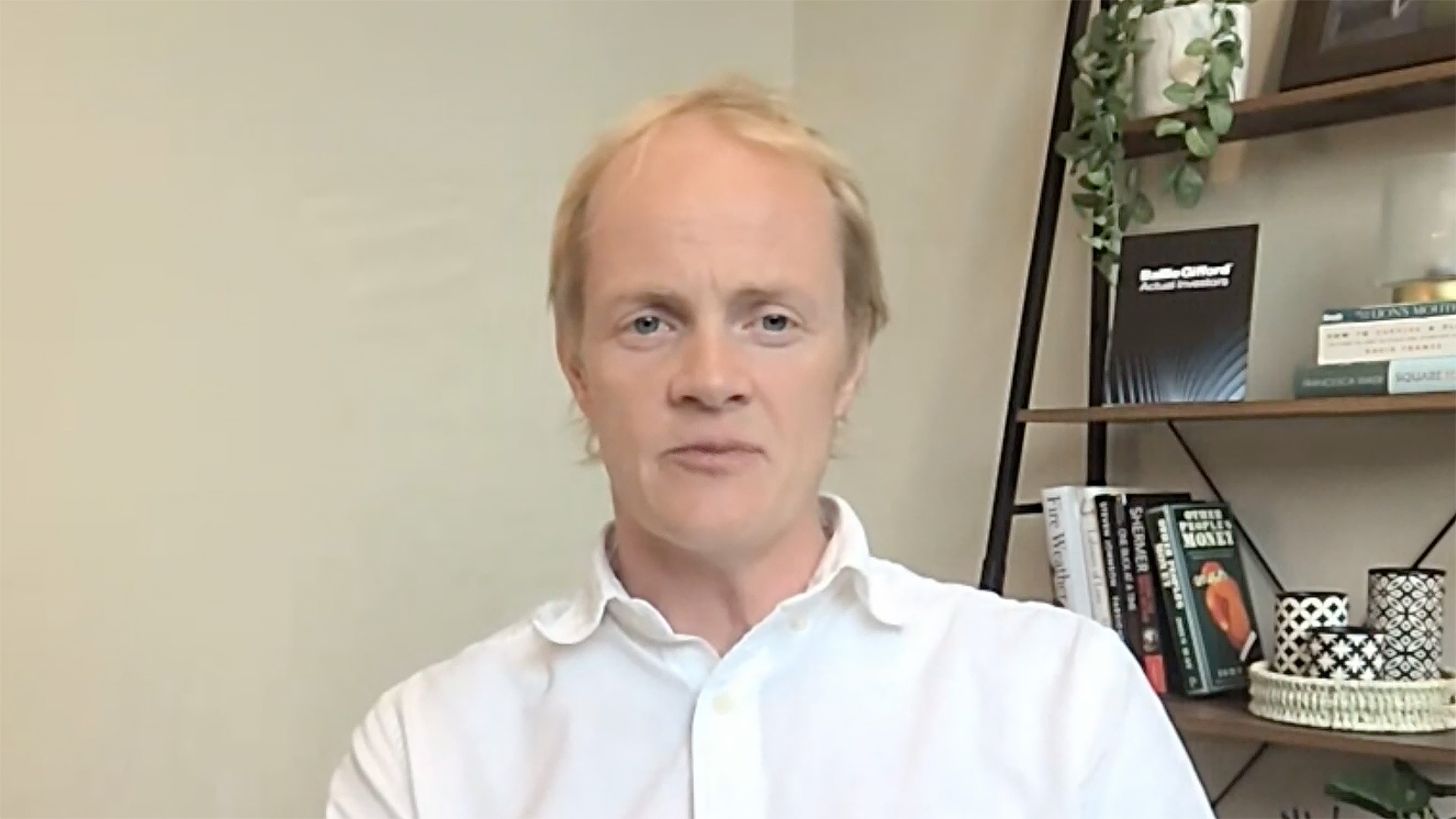
Pacific Horizon: Asia’s next act
Pacific Horizon co-manager Roderick Snell explains where he sees Asia’s next wave of growth.
Vietnam v the middle income trap
Big reforms mean domestic growth could match the country’s export success.
Stock story: Accton Technology
Natalie Beattie explains how Accton helps enable the data centres driving AI.
Pacific Horizon: Manager Insights
Roderick Snell discusses recent themes, portfolio changes, and the outlook for Pacific Horizon Trust.
TSMC: Stock Story
Qian Zhang unwraps TSMC, the company powering modern life.
Tencent: Stock Story
Fernanda Lai explores how Tencent became the super-app pioneer connecting over one billion users.
Our best ideas in China
Ben Buckler highlights Meituan (autonomous delivery), Midea (smart homes) and CATL (EV batteries).
The opportunity gap in Asia
Why exposure to Asia ex Japan matters for portfolios now.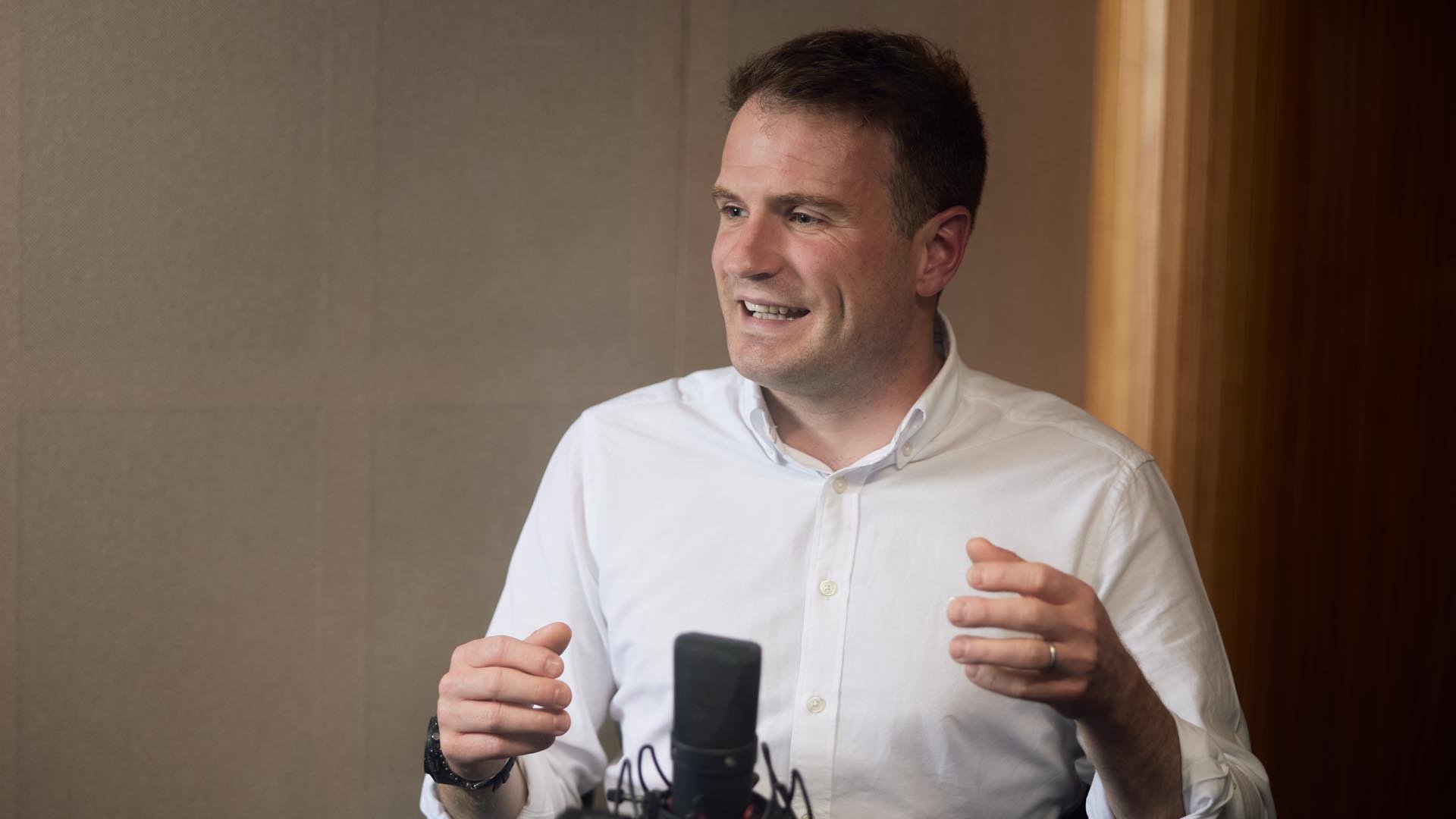
Emerging markets: the next engines of global growth
From lithium mining to a do-it-all super-app, companies capitalising on transformational trends.
The Next Chapter
Baillie Gifford trusts showcase private market focus and AI optimism at annual investment conference.
Trip notes: Kazakhstan
Sizing up super-app Kaspi.kz in Almaty.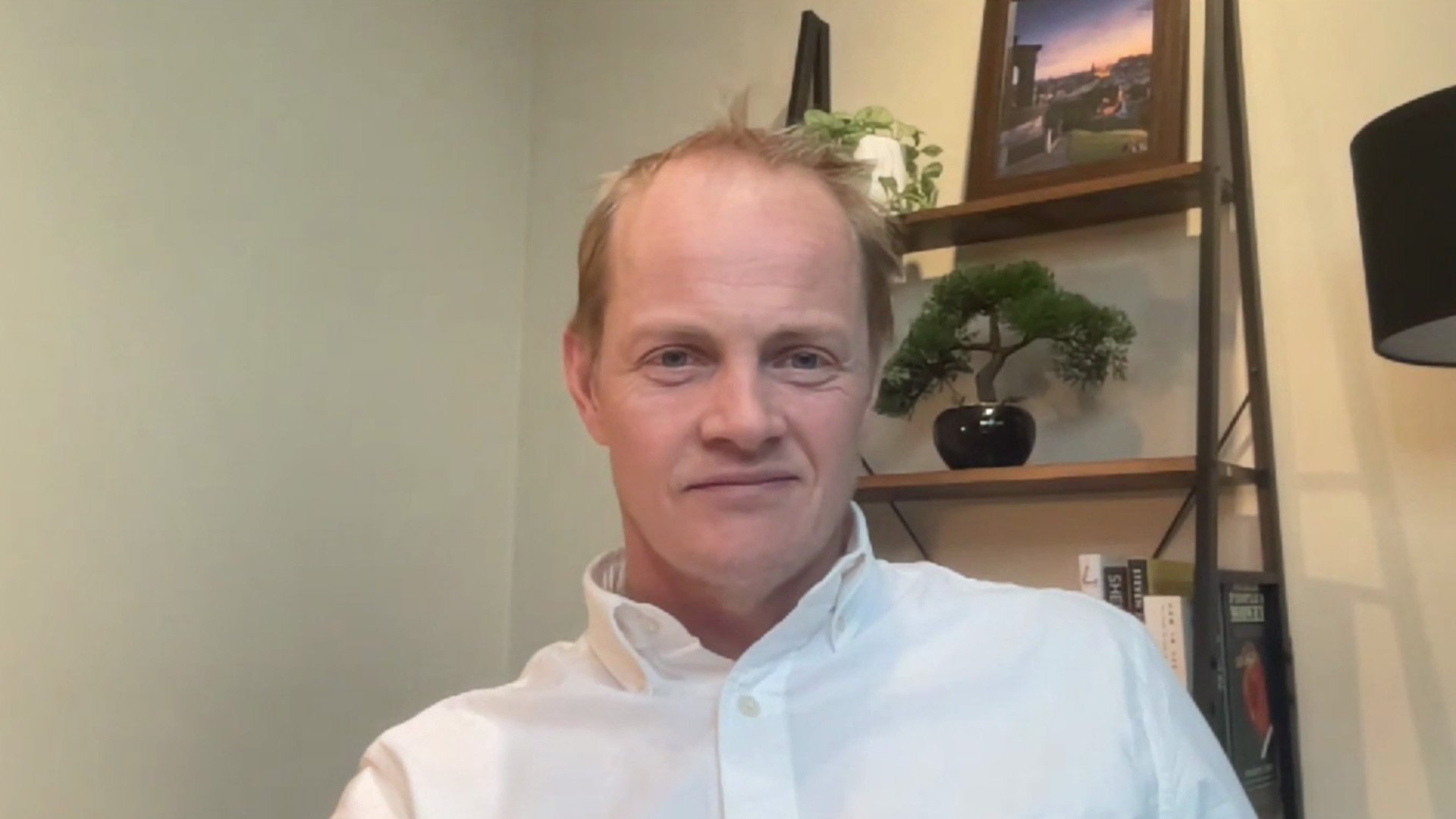
Pacific Horizon: opportunities in Asia ex Japan
The Pacific Horizon Investment Trust explores the various opportunities in Asia's dynamic markets.
Pacific Horizon: Manager Insights
Roddy Snell on the investment landscape in China, ‘silicon intensity’ and positioning the portfolio to maximise future growth opportunities.
Our best ideas in Asia
Qian Zhang covers Samsung, Delhivery and Bank Rakyat, three companies at the heart of global structural trends.
Pacific Horizon: capturing growth
The Pacific Horizon Investment Trust shares its strategic investments in Asia's dynamic markets.
Investor Forum: Onboard for growth
Optimism for the future of growth investing from four of Baillie Gifford’s investment trusts.
Vietnam: Asia’s rising star
Visiting Saigon, Roderick Snell explores what went right for the pro-business communist country.
South-east Asia’s new export stars
Unearthing growth companies in Vietnam, Indonesia and Thailand.
Pacific Horizon: Manager Insights
With Asia’s strong financial position, the long-term looks exciting for investors.
Pacific Horizon Trust: webinar
An update on investing in Asia with a focus on how economic trends relate to the portfolio.
Indonesia powers a green transition
The island nation’s natural wealth makes it crucial to a low-carbon future.
Quoted Data Research Report - Pacific Horizon Investment Trust
Quoted Data's latest research report. Please note that this is paid for research.
Manager insights: Pacific Horizon
Pacific Horizon Investment Trust manager Roderick Snell gives updates on the portfolio and investing in Asia.
Asia ex Japan: opportunities and challenges
Join Roderick Snell, manager of Pacific Horizon Investment Trust PLC as he discusses how the trust seeks out the fastest growing companies in the most rapidly growing and populous region of the world.
Trust history: Pacific Horizon
How Baillie Gifford’s Asia-focused investment trust rode the tiger of growth.
India’s data-driven growth stocks.
Pacific Horizon spots investment opportunities in a smartphone-transformed nation. Baillie Gifford explains its approach to valuing private companies in investment trust portfolios.
Pacific Horizon Investment Trust PLC Manager Insights.
Roderick Snell, investment manager of the Pacific Horizon Investment Trust PLC, gives an update on the portfolio, discusses post-pandemic trends, and tells us what excites him most about the future of the region.
China’s gen Z+
How the digital natives’ wants and needs create opportunities for forward-thinking Chinese companies.
Playing to win
The race is on to secure the loyalty of south east Asia’s increasingly prosperous consumers. Ewan Markson-Brown, manager of Pacific Horizon Investment Trust, tells us why Singapore’s Sea Limited is in pole position.
Pacific Horizon - Powered by Technology.
QuotedData’s latest research report. Please note that this is paid for research.
Pacific Horizon: dragons and salamanders
Beyond the index ‘dragons’, the rewards may lie in the quieter ‘salamanders’ others miss.Stock story: Sea Limited
Amy Leishman examines Sea’s role in Southeast Asia’s changing digital economy.Pacific Horizon: Asia’s next act
Pacific Horizon co-manager Roderick Snell explains where he sees Asia’s next wave of growth.Vietnam v the middle income trap
Big reforms mean domestic growth could match the country’s export success.Stock story: Accton Technology
Natalie Beattie explains how Accton helps enable the data centres driving AI.Pacific Horizon: Manager Insights
Roderick Snell discusses recent themes, portfolio changes, and the outlook for Pacific Horizon Trust.TSMC: Stock Story
Qian Zhang unwraps TSMC, the company powering modern life.Tencent: Stock Story
Fernanda Lai explores how Tencent became the super-app pioneer connecting over one billion users.Our best ideas in China
Ben Buckler highlights Meituan (autonomous delivery), Midea (smart homes) and CATL (EV batteries).The opportunity gap in Asia
Why exposure to Asia ex Japan matters for portfolios now.Emerging markets: the next engines of global growth
From lithium mining to a do-it-all super-app, companies capitalising on transformational trends.The Next Chapter
Baillie Gifford trusts showcase private market focus and AI optimism at annual investment conference.Trip notes: Kazakhstan
Sizing up super-app Kaspi.kz in Almaty.Pacific Horizon: opportunities in Asia ex Japan
The Pacific Horizon Investment Trust explores the various opportunities in Asia's dynamic markets.Pacific Horizon: Manager Insights
Roddy Snell on the investment landscape in China, ‘silicon intensity’ and positioning the portfolio to maximise future growth opportunities.Our best ideas in Asia
Qian Zhang covers Samsung, Delhivery and Bank Rakyat, three companies at the heart of global structural trends.Pacific Horizon: capturing growth
The Pacific Horizon Investment Trust shares its strategic investments in Asia's dynamic markets.Investor Forum: Onboard for growth
Optimism for the future of growth investing from four of Baillie Gifford’s investment trusts.Vietnam: Asia’s rising star
Visiting Saigon, Roderick Snell explores what went right for the pro-business communist country.South-east Asia’s new export stars
Unearthing growth companies in Vietnam, Indonesia and Thailand.Pacific Horizon: Manager Insights
With Asia’s strong financial position, the long-term looks exciting for investors.Pacific Horizon Trust: webinar
An update on investing in Asia with a focus on how economic trends relate to the portfolio.Indonesia powers a green transition
The island nation’s natural wealth makes it crucial to a low-carbon future.Quoted Data Research Report - Pacific Horizon Investment Trust
Quoted Data's latest research report. Please note that this is paid for research.Manager insights: Pacific Horizon
Pacific Horizon Investment Trust manager Roderick Snell gives updates on the portfolio and investing in Asia.Asia ex Japan: opportunities and challenges
Join Roderick Snell, manager of Pacific Horizon Investment Trust PLC as he discusses how the trust seeks out the fastest growing companies in the most rapidly growing and populous region of the world.Trust history: Pacific Horizon
How Baillie Gifford’s Asia-focused investment trust rode the tiger of growth.India’s data-driven growth stocks.
Pacific Horizon spots investment opportunities in a smartphone-transformed nation.Valuing private companies.
Baillie Gifford explains its approach to valuing private companies in investment trust portfolios.Pacific Horizon Investment Trust PLC Manager Insights.
Roderick Snell, investment manager of the Pacific Horizon Investment Trust PLC, gives an update on the portfolio, discusses post-pandemic trends, and tells us what excites him most about the future of the region.China’s gen Z+
How the digital natives’ wants and needs create opportunities for forward-thinking Chinese companies.Playing to win
The race is on to secure the loyalty of south east Asia’s increasingly prosperous consumers. Ewan Markson-Brown, manager of Pacific Horizon Investment Trust, tells us why Singapore’s Sea Limited is in pole position.Pacific Horizon - Powered by Technology.
QuotedData’s latest research report. Please note that this is paid for research.
How to invest
You can invest in our funds through a wide range of investment platforms. If your preferred platform does not currently offer our funds, they may be made available upon request by contacting the platform directly.
Please note that we do not have the facility for you to invest directly with us in our Investment Trusts and we do not offer ISAs, SIPPS or Share Plans. The AIC’s website contains more information about investing via fund platforms and can also help you find one.
Please also note that we do not have an online service for individual investors.
Further information on our funds can be found in the relevant Key Information and Prospectus Documents, which are available in English and will be sent to you free of charge on request or can be downloaded from the literature section of our website.
Baillie Gifford does not sponsor, maintain, or have any control over the content of any other websites. Therefore, we are not responsible for the adequacy or accuracy of any of the information you may view, nor do we undertake to ensure successful transmission to any linked website.
Getting financial advice
At Baillie Gifford we don’t provide financial advice, but we do try our best to provide you with all the information we think you might need to make investment decisions. Of course, we realise there are occasions when you may want the advice of an expert.
Using professional financial advice
An authorised intermediary can give you advice and help on how best to manage your financial affairs based on your circumstances and investment aspirations. They can also help keep track of all your different investment interests, saving you a lot of time and bookkeeping.
Finding a financial adviser near you
If you want to use an authorised intermediary, Unbiased is a website that allows you to search for authorised intermediaries in your area. You can visit their site on www.unbiased.co.uk
AGM and voting
When you invest in an investment trust you become a shareholder and have a say on how the Company is run. You also have a right to attend the Company's annual general meeting (AGM).
How to vote
The following link will take you through to The Association of Investment Trusts' (AIC) website where there is information on how to vote your shares if you hold them via one of the major platforms.
How to attend the AGM
If you hold your shares through a platform, it is not always obvious how to attend an AGM. The following link will take you through to The Association of Investment Trusts’ (AIC) website where there is information on how your platform can help you attend this important shareholder meeting. If you do not see your provider listed, please contact your provider directly and ask them to assist.
Pacific Horizon corporate calendar
Our corporate calendar provides details of the regulatory events that occur over the year. This includes dates for reports, results, dividend payments and the AGM.
| Event | Month (each year) |
| Final results announced | September |
| Interim results announced | March |
| Financial year end date | 31 July |
| Annual general meeting | November |
| Dividends payable | December |
AGM
Pacific Horizon's annual general meeting (AGM) was held on Tuesday 25 November 2025. You can read a summary of the results of the voting on AGM resolutions here.
Voting
A breakdown of the votes cast by Baillie Gifford over the previous quarter on behalf of the investment trust is available in the Proxy voting disclosure.
Registrar
Computershare Investor Services PLC maintains the share register on behalf of the Company. Queries regarding shares registered in your own name can be directed to:
Computershare Investor Service PLC,
The Pavilions,
Bridgwater Road,
Bristol,
BS99 6ZZ
T: +44 (0)370 707 1229
Documents
You can access any literature about the Fund here.
To download any document you will need Adobe Reader. Please note that we can now provide you with Braille and audio transcriptions of our literature on request. It may take up to 10 days for the transcription to be completed dependent on the size of the document.