
Key points
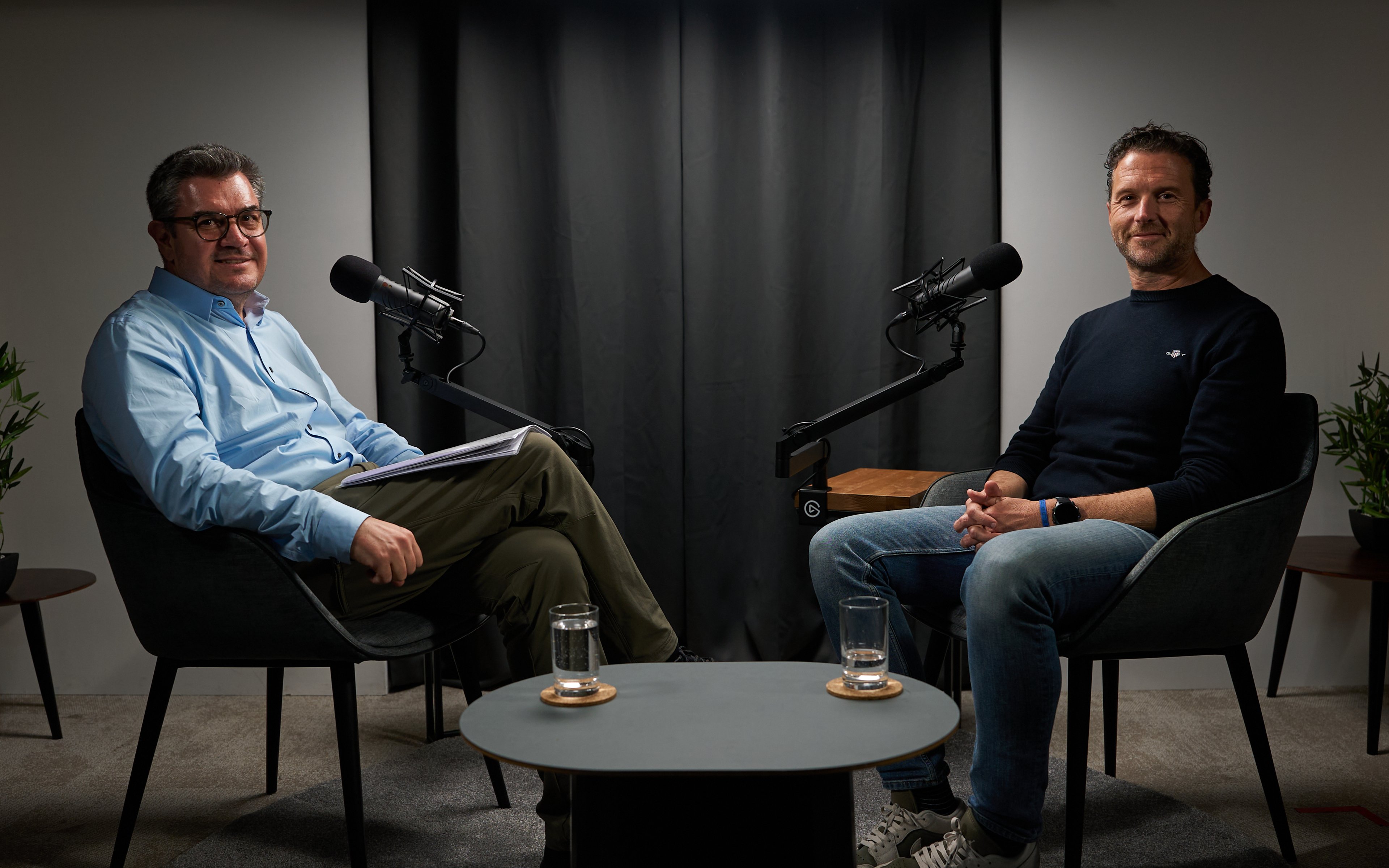
Investment manager Shan Shan speaks to Altruist founder Jason Wenk about how rethinking the infrastructure behind wealth management unlocks broader access to high quality advice.
View transcript
<p><strong>Your capital is at risk. Past performance is not a guide to future returns.</strong></p>
<p> </p>
<p><strong>Shan Shan (SS)</strong>: Hi, everyone. I’m Shan, an investment manager at Baillie Gifford. I’m here today with Jason, the founder and CEO of Altruist. Altruist is a private company that provides custody and a vertically-integrated wealth platform for RIAs in the US – registered investment advisors or what we call IFAs, independent financial advisors, in the UK.</p>
<p>Custody may be a bit of an unfamiliar word for many, but it's essentially the behind-the-scenes infrastructure that holds assets, settles trades, and keeps records. And, globally, custodianship for advisors is a $15 trillion-asset market.</p>
<p>Jason founded Altruist in 2018. Today, it serves more than 5,000 advisors. It’s one of the fastest-growing platforms in the industry. We at Baillie Gifford participated in the latest funding round. So, thank you for joining us today, Jason.</p>
<p><strong>Jason Wenk (JW)</strong>: My pleasure. You nailed our description so well.</p>
<p><strong>SS</strong>: It’s a little bit like introducing your company to you. Well, I guess, bring us down to the basics. I am handing my assets to my advisor, and my advisor says, ‘your money is now in good hands’, what happens afterwards? And what role does Altruist play in the day-to-day life of an advisor and their clients?</p>
<p><strong>JW</strong>: Sure. I think one of the things that’s important for people to understand, at least in the US, the way it works is that all custodians, major custodians, are typically members of what’s called the DTCC, which is the Depository Trust & Clearing Corporation. It’s essentially like a membership organisation. That’s where customer securities are actually held.</p>
<p>And then each custodian has what’s called the box number at the DTCC. The reason I bring it up is that the notion of safety is always top of mind for people. If you’re going to open an account someplace, you want to know that your securities are safe. And the safekeeping is the same for every DTCC member firm.</p>
<p>So, the big household names that everybody’s familiar with, and companies like Altruist, all of our securities are effectively in the same place. And then, what’s unique about Altruist is that we vertically integrated all of the other tools that a financial advisor would need to serve their clients.</p>
<p>Instead of just being a custodian, we also have this really elegant software layer, and trading tools, and client-facing apps, things that just make it much easier for a client to know precisely what they have, how they're doing, keep tabs on the work that their advisor is doing. And, as an advisor, it allows you to serve a lot of clients really well at scale with much lower kind of costs and a much higher degree of automation than if you were stacking these different pieces separately.</p>
<p><strong>SS</strong>: I think some of this knowledge that you’re quoting is partially because you were, yourself, building an advisor firm at a certain point. You built a RIA firm yourself and scaled it to over $4 billion of assets. Tell us a little bit about how was that experience and why did that kind of motivate you or drove you to build Altruist?</p>
<p><strong>JW</strong>: Yeah, so I built two RIAs before starting an RIA custodian. The first one was direct-to-consumer, so it was like a wealth management firm serving clients directly. It was a really interesting experience because it just was a few years of my career, but I got a chance to really walk in the shoes of an advisor and sit face-to-face with clients. And learn what’s important to people when it comes to their financial plans and the relationship they have with the people they entrust their life savings to.</p>
<p>The business grew really fast. One of the things that was unique is my background was as an engineer before I got into wealth management. In that first firm, I built a lot of my own software. As the firm grew, I started getting approached by other financial advisors wanting to know, ‘hey, would I resell or license some of the software that I built?’ That's how I started the second company, the one that you mentioned. That one grew very, very quickly, a very rapid pace, opening tens of thousands of accounts per year.</p>
<p>And what happens is once you reach some level of scale, things that are inconveniences when you’re small become massive problems as you grow. So things like just opening an account, the older custodians would still require paperwork, sometimes wet ink signatures, fax machines, signature guarantees, medallion stamps. Then managing accounts was also really challenging. A lot of the infrastructure that custodians made available to financial professionals didn't make it easy to manage client accounts in a way that produces the best possible outcome.</p>
<p>The second company, basically, I built a bunch of software to try to make up for the limiting factors. Software to make onboarding as elegant as you could, given the technical limitations and software to automatically allocate assets across the appropriate accounts inside of a household to maximise after-tax returns. Software to automate fee billing and performance reporting and some of these things that the custodians didn’t do out of the box.</p>
<p>And the experience was that you could only take the software so far. It's maybe a terrible analogy, but it’s like adding rockets to a horse and buggy or something. If the basic infrastructure is not designed to do much more than whatever, 10 miles per hour, you’re going to have a lot of problems, even if you bolt on a bunch of other tools.</p>
<p>Finally I grew frustrated enough that in 2018 I thought, ‘you know what would be more sensible than me trying to build the middleware of the software – the software that sits between the advisor and the custodian – is to just integrate the entire stack.’ And you do it all with modern cloud-based infrastructure. We were already envisioning AI products in 2018, so thinking about the data model to support machine learning.</p>
<p>Again, very first principles thinking, if you step back and said, ‘if the infrastructure didn’t look like this, if I was building it from scratch, what would it look like?’ And that didn’t exist in the market. So that was the ideation for Altruist.</p>
<p><strong>SS</strong>: That was one of the things that really caught my thinking, even when we first spoke, how the custodian industry really hasn't changed for decades. Some of this old code base dominated how monies are moving, even though, when we’re thinking about money, there are so many new and digital formats of it. So why do you think the industry has lacked technological innovation for so long? And why do you feel now is the right time, the right moment, to bring this innovation in?</p>
<p><strong>JW</strong>: The advisor business is very big. Like you mentioned, it’s $15 trillion, but it’s $10 trillion just in the US and two companies have 80-plus percent market share. So, there’s not a huge motivation for them to innovate in that RIA custody division. What’s changing now, as far as the last seven years, when we started the company, the timing was right. We can go way back to when I started my first RIA. It was 2004. Back then, there was probably 10 custodians, which is kind of interesting. What’s happened is that there’s far less custodians today than there was 20 years ago. But 20 years ago, there was only probably somewhere in the hundreds of billions of assets in the US in the custody space. So, there wasn’t as large of a TAM [Total Addressable Market], so to speak.</p>
<p>So, what we have now is this perfect recipe for coming into a market and innovating where the market is 20x, let's say, in the last 20 years. It’s growing with a really nice tailwind, probably somewhere in the low teens in terms the CAGR [Compound Annual Growth Rate] of the market. And it’s consolidated to basically two incumbents that have a bit of a rent-seeking view of innovation.</p>
<p>It’s opened up a huge opportunity for someone to come in. It’s incredibly hard, by the way, to build a custodian. The technical build is super challenging. Regulation, compliance. It’s non-trivial and it requires a fair bit of time and capital and industry knowledge. There's a lot of reasons why there hasn’t been many new entrants. Well, any new entrants, I should say, other than us.</p>
<p>But the timing is really good today. It wouldn’t have been very good, even 10 or 12 years ago, perhaps. So, I do think that, with a lot of entrepreneurships, it’s having the sensibilities to understand timing. I didn't quite grasp it when I started the company, but now as I look back, our timing couldn’t have been better for a bunch of reasons.</p>
<p><strong>SS</strong>: So, the texture of your customer’s industry has changed quite a lot. It went from a lot of wire house advisors to now independent advisors, and the dollars have grown exponentially. So how do you think that sets up the stage for Altruist’s entrance and then earning the trust and the success?</p>
<p><strong>JW</strong>: When I think about the source of funds, sometimes people ask us, the two biggest players in the RIA channel in the US are Fidelity and Schwab being number one, Fidelity number two. But people often forget that the bulk of net assets actually comes from outside of the channel.</p>
<p>In the RIA channel, the firms operate on a very transparent basis. They operate as fiduciaries. They operate on a fee basis versus commission basis. And on top of that, you own your firm when you’re in the channel. And so, what’s happened is you have people who maybe started their career at one of the big wire houses, or a big regional bank, or a national bank, or even at a smaller broker dealer. And at some point, they start to think about their future.</p>
<p>They think about their clients more. And the pursuit of entrepreneurship is what draws many people into the RIA channel. Again, 20-some years ago when I started my first firm, there was roughly 4,000 firms in the whole country. Today, there’s 40,000 firms. The largest firms today have as much assets as the entire industry had. So, the largest RIAs today are multiple hundreds of billions in assets, which was, again, the totality of the entire industry.</p>
<p>So, it’s a fast-growing segment. And so, it’s been a really interesting market that’s growing really rapidly. Over the next 10 years, just using like the last 10-year growth rate, which is 13.2 percent, there’s a pretty good chance that the current $10 trillion goes to $25 trillion. Some of that’s just the market natural tailwind.</p>
<p>Some of that's the deposits from existing customers. But a meaningful amount, probably $7 to $10 trillion of that, will be the continued flows from those employee advisors that work for a company and don’t technically work for their clients, choosing independence, launching their own businesses, and then ending up at places like Altruist.</p>
<p><strong>SS</strong>: I remember you saying that it’s incredibly rewarding to see Altruist grow actually alongside some of your clients’ growth, because the advisors, they’re growing their AUMs and they’re young, they’re hustling and they’re serving more and more end-clients.</p>
<p>So I think it’s motivating on both sides to be working at the frontier with each other.</p>
<p>I remember the stats when we were chatting. I think it took quite a long time to onboard the first billion dollars onto the platform, and then it only accelerated from there. I think you guys are growing one of the fastest now in the industry, but if you’d taken a time machine, what was it like before you even onboarded the first billion dollar?</p>
<p><strong>JW</strong>: So, some of the things that have been fun, I remember one of the designers created this whole meme that was based on the movie Fast and the Furious, and they superimposed a bunch of people on our team’s faces over the actors from that movie, and they had redone the branding, but in the same, block lettering, and it was ‘The Road to One Billion’, you and they had this whole road to get to a billion dollars in assets. And it was a really big milestone. You know, now we do over that every month, right? So it's, it's very, very different.</p>
<p>I can't remember the exact numbers, but I'm sure you’ve seen the chart we have where it shows how many months it took us to get there, whatever it was in the beginning, let’s say it was two or three years. And then it’s just steadily declined. And the number of days to get to a billion is now very short compared to obviously the many months it used to take in the early days, so it’s been pretty exciting.</p>
<p><strong>SS</strong>: This is one thing I discuss with my colleagues and my team quite frequently. It’s a really strange reverse psychology in your industry, because trust is so hard to earn. The advisors have to earn the trust of the end-clients, and then you have to earn the trust of advisors. But once the trust starts to accumulate, they kind of compound.</p>
<p>But this is a fantastic story. I did not know about the Fast and Furious poster.</p>
<p>Changing gears a little bit, Altruist launched Hazel last year, which is this incredible AI agent that’s becoming a co-pilot for these advisors, empowering them to tax plan, schedule meetings, take meeting notes, and follow-up with the clients. But especially, a month ago or so, when you launched the tax planning, it sent a shockwave across the market in private and in public. A lot of the public stock went down in magnitude because people were realizing the power of AI.</p>
<p>Can you in your words tell us, a little bit, what is Hazel, what it is today, and where do you think it's going to go?</p>
<p><strong>JW</strong>: As far as what Hazel does, our thinking here is that in a financial relationship with an advisor – let's just say, for example, it’s a 20-year relationship – it might start with something like, you ask me for a referral to an advisor. ‘Hey, I’m looking at hiring somebody to help’, and I say,’ Shan, here's somebody you should meet. This is Hazel, my advisor.’ And so, I introduce you via email. They might do some analysis, build a financial plan, build a proposal. So, there's all this work and interaction and time. Basically, think of it as all this context that's being established.</p>
<p>I'd say, in the past, only when you got to a place where you said, ‘I'm ready to hire you and move my accounts to you’ would you be introduced to Altruist because you're opening an account, right?</p>
<p>These are the things a custodian typically does. That part of the relationship is, actually, if you’re using Altruist, it’s very simple. We onboard clients in two minutes. Everything is so heavily automated around all of the optimisations for cash management and portfolio management that, very realistically, the advisor could spend five minutes setting your profile up on Altruist and then really never have to look at it again.</p>
<p>The next 20 years of the relationship are going to be things like, ‘I started a new job’, or ‘I sold a business’, or ‘I got a huge bonus’, or ‘I got married’, or ‘I'm starting a family’, or ‘my parents passed away’, whatever, right? All these life events.</p>
<p>So that’s a long, long-winded way of saying that when we look at Hazel, Hazel is designed to take care of all of those other things outside the custodian. So, it'll connect to your email, CRM [Customer Relationship Management system], whatever you’re using for documents. And there’s a mobile app, so you can sit it down on the table in a face-to-face meeting, it can join your virtual meetings, it can plug into whatever telephony system you’re using. And basically, it’s like that personal assistant that’s joining all of the conversations you’re having with clients.</p>
<p>And it allows you to be very present. Obviously, then it will prepare you for upcoming meetings very automatically. It'll take the meetings you have. It’ll take the data, synchronise it across all of your other platforms. And then when it’s time to do things like planning, Hazel uses multi-agent models that effectively allow us to do planning in an AI native way. So, remove all the interfaces where you’re plugging in data and then running queries and producing static outputs. And it allows us to very much bespoke and personalize every experience for every client. And it’s insanely powerful.</p>
<p>The reason why the market reacted the way it did was that effectively our tax agent is going to give people the equivalent of if you put 100 amazing CPAs [Certified Public Accountants] , tax attorneys, CFPs [Certified Financial Planners] in a room, and you gave them a complex tax situation to analyse, Hazel will beat 99 of the 100. And it will do the work in 99 percent less time, and it will do it for roughly $5 of unit cost.</p>
<p>So it’s insanely disruptive, but it just made really good tax planning available to anybody. And any financial planner that uses Hazel now can offer their clients this incredible experience and outcome. The use cases are near infinite with AI, so it’s not like, ‘Oh, it only analyses a tax return’. It will do all sorts of things. And it works in really any geo around the world, which is pretty unique, too. So that’s the AI.</p>
<p>Our general thesis on Hazel is that there’s very specific agents that can be built for virtually every task that we know we should be doing for clients. Everybody should have exactly the right amount of insurance, never more, never less, never pay a dollar more in premium than they should. Everyone should have every dollar of cash they have fully optimised.</p>
<p>If they have debt, they should have the perfect sort of debt repayment plan where they’re paying it off in a way that makes sense, but they’re also taking advantage of arbitrage when it’s appropriate and it compounds favourably for them.</p>
<p>These are all kind of obvious things, but you'd be surprised how few financial planners actually do them because there’s just not enough time in a day. And so they have to make some form of compromise. Either they have to have really, really high minimums or really, really high fees so they can have a huge team to do this work, or they have to de-scope the job and say, ‘well, instead of the 10 things I’d love to do for every client, I can only do five because there’s not enough time’. And now with Hazel, they can do all 10 and they can do them at 99th percentile.</p>
<p><strong>SS</strong>: I think this is just really, really powerful because, for me, I spent a lot of time in the US, but also in the UK, I think sometimes even for an individual like me to understand the Scottish tax law versus California tax law takes a lot. And this information used to sit in the silos of the experts who probably have tremendous knowledge, but now the hurdles of understanding can be lowered for everyday advisors. As these AI waves ripple through the system, how do you think it will change the bigger ecosystem of wealth management and the custodians in general in the next one-to-three years, let’s say?</p>
<p><strong>JW</strong>: Yes, so one to three years is a bit tricky.</p>
<p><strong>SS</strong>: In the age of AI, maybe three months is even too far off.</p>
<p><strong>JW</strong>: I think it’s easy to be right about the outcome. It’s harder to be right about the time it will take.</p>
<p><strong>SS</strong>: That's true.</p>
<p><strong>JW</strong>: What I can say, it is fascinating. I’ll use the tax agent as an example. So we made it available to all of our employees, every team member at Altruist for free. They all can use Hazel, and they can use the tax planning agent and any other agents that we build. And there’s a channel in our Slack where employees are sharing their experiences. And it started to just get really viral. And it’s wild, the outcomes.</p>
<p>I could give you one very simple example. Someone had Hazel review their tax return that was done by a CPA, last year’s tax return. And it came back and it showed $4,500 of overpayment in taxes. And Hazel will give you very precisely where and why, and then even write a letter for you that you can use with your CPA to do an amended return.</p>
<p>And the employee shared it with their CPA. The CPA profusely apologised and then said, ‘yes, Hazel is 100 percent accurate’ in that case. This whole notion of 99th percentile quality will become the standard. What’ll happen is like this, in one-to-three years, or 5 years, however long it takes, the quality will be expected to be very, very good. Everyone will have access. This is a good thing.</p>
<p>So, access to great advice at affordable prices. This is going to be very good for consumers. But it definitely will force wealth management companies and the individual professionals to change how they do things. I think this is a big part of why there was this big stock market sell-off. Companies like Altruist are making elite access to advice essentially fully democratised. AI will force the same kind of required evolution of the space.</p>
<p><strong>SS</strong>: So, this is fascinating. I think all of this actually will benefit the normal people, the end clients. And I love the word that you said, ‘required revolution’. You’re pushing this forward.</p>
<p>Besides the shiny object, which is Hazel and AI today, what is sitting in the background, a little bit in the dark, is this infrastructure and the custodian system you build, which eliminates the human friction of mistakes, because the AI can directly absorb from the information on the infrastructure side. So that creates a lot of efficiency and thinking about the future.</p>
<p>Changing gear a little bit, I know we at Baillie Gifford are investors, and we’re seeing a lot of great companies like yours decide or choose to stay private for much longer. And that is where a lot of the innovation we’re seeing is as well. What is your mental decision about staying private today? When do you think it would be a good time to go public? And how does that impact your choice of the investor you pick, the capital partners you pick?</p>
<p><strong>JW</strong>: My view from the day I started the company was always that I wanted to be IPO [initial public offering] optional or public company optional, meaning build a business that’s so good that it would be well-received in the public markets, but it could fully stand on its own and be a very enduring and profitable private business as well.</p>
<p>And yeah, I think there’s a good chance that happens for us in the next few years. But in the interim, I think it’s very comforting knowing that we have investors that I think share that same kind of time horizon. They want us to be great companies, and they’re happy being investors in a great private company or a great public company. And when the timing is right, we all make that decision.</p>
<p>Not everybody’s so fortunate. There are other folks that have different time horizons. And then you’re spending a lot of energy recapitalising and it’s a distraction for companies. So if you’re fortunate to build throughout your fundraising cycle and business maturity, like the right types of investors that have similar kind of views, it’s incredibly important and it’s been really helpful for us.</p>
<p><strong>SS</strong>: I initially had a question written down about your view for the next 10 years, but then I remembered our walk, where you were like, ‘I want to work on Altruist for the next 10 years, next 20 years, next 30 years if I live to work that long’. And I think that you said, ‘I want this to be my last company’. It would be really changing how people perceive custodianship and financials.</p>
<p>Obviously, I can’t say for the fact that Baillie would invest for 30-plus years, but we do have 100-plus years of track record as a firm. So I think that horizon alignment is truly important for us as well. We seek out founders like you who are thinking for the long run.</p>
<p>Last but not least, I always want to ask this. What does the Altruist name mean to you? What does it stand for and how does it echo on a day-to-day basis for you and your team?</p>
<p><strong>JW</strong>: So, I only have a handful of good ideas, and I like to think our name was a good idea. An altruist is someone who, similarly to a fiduciary, puts others before themself. And we wanted to share that ethos with our customers. We knew they were making that commitment. So anyway, the genesis was very ideological, making sure that we were hyper-aligned with our customers, who we felt were the purest form.</p>
<p><strong>SS</strong>: I know you're from the Midwest of the US and we were just comparing Scottish weather with the Midwest weather, but it sounds to me you're really building an industry that you think was deserving of yourself when you were much younger, with your family. So I think that really echoes.</p>
<p><strong>JW</strong>: Inclusivity is a huge part of what we do. We have an interesting internal KPI [Key Performance Indicator], which tracks how many accounts are advisors opening with less than $10,000 in there. Normally, this would never be possible. Advisors would be telling all these people they don’t have enough money, go someplace else, do it on your own. But if you build something that’s so incredibly good, has such high degrees of automation, is powered by amazing innovations and things like artificial intelligence, the barrier to get access to really good people and the best possible outcomes becomes much, much lower. That very much comes from my Midwest roots and growing up in a farming community where most people would never have access to an advisor.</p>
<p><strong>SS</strong>: Well, this has been fantastic. Thank you so much. We’re very proud to back you and the Altruist team, and it’s just starting with our partnership journey and I look forward to many great things you’re bringing to the industry. Thank you so much.</p>
<h3><strong>Glossary</strong></h3>
<p><strong>CAGR</strong>: Compound Annual Growth Rate</p>
<p><strong>TAM</strong>: Total Addressable Market</p>
<p> </p>
<h3>Risk Factors</h3>
<p>The views expressed should not be considered as advice or a recommendation to buy, sell or hold a particular investment. They reflect opinion and should not be taken as statements of fact nor should any reliance be placed on them when making investment decisions.</p>
<p>This communication was produced and approved in May 2026 and has not been updated subsequently. It represents views held at the time of writing and may not reflect current thinking.</p>
<p>Potential for Profit and Loss<br>All investment strategies have the potential for profit and loss, your or your clients’ capital may be at risk. Past performance is not a guide to future returns.</p>
<p>This communication contains information on investments which does not constitute independent research. Accordingly, it is not subject to the protections afforded to independent research, but is classified as advertising under Art 68 of the Financial Services Act (‘FinSA’) and Baillie Gifford and its staff may have dealt in the investments concerned.</p>
<p>All information is sourced from Baillie Gifford & Co and is current unless otherwise stated.</p>
<p>The images used in this communication are for illustrative purposes only.</p>
Watch short highlights from our conversation with Altruist founder Jason Wenk here.