

Key points
- Years of disruption have created a significant disconnect in the UK equity market
- Moonpig and Spirax Sarco show how strong businesses can be missed by the markets
- A standout opportunity in long-term growth companies awaits patient clients while valuations remain low

© chrisjmitchell – stock.adobe.com
As with any investment, your capital is at risk.
The UK equity market has been telling itself a story of decline, discount and disappointment: the exciting companies are elsewhere, the growth is elsewhere, and the future is listed somewhere else.
Like all powerful stories, it contains enough truth to be believable. The UK market has suffered years of weak sentiment, persistent outflows and a stubborn valuation discount. Despite this, last year the FTSE All-Share Index recorded one of its strongest years since the post-global financial crisis rally in 2009.
However, the recovery has been unusually narrow. The index returned 24 percent in 2025, but just 10 companies generated almost two-thirds of that performance, concentrated in areas such as banking, defence and pharmaceuticals.
Put simply: the mega-caps had a very strong year, and much of the rest of the market was left behind.
That narrowness matters. It has reinforced the idea that the UK is a market for income, cyclicality and defensive ballast rather than one for long-term growth.
It has also obscured a more interesting reality. Beneath the surface sits a collection of companies that are global, innovative, adaptive and capable of sustained growth.
The recent divergence between the FTSE 100 and the FTSE 250 illustrates the problem. A small number of large companies have dominated index returns, while a broader range of mid-sized growth businesses has been overlooked.
Over long periods, faster-growing companies in the FTSE 250 have generated significantly higher returns, but that relationship has reversed in recent years.
UK equity large-cap v UK equity mid-cap performance
The opportunity today: strong fundamentals, depressed valuations
This dislocation presents an attractive opportunity in UK growth equities. Across much of the market, and particularly within the Baillie Gifford UK Growth Trust (BGUK), there is a pronounced disconnect between the fundamental earnings power of businesses and their current valuations.
Encouragingly, earnings-per-share growth from high-quality growth companies has reasserted itself relative to more cyclical ‘value’ sectors, many of which have benefited from a short-term uplift in profitability in the aftermath of the Covid pandemic. Share prices, however, have yet to reflect this shift. We do not expect this divergence between fundamentals and valuations to persist indefinitely.
This distinction counts. While share price performance across much of the portfolio has been disappointing, the operational performance of many of the underlying businesses has remained far more resilient, as illustrated in the charts below.
Why this opportunity exists
An exceptional concentration of macroeconomic and geopolitical disruption has marked the past five years. Rather than one isolated shock, markets have absorbed a sequence of overlapping events, each with lasting second-order effects: the pandemic and its policy response, supply chain disruption, inflation, higher interest rates and a more uncertain geopolitical backdrop.
The cumulative effect has been to shorten investor time horizons and increase the premium placed on near-term certainty. Capital has gravitated towards areas offering immediate cash flows, perceived defensiveness or very clear structural tailwinds such as AI-related spending. Longer-duration growth opportunities have been more heavily discounted.
This has resulted in narrow market leadership and a widening dispersion between sectors and investment styles. As long-term investors in high-quality, growth-oriented businesses, the portfolio has been out of step with this environment. This has been the primary driver of BGUK’s recent underperformance relative to the FTSE All-Share.
Periods like this are part of long-term investing. But the extent of the divergence between share prices and underlying business progress has been striking. That is what creates the opportunity today.
Great British growth companies on offer
Moonpig typifies this opportunity. It is well known as the biggest online greetings card seller in the UK, with a 70 percent share of a growing market. Its valuation has fallen as the market worries about a slowdown in discretionary spending. But what if Moonpig is not a tired UK consumer stock at all, but one of the clearest mispriced digital franchises in the market?
Moonpig has a dominant brand that owns the occasion and a data-science-enabled engine that turns reminders, personalisation and habit into repeat purchase behaviour.
While the market is fretting about the UK consumer, Moonpig is quietly building a larger online category. It is attaching gifts to emotionally charged moments and doing so with rare ecommerce economics: high repeat revenue, low marketing intensity, strong cash generation and disciplined reinvestment.
This is not a macro recovery story. It is a structurally advantaged online leader being priced as if it were just another discretionary retailer.
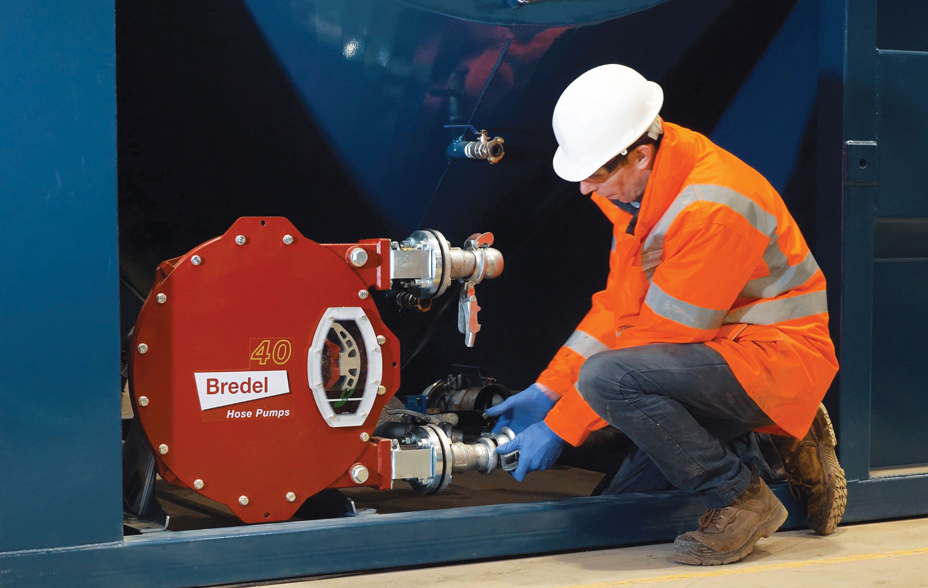
Image supplied courtesy of Spirax Group
Another example of the opportunities now appearing is Spirax Sarco, a recent purchase for BGUK. Its share price has fallen as demand in some of its end markets normalised after the distortions of the pandemic. The market appears to be treating this as a structural problem. We believe it is a cyclical pause for this world-class industrial compounder.
Spirax specialises in niche heat transfer and pumping systems. Its global network of about 2,000 highly skilled sales engineers gives it an unusually strong competitive position: they solve complex customer problems, design bespoke solutions and become embedded in customers’ operations. This creates repeat business, pricing power and high barriers to entry.
The result is a business with a long record of organic growth, strong returns and resilient margins. We believe the recent weakness has created an attractive entry point into an exceptional company whose long-term prospects remain intact.
Restoring confidence
Markets have become increasingly driven by shorter-term narratives and narrow leadership. This has created opportunities to invest in high-quality growth businesses at attractive valuations.
The UK market is often overlooked. Yet it offers a diverse range of world-class growth businesses with the potential to provide useful diversification away from increasingly concentrated global equity indices.
Confidence in UK equities has been eroded. We believe it is time to rebuild it. For long-term investors willing to look beyond today’s narrow market leadership, the opportunity in great British growth companies is compelling.
Glossary
Return on invested capital: A measure of how efficiently a company turns the money invested in its business into profits.
Price-to-earnings ratio: A measure of how much investors are paying for each pound of a company’s earnings, often used to judge whether a share looks expensive or cheap.
Baillie Gifford UK Growth Trust plc annual discrete performance to 31 March each year (%)
| 2022 | 2023 | 2024 | 2025 | 2026 | |
| Share Price | -18.8 | -9.2 | 1.5 | 12.2 | 7.2 |
| NAV | -9.5 | -2.6 | 2.3 | 3.5 | 8.1 |
| Index* | 13.0 | 2.9 | 8.4 | 10.5 | 21.5 |
Source: Morningstar, FTSE. Share price, total return in sterling. Returns reflect the annual charges but exclude any initial charge paid.
*FTSE All-Share Index
Legal notice: London Stock Exchange Group plc and its group undertakings (collectively, the "LSE Group"). © LSE Group 2023. FTSE Russell is a trading name of certain of the LSE Group companies. "FTSE®" "Russell®", is/are a trade mark(s) of the relevant LSE Group companies and is/are used by any other LSE Group company under license. All rights in the FTSE Russell indexes or data vest in the relevant LSE Group company which owns the index or the data. Neither LSE Group nor its licensors accept any liability for any errors or omissions in the indexes or data and no party may rely on any indexes or data contained in this communication. No further distribution of data from the LSE Group is permitted without the relevant LSE Group company's express written consent. The LSE Group does not promote, sponsor or endorse the content of this communication.
Past performance is not a guide to future returns.
Important information and risk factors
This communication was produced and approved in June 2026 and has not been updated subsequently. It represents views held at the time of writing and may not reflect current thinking.
This communication does not constitute, and is not subject to the protections afforded to, independent research. Baillie Gifford and its staff may have dealt in the investments concerned. The views expressed are not statements of fact and should not be considered as advice or a recommendation to buy, sell or hold a particular investment.
The investment trusts managed by Baillie Gifford & Co Limited are listed UK companies and are not authorised or regulated by the Financial Conduct Authority. The value of their shares, and any income from them, can fall as well as rise and investors may not get back the amount invested.
Baillie Gifford & Co and Baillie Gifford & Co Limited are authorised and regulated by the Financial Conduct Authority (FCA). The investment trusts managed by Baillie Gifford & Co Limited are listed on the London Stock Exchange and are not authorised or regulated by the FCA. A Key Information Document is available at bailliegifford.com.
Baillie Gifford & Co and Baillie Gifford & Co Limited are authorised and regulated by the Financial Conduct Authority (FCA).
The specific risks associated with the trust include:
- Unlisted investments such as private companies can increase risk. These assets may be more difficult to sell, so changes in their prices may be greater.
- Market values for securities which have become difficult to trade may not be readily available and there can be no assurance that any value assigned to such securities will accurately reflect the price the Trust might receive upon their sale.
- The Trust's risk is increased as it holds fewer investments than a typical investment trust and the effect of this, together with its long-term approach to investment, could result in large movements in the share price.
- The Trust's exposure to a single market may increase risk.
- Share prices may either be below (at a discount) or above (at a premium) the net asset value (NAV). The Company may issue new shares when the price is at a premium which may reduce the share price. Shares bought at a premium may have a greater risk of loss than those bought at a discount.
- The Trust can buy back its own shares. The risks from borrowing, referred to above, are increased when a trust buys back its own shares.
- The aim of the Trust is to achieve capital growth. You should not expect a significant, or steady, annual income from the Trust.
Further details of the risks associated with investing in the Trust, including a Key Information Document and how charges are applied, can be found in the Trust specific pages at www.bailliegifford.com, or by calling Baillie Gifford on 0800 917 2113.
197518 10063774