


As with any investment, your capital is at risk.
Since we launched Long Term Global Growth (LTGG) 22 years ago, average global longevity has increased by more than five years. There’s still an unacceptably wide range between the longest lives in Oceania and the shortest in Africa, but the gap is narrowing quickly.
Granted this additional half decade, people might be expected to savour life’s tapestry with less haste, but there’s scant sign of this happening. Films and TV shows are clipped into “shorts” for rapid social media consumption. Hour-long gym classes are reformatted as “one song workouts” and rapid assembly meal kits are replacing proper cooking.
How then, is the freed-up time being used? Not for holidays, because here too, snack-sized “on-the-go” experiences are multiplying. Recently launched Uber safaris offer three-hour guided experiences in Kenya and South Africa for less than $200 with customers promised that they’ll “experience the Big 5 in an easy and luxurious way.” Minibuses flock to the same watering holes, close to the game reserve entrances.
The jostling tourists in the back are keen to grab closeup snaps of the megafauna and anxiety prevails. Have they just missed the best sighting, or should they hang around for a bit longer?
Those who bag a Big Five full house may be pleased with the kudos for their socials, but they’re oblivious to the rich tapestry that they’ve missed. The Swahili concept of Safari has shifted a long way from its roots, where extended immersion in the bush entailed a degree of discomfort but – for the less temporally challenged – led to a much deeper understanding of the rich ecosystem beyond the obvious megafauna.
The prisoner’s dilemma
The minibus day-trippers are reminiscent of many equity market sightseers this year. Having hitched a bargain lift in a passive fund, they’re crowding around the same waterhole with their lenses firmly trained on the index behemoths. The megacaps are in fine spirits, awash with cash and splashing it about noisily.
But equity tourists are in a quandary about what to do next. Hang around with more gratification just around the corner, or head home because the best of the action is now over? It’s a tricky dilemma, and there’s plenty of arguing about it.
Some think the behemoths will deliver more rewards, so they want to hang around for longer. They point to the astonishing pace of progress in Artificial Intelligence – and with some justification.
Chat GPT ended 2025 with user numbers approaching one billion (a cool trebling over the course of the year), and we’re continuing to see large leaps forward in Large Language Model (LLM) capabilities, most recently via Alphabet’s Gemini 3.
The waterhole remainers also point out the abundance of cash sloshing around. The leading software labs are largely equity-funded1. Capex to Free Cash Flow ratios are low relative to history and average earnings multiples of below 30x for medium-term growth in the high teens don’t seem exorbitant.
Others feel that it’s high time to wrap things up and head home. They’re concerned that the AI megafauna is piling on the pounds2 because the ‘bragawatts’ arms race involves massive infrastructure plans to intimidate competitors.
The returns on all that capex are still open to question because it may be a challenge to adequately monetise LLMs if they become commoditised. Given accelerating chip replacement cycles, some ask whether that datacentre capex should be depreciated more quickly than widely assumed. And that’s before further questions surrounding increasingly complex balance sheet entanglement.
So…who’s right?
The reality is that we just don’t know because although there is clear evidence of demand continuing to exceed supply and there are no “dark” GPUs, there’s still little clarity on the shape of the market or where the value will accrue.
For index tourists, this is highly problematic. The extreme skews in the global equity market mean that they’ve ended up with huge exposure to the most capital-intensive parts of AI arms race and as a result, they’re locked into some knotty “Prisoner’s Dilemma” dynamics.
While it might be optimal for the hyperscalers to collectively moderate their AI investments to preserve their oligopoly, each firm is incentivised to unilaterally ramp up investment to capture the market.
In LTGG, we have, on many occasions over the past couple of decades, counted our blessings that we have a licence to ignore the index when constructing your portfolio. It means that we can avoid the crowding around the waterhole, travelling further afield to explore what the market is missing elsewhere.
Focusing on watt matters
For many decades, the time it takes for the number of computations per joule of energy to double has remained remarkably stable at approximately 1.6 years. But over the last fifteen years, the doubling rate has slowed markedly. Acute computer energy pinch points mean that computing capacity now tends to be articulated in watts rather than bytes.

AI’s next bottleneck is electricity: power, storage and transmission are now central to scaling compute.
AI datacentre power spend has grown 15-fold over the last three years3, and as the exponential world of technology meets the not so s-curvey world of energy utilities, we can expect more scrutiny of the hyperscalers’ power procurement strategies.
Renewables, batteries and transmission upgrades are needed to address the bottlenecks, especially in the US. But investment there has been falling in the light of energy policy shifts and regulatory uncertainty.
This plays into the hands of China, which, thanks to rapidly ramping renewable capacity4, enjoys the lowest industrial electricity price in the world. This is good news for CATL, our Chinese battery and energy systems holding. The often-overlooked Energy Storage System (ESS) part of their business currently represents just a mid-teens share of revenue but could become a much larger portion in the long term.
Energy issues also reinforce NVIDIA’s position as a critical enabler of energy efficiency for the hyperscalers. On a performance-adjusted basis, their chips have delivered a forty-thousand-fold improvement in energy efficiency over the past eight years.
NVIDIA’s next-generation Rubin chip is due next year and expected to deliver another step change downwards in power consumption, along with a doubling of memory bandwidth5. This dynamic underpins continued remarkable top-line growth (over 60 per cent at the last take) and margin expansion from NVIDIA.
If AI capex represents 1 per cent of global GDP total in five years’ time, and NVIDIA’s share falls to half of that capex from three-quarters today, there’s a path to $650bn of revenue and a 3x upside case, with scope for more as we look further out.
Despite this rosy outlook, we may see a shift from the monopoly structure built around its CUDA operating system to a messier and less well-defined moat. We’re keeping a close eye on Alphabet in this vein, but we don’t currently share the market’s enthusiasm around its Tensor Processing Units (TPUs)6.
Exploring the tributaries and migration routes
The history of General Purpose Technology deployment suggests that the greatest value often accrues to entities that address critical bottlenecks. In this regard, both TSMC and ASML occupy enviable positions in the supply chain.
As a pure play foundry, TSMC can grow in the mid-20s with Hermès-like longevity.
ASML’s position in the supply chain is of similar strategic importance because, whilst the Deep Ultraviolet Lithography (DUV) part of their business is likely to be replicated by others over time, its higher-end Extreme Ultraviolet Lithography (EUV) business remains key for transistor sizes of less than 4 nanometres and enjoys superb returns on capital.
Beyond the tributaries to the AI watering hole, it is also valuable to look at the rich network of paths surrounding it. Just as egrets hoover up insects flushed out by hippos, beetles feast on elephant dung and ox peckers hitch rides on buffalo, a fascinating network of business models is being catalysed and accelerated thanks to the infrastructure being laid by AI megafauna.

Beyond the AI megacaps, value can accrue in the plumbing: Cloudflare helps route, secure and control the flow of digital traffic.
Image generated by AI
Cloudflare is one such example. Having delivered a roughly sevenfold return for LTGG in the five years since its initial purchase, the company is one of the strongest contributors to portfolio returns and the growth runway from here looks increasingly exciting.
There’s a lot still to go for in those core areas of web performance optimisation and security, but from here, we also see potential for Cloudflare to play a critical role in the governance of the AI economy.
Their Crawl Control offering enables online publishers to prevent AI companies from crawling their sites for data - not just a matter of IP protection but also an issue of cost control. In addition, Cloudflare has an interesting potential role in facilitating machine-to-machine micropayments at scale.
Meanwhile, Samsara is harnessing the powers of AI to collect and synthesise tens of trillions of data points each year from networks of trucks and industrial equipment. As Samsara burrows its way into its customers’ operations, their mycelial stickiness is becoming increasingly clear.
At the Dallas-Fort Worth American Airlines Superhub, assets such as aircraft towbars, generators, ladders and baggage carts often go missing, with hours wasted looking for them across the airport’s two hundred gates. Having them in the right place at the right time thanks to Samsara’s predictive analytics saves customers millions of dollars per annum.
Samsara’s other customers are seeing similarly compelling returns on their investment, and this is driving revenue growth of over 30 per cent with rapidly expanding returns.
Intuitive Surgical is also enjoying an invigorating surf on the AI capex deployed by others. We’ve held this company in LTGG since 2010, and its robots are now delivering a step change in capabilities.
Their Sureform intelligent staplers use embedded sensors and AI algorithms to measure tissue compression, automatically adjusting the application of staples to safely cut, close, and reconnect tissues and organs.
Meanwhile, the “My Intuitive” offering acts as an AI control tower by collating video footage and performance metrics from individual procedures. These capabilities drive improved surgical outcomes and returns on investment, thereby deepening the longevity of Intuitive’s competitive moat. Intuitive Surgical’s sales and procedure volumes are growing at over 20 per cent.
Chronometric anarchy
In contrast to the time-poor tourists at the waterhole, the best wildlife trackers and photographers see slowness as a quality rather than a failing. Their rhythms are driven by nature and they check their watches infrequently.
Here, once again, there’s a close parallel with investment. At a time of accelerating change, many market participants are squeezing the pips of time ever harder in a rush to form judgements. But in LTGG, the insights come from our ability to triangulate between seasons and cycles.
This is particularly relevant as we reflect on valuations.
While it’s superficially interesting to note that share prices have lagged earnings growth for about two-thirds of the LTGG portfolio over the last year or so, these observations mean little without additional temporal context. When a holding’s share price moves downwards, we need to reflect on whether to top up or pause for further work.
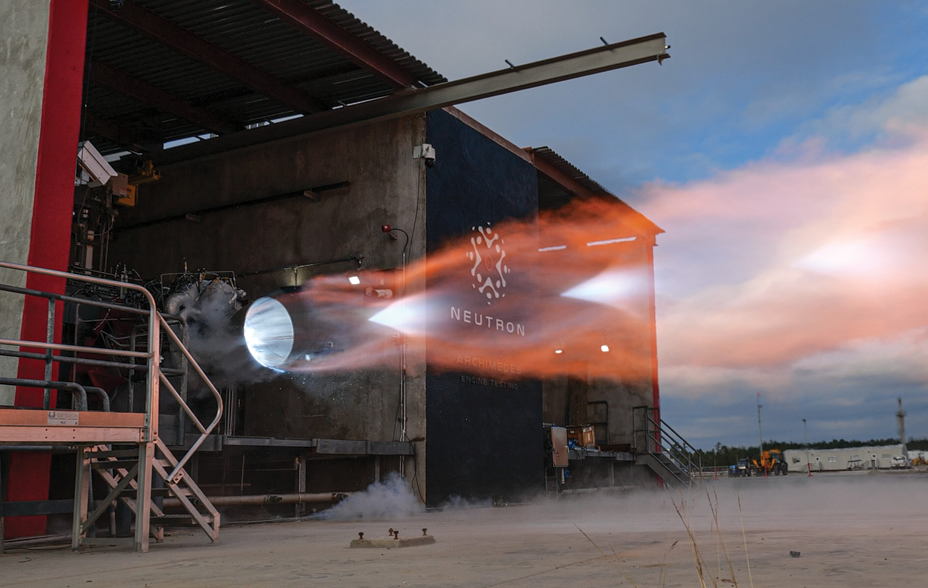
Price moves are signals, not conclusions: we pause, reassess, and only top up when the long-term case remains intact.
Image courtesy of Rocket Lab.
We took advantage of the recent share price weakness to add to the positions in Mercado Libre, Hermès, Horizon Robotics and Rocket Lab based on the strength of their long-term investment cases.
However, in the cases of Meituan, PDD, Atlassian and The Trade Desk we refrained from doing so despite their lacklustre share prices because we have questions around their returns structures and competitive moats.
Similarly, just because a holding experiences a sharp share price move or a rerating upward, that doesn’t necessarily mean it has become more expensive.
AppLovin has scorched out of the blocks, having quintupled since we bought it just over a year ago. But the payoffs look even more attractive from here than when we first purchased it.
As a reminder, this company’s tools help app developers to acquire users, monetise their apps, and optimise mobile advertising using reinforcement learning. It's 70 per cent top-line growth and 80 per cent margins stem from Axon, AppLovin’s AI-powered ad optimisation platform.
By processing around 2.5 million ad-decision requests every second, Axon drives a powerful flywheel of better advertising outcomes, greater engagement from both developers and advertisers and more data.
Shifting the ad impression conversion rate from around 1 per cent to nearer 2 per cent is quite achievable, and the resulting operational leverage would comfortably drive the required LTGG levels of incremental upside from here.
That’s before the integration with the Shopify platform brings 2 million additional merchants into play, unlocking a huge incremental opportunity in commerce.
As we reflect on the importance of patience and time when assessing individual stocks, it’s also interesting to think about the value of prolonged exposure to LTGG as a strategy more broadly.
A single $100 investment, left to mature over the 21 years since LTGG’s inception in 2004, would have yielded a return of $1,660.
Let’s contrast that with the costs of pro-cyclicality by considering a hypothetical investor who gets spooked by relative rolling one-year index divergences of over 5 per cent and switches their money into the MSCI World Index when that happens. They would have earned a mere $780 - less than half of the amount of the LTGG remainer.
So the message is clear. Time in LTGG beats timing LTGG hands down, and just as with the safari day-trippers, any attempt to dash in and out comes with considerable costs.
Offroad capabilities
Back to that waterhole. Is the tourists’ keenness to loiter there only down to their time constraints and megafauna FOMO? Perhaps the limitations of their minibuses are also to blame.
Shod with road tyres, they’re incapable of heading far into the bush lest they run over an acacia thorn. We’re keeping the LTGG information advantage intact by travelling further afield than our peers and tapping our strong levels of private and public company access - hard-earned over the last couple of decades.
Last month, NVIDIA’s founder and CEO, Jensen Huang, was quoted as saying that China would win the AI race. He later clarified that China was, in fact, “nanoseconds behind” America.

“Nanoseconds behind”: China’s tech ecosystem is moving quickly, making first-hand insight increasingly valuable.
Setting aside the diplomatic niceties, the implications are clear. Around 300 generative AI tools are being registered with the Chinese technology regulator, Cyberspace Administration of China, each month, so it’s hard to keep up with them all. However, our frequent trips to China invariably yield invaluable insights.
Beyond local artificial intelligence players such as the Six Little Dragons of Hangzhou – Game Science, DeepSeek, Unitree Robotics, Deep Robotics, BrainCo and Manycore – we have been keeping abreast of progress at Enflame, Moore Threads, Meta X, Biren, Kunlunxin and Minimax, some of which are likely to IPO next year.
We’ve also been chatting about SenseTime, which has developed its own CUDA-like software layer to enable interoperability between Chinese GPUs. Very few software engineers in China write code on NVIDIA’s operating system, and given the global mobility of Chinese technology talent, there may be longer term implications for CUDA.
We’ve also been meeting with local players such as SMIC whose foundries are starting to get good yields on 7-nanometer chips.
Following Alibaba founder Jack Ma’s symbolic handshake with President Xi earlier this year, we are also monitoring the improving Chinese business environment at a broader level.
Our conversations with former Chinese LTGG holdings such as Netease, Trip.com and KE Holdings provide helpful context that we can triangulate with broader portfolio perspectives.
We’ve also rerun the slide rule over BYD. When we first put this Chinese auto powerhouse through our research framework 15 years ago, we struggled with the company’s competitive edge and returns structures. However, over the last five years, a remarkable shift has occurred in terms of both brand and quality.
BYD seems well on the way to becoming the Toyota of EVs. But to meet the LTGG upside hurdle from here, they’d need to nail progress overseas, move into the higher margin premium market and make big leaps with their ‘God’s Eye’ smart driving system, and we’re struggling to attach meaningful levels of probability to this happy trinity.
Beyond China, we’ve revisited Indian ideas through Eternal and Make My Trip — leading players in quick commerce and online travel, respectively. We’ve also returned to look at our old friend Nintendo, the last Japanese stock held by LTGG back in 2011.
It was interesting to muse on cultural read across as we followed the crazed demand for Pop Mart’s Labubu dolls. At the more disruptive end of the spectrum, we’re exploring Sofi (a student loan fintech), Oklo (nuclear fission technology) and Tempus which applies AI to huge genomic testing datasets.
You can read about the recent new buy of Axon along with the complete sales of BioNTech and Datadog elsewhere in this report. Given the concentration of LTGG and the portfolio’s low turnover, it remains the case that we will only buy and sell a small handful of holdings each year.
Why then is there so much rummaging around in the thicket for new ideas? Because what makes us toss and turn at night is the worry that we might be missing the next multi-bagger because we’re not casting the net wide or far enough.
Year 22: as different as ever
“Mvumilivu hula mbivu” is an old Swahili expression. It roughly translates as “the patient person eats ripe fruit”. This applies to investing as much as observing nature because it’s patience that unlocks LTGG’s espresso of earnings growth.
It remains the case that, based on independent forecasts, over three-quarters of the portfolio holdings by weight are set to grow future earnings in the top two quintiles of growth rates (with over half in the very top quintile).
Our returns won’t metronomically track those of the index from one year to the next. Indeed, from time to time, they will lag over short periods, and 2025 was a case in point.
But as we embark on the 22nd year of LTGG, the market inefficiencies that underpin and power our approach remain massive, and so our clients are better set than ever to enjoy the superior long-term returns that others miss.
In 2026, you can rest assured that we will continue to forge our own exploration paths. Because crowding around the waterhole isn’t really our bag.
Footnotes:
- In contrast to the dot com era when the large telco companies had crippling debt burdens.
- Meta, Microsoft, and Alphabet are each set to spend between 21 and 35% of their revenue on capex, more than both the average global utility today and AT&T at the height of the telecom bubble. To put some context around the current level of AI capex, the dollar value of American datacentre investment over the past 3 years is the same as the dollar value that was spent to build the entire interstate highway system over 40 years.
- Open AI plans to use 125x more energy in 8 years’ time (their incremental energy needs alone exceed India’s installed capacity)
- For each of the past two years, China has added more incremental renewable capacity than the rest of the world combined
- Even before Rubin, the first AI models trained on Nvidia’s B300s will come out in 2026. Where B300s are the undisputed winner vs TPUS or any ASIC is in the crucial variable of tokens per watt – the central KPI in a world of power constraints
- More specialist processing units designed for neural networks and tensor maths
Annual past performance to 31 December each year (%)
| 2021 | 2022 | 2023 | 2024 | 2025 | |
| Long Term Global Growth Composite (gross) | 3.2 | -46.0 | 38.2 | 26.6 | 17.8 |
| Long Term Global Growth Composite (net) | 2.4 | -46.4 | 37.3 | 25.7 | 16.9 |
| MSCI ACWI Index | 19.0 | -18.0 | 22.8 | 18.0 | 22.9 |
Annualised returns to 31 December 2025 (%)
| 1 year | 5 years | 10 years | |
| Long Term Global Growth Composite (gross) | 17.8 | 2.8 | 16.7 |
| Long Term Global Growth Composite (net) | 16.9 | 2.1 | 15.9 |
| MSCI ACWI Index | 22.9 | 11.7 | 12.3 |
Source: Revolution, MSCI. USD. Returns have been calculated by reducing the gross return by the highest annual management fee for the composite. LTGG composite is more concentrated than MSCI ACWI Index.
Past performance is not a guide to future returns.
Legal notice: MSCI makes no express or implied warranties or representations and shall have no liability whatsoever with respect to any MSCI data contained herein. The MSCI data may not be further redistributed or used as a basis for other indexes or any securities or financial products. This report is not approved, endorsed, reviewed or produced by MSCI. None of the MSCI data is intended to constitute investment advice or a recommendation to make (or refrain from making) any kind of investment decision and may not be relied on as such.
Risk factors and important information
The views expressed should not be considered as advice or a recommendation to buy, sell or hold a particular investment. They reflect opinion and should not be taken as statements of fact nor should any reliance be placed on them when making investment decisions.
This communication was produced and approved in January 2026 and has not been updated subsequently. It represents views held at the time of writing and may not reflect current thinking.
Potential for Profit and Loss
All investment strategies have the potential for profit and loss, your or your clients’ capital may be at risk. Past performance is not a guide to future returns.
This communication contains information on investments which does not constitute independent research. Accordingly, it is not subject to the protections afforded to independent research, but is classified as advertising under Art 68 of the Financial Services Act (‘FinSA’) and Baillie Gifford and its staff may have dealt in the investments concerned.
All information is sourced from Baillie Gifford & Co and is current unless otherwise stated.
The images used in this communication are for illustrative purposes only.
Important Information
Baillie Gifford & Co and Baillie Gifford & Co Limited are authorised and regulated by the Financial Conduct Authority (FCA). Baillie Gifford & Co Limited is an Authorised Corporate Director of OEICs.
Baillie Gifford Overseas Limited provides investment management and advisory services to non-UK Professional/Institutional clients only. Baillie Gifford Overseas Limited is wholly owned by Baillie Gifford & Co. Baillie Gifford & Co and Baillie Gifford Overseas Limited are authorised and regulated by the FCA in the UK.
Persons resident or domiciled outside the UK should consult with their professional advisers as to whether they require any governmental or other consents in order to enable them to invest, and with their tax advisers for advice relevant to their own particular circumstances.
Financial Intermediaries
This communication is suitable for use of financial intermediaries. Financial intermediaries are solely responsible for any further distribution and Baillie Gifford takes no responsibility for the reliance on this document by any other person who did not receive this document directly from Baillie Gifford.
184301 10059678