
View transcript
<p><strong>As with any investment, your capital is at risk. Past performance is not a guide to future returns.</strong></p>
<p class="MsoNormal"> </p>
<p class="MsoNormal"><strong>Amy Maxwell (AM):</strong> Hello, and welcome to today’s webinar brought to you by Citywire in association with Baillie Gifford. I’m Amy Maxwell, and I’ll be your host for the next 45 minutes as we explore how investors can navigate what Baillie Gifford has described as ‘a sense of vertigo’ in markets. A period of rapid change, heightened volatility and shifting assumptions.</p>
<p class="MsoNormal">The US remains the global engine room for growth investing, but the backdrop is moving quickly from political uncertainty and potential policy shifts to the accelerating impact of artificial intelligence and fast-moving innovation in areas like healthcare.</p>
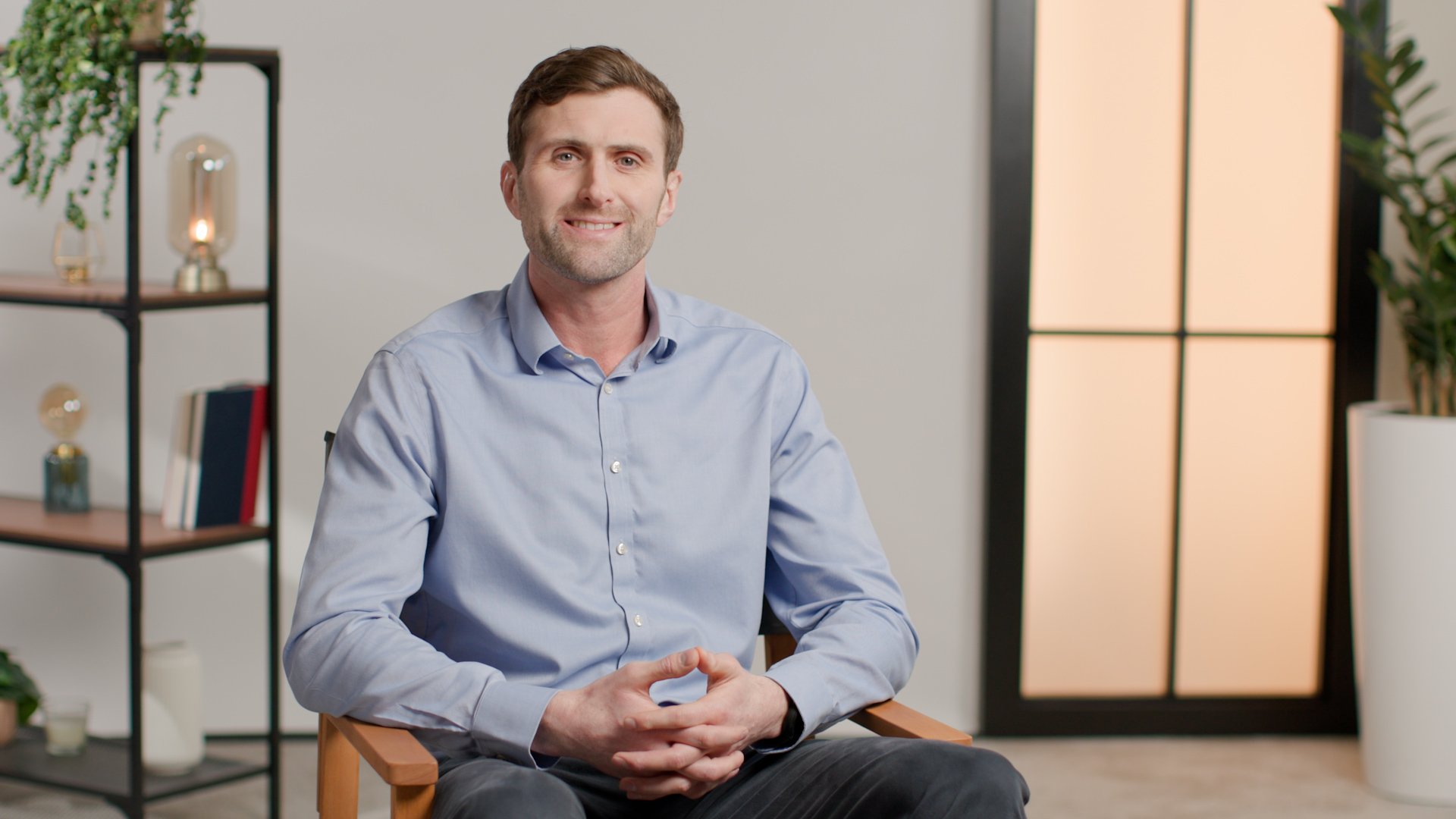
<p class="MsoNormal">I’m very pleased to be joined today by Kirsty Gibson, co-manager of the Baillie Gifford US Growth Trust. Kirsty will share how the trust is positioned across public and private growth companies, what has driven recent portfolio changes and how the team thinks about resilience, adaptability, and long-term compounding.</p>
<p class="MsoNormal">Kirsty, thank you very much for joining me today.</p>
<p class="MsoNormal"><strong>Kirsty Gibson (KG): </strong>Thank you for having me.</p>
<p class="MsoNormal"><strong>AM:</strong> So we’re talking about the US, and there is certainly a lot to talk about. Explosive headlines. The ground shifting beneath investors and the population’s feet. The backdrop certainly feels unusually volatile. Lots of implications for areas like trade, technology and healthcare, all of which we’re going to cover.</p>
<p class="MsoNormal">When you look at the Trust’s holdings, how do you decide the importance of these policy shifts? Whether they’re going to be likely short-term disruptions, or something that genuinely changes the trajectory of the Trust?</p>
<p class="MsoNormal"><strong>KG:</strong> I would maybe broaden the question out a little bit beyond politics. I try to think about the headlines, whether that be macro or geopolitics, and the impact on the companies that I invest in on behalf of my clients, in two broad buckets.</p>
<p class="MsoNormal">The first would be timing or volatility. Are we seeing pulls in demand forward or backwards, or changes in sentiment? The second would be a genuine rule change. That’s something that permanently alters unit economics, access to markets, who potentially can capture the value. The market broadly focuses, I think, on number one, and that makes sense if you have a shorter time horizon. But for long-term investors who can ride out the ups and downs, the rarer portfolio-shaping moments actually come from number two.</p>
<p class="MsoNormal">So with both buckets we have to ask ourselves, does this change the end-state or does it just change the path that the company has to take? In practical terms that means during times of change and volatility we spend more time on company-specific endurance or adaptability. We think about things like adaptability or supply chain flexibility or pricing power or something like culture as an execution edge, rather than getting too bogged down in the specific details of any particular policy change, for example.</p>
<p class="MsoNormal"><strong>AM:</strong> I suppose it’s the difference then between event-driven trading and an investment as a result of a real paradigm shift.</p>
<p class="MsoNormal"><strong>KG:</strong> Yes, I think that’s a good way to articulate it.</p>
<p class="MsoNormal"><strong>AM:</strong> Carrying on on this idea of paradigm shift, you’ve spoken before about old mental models breaking down during these periods of real rapid change, which we’re seeing at the moment. With developments like generative AI, new forms of digital consumption, so our ecommerce, and shifting labour dynamics, where do you think investors are most at risk of really misunderstanding what’s going on and what’s really going to drive long-term performance?</p>
<p class="MsoNormal"><strong>KG:</strong> I think the biggest investor mistake I see right now in the US is over-indexing on linear thinking in a world that’s becoming just much more nonlinear. Ultimately, we’re human, and humans want neat narratives. They want one new technology, one addressable market, one winner.</p>
<p class="MsoNormal">The more plausible reality, especially with something like artificial intelligence, changing assumptions, shifting labour, is a messy recombination of that. What are the second order effects? The feedback loops? The sudden phase shifts? And so, I think we need to all be very wary of too much historical pattern-matching. AI is a paradigm shift. Some old assumptions may no longer apply. There’s a lot of discussion at the moment in the software space, for example, around charging per seat versus charging for consumption, the amount of the software that’s consumed.</p>
<p class="MsoNormal">We have to try and stay wary of tiny models and instead ask, what is the system as a whole doing? Where are the bottlenecks moving to within the system? Who’s potentially gaining leverage? Is that through distribution or data or compute or trust or workflow? To really do well in an environment of significant change, ultimately, you have to be comfortable looking wrong for a period of time, as well.</p>
<p class="MsoNormal"><strong>AM:</strong> Shall we get into the portfolio activity in a little bit more detail, to see those roles playing out?</p>
<p class="MsoNormal">Recent additions to the portfolio, you’ve got businesses like Knife River, AppLovin and Circle. Rather than on the specifics of their industries, could you talk about some of the common traits you see in these companies, and what attracted [you to them as] long-term compounders, despite this really volatile environment that they’re operating in?</p>
<p class="MsoNormal"><strong>KG: </strong>When I tell you what each of them do, I think you’ll see that these three are really quite different businesses. But actually, I think you’ll start to see that there are more similarities than you would expect.</p>
<p class="MsoNormal">Knife River is a vertically integrated aggregates company, AppLovin is a digital advertising enabler and Circle is a stablecoin issuer. At face value, these are just not similar businesses at all. But if you dig below the surface, a few similarities do start to emerge.</p>
<p class="MsoNormal">The first one, I’d say, is each has a clear source of demand. That’s a structural pull not a cyclical push. Knife River is a good example of a business tied to long-lived physical systems rather than short economic cycles. Infrastructure needs don’t disappear because growth slows for a year or two, and in aggregates and construction materials, local scale and reliability really matter. That gives the business a chance to compound steadily through different phases of the cycle, rather than needing perfect conditions to perform.</p>
<p class="MsoNormal">[For] AppLovin, the structural pull comes from a different place. Mobile gaming and digital advertising are messy, competitive markets, but AppLovin sits at the intersection of data distribution and optimisation. As more developers rely on its tools to help them acquire users and for them to help monetise their games, its system learns and improves. Ultimately, that creates learning loops where their product actually gets better as it scales, and that helps them to drive more demand.</p>
<p class="MsoNormal">In Circle, that reflects a hypothesis that financial infrastructure is slowly being rebuilt. Stablecoins like Circle’s USDC, they’re not about speculation. They’re about moving value faster, more cheaply and more globally. And if that system continues to be adopted by businesses, by developers, by broader institutions, then Circle benefits from being embedded at that foundational level. </p>
<p class="MsoNormal">Another similarity is evidence of a widening advantage. Knife River’s local scale and asset footprint are really hard for other players to potentially replicate. AppLovin’s advantage strengthens as data accumulates and as tools become more central to customer workflows. Circle benefits from trust, regulatory engagement and network effects that raise the bar for the competitors. In each case, success makes the business harder to displace, it doesn’t make it easier.</p>
<p class="MsoNormal">Then I think the final thread is how these companies are run. We’ve talked about this a lot. If people have heard either Gary or myself talk before, we talk a lot about culture, but we’re drawn to management teams that think like builders rather than caretakers. Teams that are willing to invest ahead of consensus, they’re willing to adapt quickly when reality changes and stay focused on long-term outcomes, even when the market is impatient. That cultural aspect matters enormously when the environment is uncertain, which obviously, we’re experiencing at the moment, because ultimately, it determines whether a company freezes or it evolves.</p>
<p class="MsoNormal">Actually, what’s really important about these three things that I’ve talked about here, is that these are the characteristics of what we define as exceptional growth businesses. They are the building blocks of what we look for in the Baillie Gifford US Growth Trust across public and private businesses. Large and often expanding market opportunities, strong competitive positions, or the opportunity to build one, and distinctive cultures.</p>
<p class="MsoNormal"><strong>AM: </strong>It’s really interesting, you spoke about this mentality of being a builder versus a caretaker. We heard there about three positions that you’ve recently taken up. It would be interesting to apply that same logic to positions that you’ve exited, and maybe we can get under the skin of, were they more in the caretaker bracket, and why?</p>
<p class="MsoNormal"><strong>KG: </strong>Our bias is that buys drive sales in the portfolio. We want to keep the competition for capital high and that’s really healthy. When we’re thinking about changes we want to make in the portfolio, we’re thinking about thesis integrity: how well has the company executed against the thesis that we have for it, and do we think that will continue.</p>
<p class="MsoNormal">We’re also thinking about competition for capital in our decisions. Ultimately, we run a relatively concentrated portfolio, and we want to ensure that the businesses that we do own are the ones that we think are the best and they’re bringing the most to the portfolio.</p>
<p class="MsoNormal">And so the decision to sell Chewy and Roku, two relatively well-known business within the portfolio that we sold in the last year, wasn’t driven by short-term disappointment or even a sudden loss of faith in the management teams, necessarily – although, occasionally, that can be a reason to sell.</p>
<p class="MsoNormal">In the case of Chewy and Roku, both are very well-run businesses and have been successful. Chewy is in the pet market. Pet has been a wonderful segment of the market. The humanisation of pets has been a very powerful tailwind for the business.</p>
<p class="MsoNormal">However, we’ve come to the conclusion that Chewy is increasingly looking like a very good retailer rather than a business where the advantage widens meaningfully as it grows. Customer growth has started to feel a lot harder and, in that context, for us anyway, the upside felt like it had become more bounded and the path to it becoming that exceptional outlier that we look for just wasn’t as clear. There were other things that we were discussing in the portfolio where that felt stronger, and so it couldn’t earn its place anymore within the portfolio.</p>
<p class="MsoNormal">Roku is a slightly different story, but I think the same framework applies. Roku helped define the streaming operating system layer in the US for television. For a period, it looked like it could become a powerful gatekeeper between content creators, advertisers, and viewers.</p>
<p class="MsoNormal">What changed wasn’t actually the relevance of streaming, that’s still very much intact, but the distribution of power within that ecosystem. Platform owners, content producers, large tech companies all pushed aggressively into the space, and that compressed economics and increasingly led to competition for attention and the advertising dollars that Roku actually monetised. And so as the system evolved, Roku’s ability to capture a disproportionate share of long-term value became less obvious, even if the platform itself remained widely used. That’s why we consequently decided to move on from both of those holdings.</p>
<p class="MsoNormal"><strong>AM: </strong>Both those decisions do take having eyes and ears on the ground and ensuring that you’re plugged into these networks – because, while they’re good businesses, they’re not actually providing that exceptional growth that this Trust, in particular, is looking for.</p>
<p class="MsoNormal"><strong>KG: </strong>Yes, I think that’s fair.</p>
<p class="MsoNormal"><strong>AM: </strong>Let’s move on to another area which you and the team are excited about, but it’s been beaten down quite a bit. We always hear a lot of potential around healthcare innovation, but it’s quite a dense market to understand, rich in regulation and scientific jargon. Perhaps you could break down for us the points of interest in healthcare, both as a source of innovation and, also, explain away some of the volatility that we’ve seen there.</p>
<p class="MsoNormal"><strong>KG:</strong> I think when you invest in healthcare, you almost have to normalise discomfort. Moreso probably than any other types of businesses that we invest in. Because in many respects, the outcomes are binary, they succeed or they fail, particularly in the biotech space. We accept that. We know that breakthrough innovation is lumpy.</p>
<p class="MsoNormal">I think you have to spend a lot of time thinking. The question is whether bad news is a signal when it comes to a healthcare business. Is the slope of the long-term value creation flattening, or is bad news noise: a timing gap, a trial readout delay, a reimbursement wobble, a policy headline, something like that? Separating these is not easy, but being able to separate these can help you hold on to long-term winners, even if things are quite volatile.</p>
<p class="MsoNormal">I’d say I think about three broad things. I think in terms of the product, are we seeing platform strength or a product cycle? Is the underlying engine improving, even if one single product disappoints? If you think historically how many biotech platforms worked, or biotech players worked, or even large pharma worked, it was, throw some spaghetti at the wall and see what stuck in terms of the target. I think many more of the businesses that we see emerging or we have in the portfolio, have a broader platform offering where they have one type of technology, whether that’s something like Alnylam with gene silencing or Moderna with mRNA, where you can potentially apply that technology to a broad swathe of different types of disease. So it means that you’re much less dependent on success in a singular area because you have other shots on goal, shall we say.</p>
<p class="MsoNormal">I think the second thing I think about is adoption. So, is this a rules-based problem? For example, does regulation need to change in order for this to work? Or is it a behaviour or change in management issue that you need? Which is time-consuming, but that’s a much easier lift. I think that’s particularly relevant when you’re thinking about medical devices. Medical devices, often they can be approved from a regulatory point of view, but that doesn’t mean that the path to rollout is necessarily easy, because you have to be able to train people and surgeons and doctors to be able to use these devices.</p>
<p class="MsoNormal">And then I think the third thing that I would think about is how quickly can management respond? Can they evolve quickly? Are they effectively allocating capital within the business? I think it’s very easy when you’re in an environment when there’s lots of capital flowing around for management teams to take on every possible project that they can. That can be a really good tactic at that point in time, but if the environment changes, as we’ve seen over the last couple of years, how do you prioritise? How do you ensure that you’re learning cheaply, but you’re also learning quickly to be able to give yourself that opportunity?</p>
<p class="MsoNormal">So, I think ultimately, when you invest in healthcare, the path doesn’t need to be smooth, but I think what you do need to feel comfort with is that the end destination is growing, not shrinking. And the company needs to be one of the best ways that you think to reach that end destination.</p>
<p class="MsoNormal"><strong>AM: </strong>And as an expression of that in the portfolio, what would you say you’re excited about and you have confidence in the trajectory?</p>
<p class="MsoNormal"><strong>KG: </strong>So, I actually mentioned two of them earlier. We have a holding in Alnylam. Alnylam is a gene silencing business. Alnylam now has six drugs on the market. And it’s very interesting now, they haven’t given out this data that recently, but in 2023 they revealed that their probability of success for their drugs is much higher at every stage. Converting from phase one to phase two, phase two to phase three, and phase three to being successful, their probability of success is well above the industry average.</p>
<p class="MsoNormal">I think that’s because with RNAi, the challenge is not so much which gene to silence, that’s relatively well understood, it’s the delivery of the medicine into the body. We know that Alnylam’s very strong at that because even their competitors have licensed their technology for delivery.</p>
<p class="MsoNormal">The second challenge is getting that drug to last for a long enough period of time in the body so that it actually has the desired effects. And Alnylam has gone from, when we first invested, dosing once every week or two weeks, to some of their drugs being able to dose once a year. If you look at their pipeline, if you were to apply that probability of success to a large swathe of some of the things that are in the late stage of their pipeline, there’s a really huge opportunity for this business to produce many more drugs. </p>
<p class="MsoNormal">The other name I would mention would be Moderna. Obviously, this is a business that has gone on a little bit of a journey, shall we say. It’s definitely had its ups and its downs. The data that we’re starting to see coming out with Moderna, from its personalised cancer vaccine, and the fact that you can maybe apply mRNA to a much broader swathe of disease treatments, is extremely positive.</p>
<p class="MsoNormal"><strong>AM:</strong> It's moving on from those post-pandemic lows and lots of other strings to its bow.</p>
<p class="MsoNormal"><strong>KG:</strong> Exactly.</p>
<p class="MsoNormal"><strong>AM: </strong>I’m surprised we’ve made it to nearly 20 minutes in without having a more in-depth conversation about AI, which of course, is the theme running through many of the Trust’s largest holdings and of course, is reshaping our realities. From Nvidia to Meta to newer private purchases like Runway AI and Anthropic, we have lots to talk about here. So, where do you see AI most clearly reinforcing existing competitive advantages, and where do you think it has the potential to fundamentally change the game?</p>
<p class="MsoNormal"><strong>KG: </strong>I actually read something the other day that described AI as both a microscope and a bulldozer, and I thought it was actually quite fitting. In some cases, AI acts as a microscope because it magnifies existing strengths. If a company already has scale or distribution or data or deeply embedded workflows, AI can make those advantages more powerful, rather than less. I think Nvidia is probably the most obvious example here. Its advantage is compounded because the ecosystem of AI has literally been built on top of it.</p>
<p class="MsoNormal">Meta is another good example, but in a different part of the stack. Meta’s advantage isn’t just the models, it’s the combination of global distribution, massive data, highly refined monetisation systems. When Meta introduces new AI capabilities, whether that be in advertising, content recommendation, or creative tools, it can deploy them across billions of users almost instantaneously, and monetise them within an existing machine.</p>
<p class="MsoNormal">I think that’s a good illustration of a broader pattern that we’re seeing. Companies with strong distribution and fast moving product-led cultures tend to be able to absorb these new tools rather than be disrupted by them. At the same time, I think AI has the potential to be a bulldozer because it might flatten what used to be valuable. For example, differentiation that once came from specialised human labour, bespoke processes, or incremental software features could suddenly become commoditised in time.</p>
<p class="MsoNormal">When that happens, the structure of industries is really going to start to change. Not gradually, but in quite clearly defined jumps. Consequently, we’re asking ourselves what becomes scarce in an AI-enabled world? Sometimes it’s compute, which again, points to companies like Nvidia. Sometimes it’s proprietary data, especially data generated inside real workflows rather than being scraped from the open internet. Sometimes it’s trust, brand, maybe regulatory permission. [That feels] particularly true in sensitive domains like finance of healthcare or education. Sometimes it’s simply distribution: the ability to put new capabilities in front of users at scale.</p>
<p class="MsoNormal">I think that’s why the newer private investments that you mentioned, such a Runway AI in creative tools and Anthropic in model development and deployment, gets us really excited, because they ultimately represent new control points in the stack. These are in places where value could accrue if AI reshapes how creative work is done, or how knowledge is accessed, or how intelligence itself is deployed. These aren’t guaranteed winners, but they sit at junctions where small changes in adoption or capability could lead to really very large outcomes.</p>
<p class="MsoNormal"><strong>AM:</strong> Let’s get deeper into some of-, You’ve mentioned two new positions there in the private segment. Where do you feel is the biggest potential for the long-term growth in these areas and how has that emphasis evolved as the opportunity set in the US has changed?</p>
<p class="MsoNormal">Let’s use last night’s results as an example, If you could update our audience. We saw Microsoft, Meta, [and] Tesla all release results last night. These are the established names in the field. How have they faired and were your expectations met?</p>
<p class="MsoNormal"><strong>KG:</strong> I think it’s really fascinating at the moment, that you’re seeing that some of the most innovation in a paradigm shift is coming out of these really large players. Really intriguing yesterday in Meta’s results, for example, was they were talking about the fact that although advertising is likely to remain a very significant part of their revenue base, at least for the next few years, they’re talking about new businesses being launched over the next year, and new ways that they can go about monetising what they have on offer. This is an extremely large business and it’s still growing its top line over 20 per cent. I think that really is quite intriguing, and it’s showing the power of artificial intelligence to be able to supercharge an existing business who is able to harness it very effectively.</p>
<p class="MsoNormal">I think what we saw with Tesla is that Tesla’s changed its mission statement to now be a business that they’re talking about this idea of amazing abundance. That’s the mission of the business, to deliver amazing abundance. The company is making some really big changes as a consequence of that: full self-driving cyber trucks, cyber taxies, robotaxis, these are all terms that they’re talking about, and this is all stuff that’s coming in the next couple of years. In fact, some of this is coming in the first few quarters. They’ve got optimus robots that they are releasing a new version of relatively soon.</p>
<p class="MsoNormal">Really interestingly, the company has announced that in Q1 of this year, they’re actually going to stop producing their model S and their model X at their Fremont facility, that’s the facility that produces those models, and they’re going to refurbish the facility and have that producing optimus robots. At capacity it could produce a million robots a year on that line. So, these businesses are shifting, and I think AI is an accelerant to them.</p>
<p class="MsoNormal"><strong>AM: </strong>That’s a massive pivot there, from Tesla in particular. The investors have to adjust to it not just being a carmaker, it’s a multi-sided business model for which, in the years to come, we will see many different revenue streams, I’m sure.</p>
<p class="MsoNormal"><strong>KG: </strong>Yes. I think that speaks to that adaptability point. This is the willingness of product-led or founder-led businesses with adaptable cultures. They can ingest these big changes in a way that potentially a larger, older, less nimble business will struggle to.</p>
<p class="MsoNormal"><strong>AM: </strong>Quite a lot has been made about the capex expenditure of these companies. It’s equivalent to nation-state spending for single companies. What would you say to those concerned about the capex expenditure and the return on investment versus the future that perhaps we are looking at?*</p>
<p style="text-align: justify; line-height: 150%; tab-stops: 363.75pt;" class="MsoNormal"><em><span class="source-text">*Capital expenditure, or 'capex', refers to funds a business spends on assets for its long-term operational benefit.</span></em></p>
<p class="MsoNormal"><strong>KG: </strong>The challenge is less to do with whether it’s a complete waste of money and much more to do with, have we got the timing right? I think that’s what people are ultimately questioning. If you go back and look at the dot.com bubble, the challenge was not that we didn’t absorb that infrastructure over time, the challenge was that it was all built and we didn’t even have broadband.</p>
<p class="MsoNormal">I’ve read some pieces of work that suggested if the broadband had come earlier, as opposed to in 2006-2007 timeframe, maybe we wouldn’t have had a bubble in the same way at all. Bubbles are something that you call after the fact, so it’s very hard to say where we are right now. But I think the reality is, when you look at these businesses, you talk to someone like Meta, for example, they’re very clearly saying, we need to invest. We also know that even if we stopped investing, we can absorb all this capacity. We can use the capacity we’ve already invested in. </p>
<p class="MsoNormal">I think the other point is, when you look at someone like an Amazon or you look at someone like an Alphabet, for example, and what they’re spending and how they’re investing, that’s on the basis of external demand. They have the demand and they’re trying to fulfil that demand. They’re not investing ahead of demand, at the moment. They are investing behind demand. Everything that they are building is being absorbed. And I think that’s quite a different situation to what we’ve seen in the past.</p>
<p class="MsoNormal"><strong>AM: </strong>The story of 2025, really, was the Mag7 and the overconcentration of them in US stock markets. It sounds like you’re very much a believer that this is justified.</p>
<p class="MsoNormal"><strong>KG: </strong>I think the Mag7 has changed over the past couple of years. It’s gone from one group of Magnificent Seven to another Magnificent Seven. We’re now just saying any company in the top seven companies are magnificent. I think we have to be a little bit wary of-</p>
<p class="MsoNormal"><strong>AM:</strong> We sound like Elon with his ‘amazing abundance’. Everything is magnificent and amazing and brilliant.</p>
<p class="MsoNormal"><strong>KG: </strong>Yes, Tesla was in that group and then it’s not in that group anymore, etc. So, I think we have to be a little bit wary of that. For me, it’s much more about this idea that these are-, And we don’t own all of them, I should say, we don’t own all of these businesses. I think the really important thing to do right now is be selective. I think there’s a lot of excitement in the market around artificial intelligence, and specifically AI capex spend. If you look at the data, the companies that have seen the most significant re-ratings over the past year have been those that are directly tied to AI capex. So, I think it’s about being selective. Who do you want to own in that space? How sustainable is their competitive advantage? How large is their opportunity? How distinctive is their culture?</p>
<p class="MsoNormal">The companies that we believe fulfil the criteria of what we’re looking for, we are willing to own those businesses, and we will be willing to hold them through periods of volatility because we believe in that long-run opportunity that comes out the other side.</p>
<p class="MsoNormal"><strong>AM:</strong> I suppose that’s the infrastructure first layer as well. There’s a second wave of innovation on the applications built on top of that as well, which you went into earlier.</p>
<p class="MsoNormal"><strong>KG: </strong>Yes. I think that’s really important around-, I think we can all get very fixated on artificial intelligence and capex. There’re some brilliant businesses in that space, but I think most interestingly for me is around the deployers of artificial intelligence. Who are deploying this technology effectively?</p>
<p class="MsoNormal">Because ultimately, if we were to go through a period where AI capex, it turns out that there was too much spend and we’ve had a bit of a pull forward, ultimately, the players that are deploying that technology are still going to go on to be really successful, because they’re improving their businesses, they’re making their product better, they’re operating more efficiently. That doesn’t get taken away, even if X, Y or Z business has potentially spent a little bit too much on capex.</p>
<p class="MsoNormal"><strong>AM: </strong>Excellent, okay, well we’ve reached the end of our Q&A session and I’m going to spend the last 15 minutes or so going through quite a lot of varied questions coming in here.</p>
<p class="MsoNormal">This is a political risk question. “If things got really bad geopolitically, is it plausible that [the] US could freeze assets of institutions and make it difficult to invest or divest in the US?” How much of this is on your radar screen, from a risk perspective?</p>
<p class="MsoNormal"><strong>KG: </strong>That is a big question. I think that’s a really difficult question to answer. Ultimately, I think we’re obviously operating under the assumption that that isn’t going to happen, and I guess you could say that that is a small risk. It seems unlikely to me at the moment, from the perspective that I think that Donald Trump has been making, and the Whitehouse more generally, has been making, some big changes. Some of those things are probably going to play out well, and probably some of them are not going to play out that well.</p>
<p class="MsoNormal">I think that the one thing that is important to the administration at the moment is America’s position on the world stage. I think that America’s businesses are some of the most exciting and innovative worldwide, and I think it matters to America’s position in the world that people are able to access both the technologies that those businesses are developing, but also, be able to access funding those as well.</p>
<p class="MsoNormal"><strong>AM: </strong>America’s trying to be great again, to get another slogan in there.</p>
<p class="MsoNormal">Staying on this theme, “Are you seeing any worldwide consumer sentiment turn against US products, brands or services given the increasing geopolitical tensions over recent months?” Any boycotts or backlashes and how far can sentiment impact your positions, or have we just got to a stage where these companies are just too big and there’s not much that can be done to alter the trajectory?</p>
<p class="MsoNormal"><strong>KG: </strong>I think the company that I’d say has seen the biggest backlash in probably Europe, for example, is Tesla, in terms of the purchasing of cars. The results last night, they said that APAC is the most deliveries that they’ve ever made in that region. I don’t think we’re seeing it so much in other parts of the world.</p>
<p class="MsoNormal">In terms of that as a brand, I think that’s less to do with the current administration per se, and much more to do with Musk’s affiliation, or previous affiliation, with that administration [which] has caused a bit of backlash there. Like I say, Tesla ultimately is quite a lot more than a car company, now, and there are many other opportunities that they’re looking for.</p>
<p class="MsoNormal">I think in terms of other brands or consumer discretionary businesses that we own, many of those businesses are quite US-focused. They have many multiple opportunities to expand within the US before potentially going internationally.</p>
<p class="MsoNormal">And then you have the very, very large players like the Amazons, for example, or the Metas of this world, where yes, they are US companies, but they’ve been operating on a global scale for a very significant period of time. I think many of us would probably struggle to-, they’re very integrated into our lives, that I think it’s very difficult for somebody to arrange a broader large-scale boycott of them.</p>
<p class="MsoNormal"><strong>AM:</strong> You mentioned there, Tesla, of course always of interest. We have another question here on Elon Musk’s side project, Space X, one of your holdings in the private aspect of the Trust: “What is the Baillie Gifford plan regarding Space X this year? To hold all your shares through IPO and beyond, or will you trim along the way?”</p>
<p class="MsoNormal"><strong>KG:</strong> I think I should make it clear that there is no Baillie Gifford plan. The trusts all operate independently, and they have different investment managers in charge, and those investment managers will make their own decisions on what they want to do with their holding.</p>
<p class="MsoNormal">For Gary and I, at the moment, we have no intention to reduce our Space X holding right now. That reflects the fact that I think we are seeing-, When we made our reduction last year, this was all in the interim results, so this is all known, but that was decided upon in May of last year. We decided to take some money off the table and reinvest in other exciting private opportunities, public opportunities, that we could see.</p>
<p class="MsoNormal">I think it’s quite important to recognise the fact that, at that point in time, there was no IPO that we knew of on the horizon, etc. I think the situation that we are in now is different, and I think that with a potential IPO, we don’t see any requirement for us to be reducing our holding right now.</p>
<p class="MsoNormal">But, you know, that could change as well. The markets are moving, they change quite dramatically. Space X has publicly disclosed that they intend to IPO, but they don’t have to do that. There’s no requirement for them to do that at this point, and market conditions might change as a consequence.</p>
<p class="MsoNormal"><strong>AM:</strong> This raises another question, which we didn’t touch upon in the main Q&A, around the private holdings, valuation and liquidity, particularly in periods of market stress. So how do you balance those holdings, and the risk of those holdings, while staying aligned with long-term value creation?</p>
<p class="MsoNormal"><strong>KG: </strong>I think it’s right to say that the risks do exist. Ultimately, these are much more illiquid names. I think the right response is about process. The unquoted valuations follow consistent methodologies internally. We have a separate valuation team who also use an external party with board oversight. So, the US Growth Trust board has meetings around that, and they’re challenged and reviewed regularly. So there’s a quarterly measurement cycle with additional reviews around trigger events or during periods of significant volatility in the market.</p>
<p class="MsoNormal">Ultimately, Gary and I manage this portfolio in a very holistic manner. We don’t have a private or public company target. We can own up to 50 per cent in private companies, but we’re not looking to own up to 50 – that currently stands in the mid-30s. This yea,r there’s rumours of quite a lot of different IPOs potentially coming, so that number may come down.</p>
<p class="MsoNormal">We have been through a more unusual period. During the pandemic, the IPO door was very widely open, and then it sort of shut completely. [Now it] looks to be opening up a little bit more. Late last year, one of our private companies did IPO, BillionToOne. And like I say, there are rumours of several high-profile IPOs this year, too, not just Space X.</p>
<p class="MsoNormal">I think it’s really important to say that the private part of the Trust matters because we are looking for exceptional growth businesses, and they’re not all in public markets anymore. A decade-plus ago, plus, companies would list as small-caps and scale up in public markets. That’s not the only path that they have to take now. Many of the most exciting companies that we’re seeing in private markets are likely to list as mid-caps or higher. Thus, getting access to exceptional growth businesses in the US actually necessitates owning private companies.</p>
<p class="MsoNormal">And ultimately, that’s actually why we launched the US Growth Trust, because we wanted to provide people access to that, leveraging Baillie Gifford’s reputation as a long-term supportive shareholder to gain us access to private markets. I think we’ve done a good job of that – the fact we own Space X and Anthropic and Stripe and Rippling, these are well-known names and we’re able to provide that access to shareholders – I think is very important to highlight as well.</p>
<p class="MsoNormal"><strong>AM: </strong>You’re very much that conduit to growth. You are investing in them before they’ve even begun their journey, at the very start of their journey. So you’re part of that, aren’t you, investors are?</p>
<p class="MsoNormal"><strong>KG: </strong>I would say at the start of their journey, but not too early. These are established businesses. It’s not two guys in a garage, right? It’s not the historic Bill Gates story of two guys, or Apple’s story. These are later-stage private investments that we’re making. And whilst we don’t push the companies that we invest in to an exit – we’re happy for them to stay private, we’re happy for them to IPO – I think the IPO is still on the medium-term plan of many of the private companies that we invest in. They see that as a progress point, a point of success for them as a business.</p>
<p class="MsoNormal"><strong>AM:</strong> We’ve got a question here about the team makeup. “Could you tell us more about how you work with other US counterparts within Baillie Gifford, and when you are scheduled to take trips?” Essentially, what’s the mood on the ground and how has that shifted? I suppose that’s a really interesting question in the last few minutes of this session, to do a pulse check on, what are businesses on the ground saying? How often are you getting to see them, and what are your counterparts in managing different areas of US equities across Baillie Gifford saying?</p>
<p class="MsoNormal"><strong>KG:</strong> We’re a team of nine. We’re the US Growth Team within Baillie Gifford. There’s around about 50 or so colleagues of mine that also cover the US, whether that be through global teams of other areas, specialist teams looking at specific topics. We have good coverage, I think, from that perspective.</p>
<p class="MsoNormal">We have a centralised research library where all of the research is shared that everybody’s writing on. And we all talk. I know it’s not something that investment managers are necessarily famous for, but we do have conversations and we do chat to our colleagues and share, hopefully, our best ideas.</p>
<p class="MsoNormal">In terms of trips, I’d say that each of us probably goes to the US at least four times a year visiting businesses. I was out just before Christmas, I saw 18 companies in three days. That was quite intense. I’m off to San Francisco in early March, to go and spend some time with many of the companies that we have in the portfolio, but also, new ideas that are potentially interesting, that have either been recommended by colleagues in other teams that own things that we don’t, or potential businesses that we don’t, as a firm, actually hold at the moment.</p>
<p class="MsoNormal">I think in terms of the mood music and how the companies are feeling, I think these businesses have now become quite accustomed-, the types of businesses that we invest in anyway, have become quite accustomed to being nimble and adaptable and are looking, as much as possible, to embrace the opportunities that they see from things like artificial intelligence to operate faster and more efficiently, to potentially being able to scale without the requirement to have as many people or processes in place that they would have historically.</p>
<p class="MsoNormal">I think that nimbleness and adaptability, which often comes from the fact that these businesses are founder-led – which like I said earlier, we have a bias towards – means that they’re also quite well-placed to be able to navigate some of the more challenging trade volleys or tariffs or anything else – the general sort of volatility that maybe is coming from the administration within the US as well.</p>
<p class="MsoNormal"><strong>AM: </strong>Well, we started off talking about investors potentially having vertigo with everything that’s going on, so I hope by the end of the session everyone’s feeling a little bit more level-headed. Thank you, that is all we’ve got time for today. Thank you to Kirsty for joining us. We hope the session has given you a clearer view of how the Baillie Gifford US Growth Trust is navigating a fast-changing and volatile US growth landscape, and how the portfolio is positioned across both public and private companies for the long term. Thank you again for watching, and we look forward to seeing you next time.</p>
<p class="MsoNormal"> </p>
<h3 class="TABLEHEADER1212pt">Baillie Gifford US Growth Trust plc</h3>
<p><strong>Annual past performance to 31 December each year</strong></p>
<table border="1" style="border-collapse: collapse; width: 100%; border-width: 0px; height: 74px;">
<tbody>
<tr style="height: 18.5px;">
<td style="border-width: 1px 1px 2px; border-style: solid; border-color: rgb(204, 204, 204) rgb(204, 204, 204) rgb(0, 0, 0); border-image: initial; padding: 10px; height: 18.5px;"> </td>
<td style="border-width: 1px 1px 2px; border-style: solid; border-color: rgb(204, 204, 204) rgb(204, 204, 204) rgb(0, 0, 0); border-image: initial; padding: 10px; height: 18.5px;"><strong>2021</strong></td>
<td style="border-width: 1px 1px 2px; border-style: solid; border-color: rgb(204, 204, 204) rgb(204, 204, 204) rgb(0, 0, 0); border-image: initial; padding: 10px; height: 18.5px;"><strong>2022</strong></td>
<td style="border-width: 1px 1px 2px; border-style: solid; border-color: rgb(204, 204, 204) rgb(204, 204, 204) rgb(0, 0, 0); border-image: initial; padding: 10px; height: 18.5px;"><strong>2023</strong></td>
<td style="border-width: 1px 1px 2px; border-style: solid; border-color: rgb(204, 204, 204) rgb(204, 204, 204) rgb(0, 0, 0); border-image: initial; padding: 10px; height: 18.5px;"><strong>2024</strong></td>
<td style="border-width: 1px 1px 2px; border-style: solid; border-color: rgb(204, 204, 204) rgb(204, 204, 204) rgb(0, 0, 0); border-image: initial; padding: 10px; height: 18.5px;"><strong>2025</strong></td>
</tr>
<tr style="height: 18.5px;">
<td style="border: 1px solid rgb(204, 204, 204); padding: 10px; height: 18.5px;">Share Price (%)</td>
<td style="border: 1px solid rgb(204, 204, 204); padding: 10px; height: 18.5px;">-4.7</td>
<td style="border: 1px solid rgb(204, 204, 204); padding: 10px; height: 18.5px;">-52.8</td>
<td style="border: 1px solid rgb(204, 204, 204); padding: 10px; height: 18.5px;">22.3</td>
<td style="border: 1px solid rgb(204, 204, 204); padding: 10px; height: 18.5px;">56.0</td>
<td style="border: 1px solid rgb(204, 204, 204); padding: 10px; height: 18.5px;">3.0</td>
</tr>
<tr style="height: 18.5px;">
<td style="border: 1px solid rgb(204, 204, 204); padding: 10px; height: 18.5px;">NAV (%)</td>
<td style="border: 1px solid rgb(204, 204, 204); padding: 10px; height: 18.5px;">5.7</td>
<td style="border: 1px solid rgb(204, 204, 204); padding: 10px; height: 18.5px;">-44.1</td>
<td style="border: 1px solid rgb(204, 204, 204); padding: 10px; height: 18.5px;">20.4</td>
<td style="border: 1px solid rgb(204, 204, 204); padding: 10px; height: 18.5px;">33.4</td>
<td style="border: 1px solid rgb(204, 204, 204); padding: 10px; height: 18.5px;">11.1</td>
</tr>
<tr style="height: 18.5px;">
<td style="border: 1px solid rgb(204, 204, 204); padding: 10px; height: 18.5px;">S&P 500 (%)</td>
<td style="border: 1px solid rgb(204, 204, 204); padding: 10px; height: 18.5px;">29.9</td>
<td style="border: 1px solid rgb(204, 204, 204); padding: 10px; height: 18.5px;">-7.8</td>
<td style="border: 1px solid rgb(204, 204, 204); padding: 10px; height: 18.5px;">19.2</td>
<td style="border: 1px solid rgb(204, 204, 204); padding: 10px; height: 18.5px;">27.3</td>
<td style="border: 1px solid rgb(204, 204, 204); padding: 10px; height: 18.5px;">9.8</td>
</tr>
</tbody>
</table>
<p><span class="source-text">Source: Morningstar, S&P, total return in sterling. <br><br></span></p>
<p><strong>Past performance is not a guide to future returns.</strong></p>
<p>The index data referenced herein is the property of one or more third party index provider(s) and is used under license. Such index providers accept no liability in connection with this document. For full details, see <a href="https://www.bailliegifford.com/legal">www.bailliegifford.com/legal</a> </p>
<p> </p>
<h3 class="MsoNormal">Important information and risk factors</h3>
<p class="MsoNormal">This communication was produced and approved in January 2026 and has not been updated subsequently. It represents views held at the time of recording and may not reflect current thinking.</p>
<p class="MsoNormal">This communication should not be considered as advice or a recommendation to buy, sell or hold a particular investment. This communication contains information on investments which does not constitute independent investment research. Accordingly, it is not subject to the protections afforded to independent research and Baillie Gifford and its staff may have dealt in the investments concerned. </p>
<p class="MsoNormal">The investment trusts managed by Baillie Gifford & Co Limited are listed UK companies and are not authorised or regulated by the FCA. The value of their shares, and any income from them, can fall as well as rise and investors may not get back the amount invested. </p>
<p class="MsoNormal">Baillie Gifford & Co and Baillie Gifford & Co Limited is authorised and regulated by the Financial Conduct Authority (FCA).</p>
<p class="MsoNormal"> </p>
<p class="MsoNormal"><strong>The specific risks associated with the Trust include: </strong></p>
<ul style="margin-top: 0cm;">
<li class="MsoNormal" style="mso-list: l0 level1 lfo1;">The US Growth Trust invests in overseas securities. Changes in the rates of exchange may also cause the value of your investment (and any income it may pay) to go down or up.</li>
<li class="MsoNormal" style="mso-list: l0 level1 lfo1;">The Trust can borrow money to make further investments (sometimes known as “gearing” or “leverage”). The risk is that when this money is repaid by the Trust, the value of the investments may not be enough to cover the borrowing and interest costs, and the Trust will make a loss. If the Trust's investments fall in value, any invested borrowings will increase the amount of this loss.</li>
<li class="MsoNormal" style="mso-list: l0 level1 lfo1;">The Trust has a significant investment in private companies. The Trust’s risk could be increased as these assets may be more difficult to sell, so changes in their prices may be greater.</li>
<li class="MsoNormal" style="mso-list: l0 level1 lfo1;">The Trust can buy back its own shares. The risks from borrowing, referred to above, are increased when a trust buys back its own shares.</li>
<li class="MsoNormal" style="mso-list: l0 level1 lfo1;">Market values for securities which have become difficult to trade may not be readily available and there can be no assurance that any value assigned to such securities will accurately reflect the price the Trust might receive upon their sale.</li>
<li class="MsoNormal" style="mso-list: l0 level1 lfo1;">Investment in smaller companies is generally considered higher risk as changes in their share prices may be greater and the shares may be harder to sell. Smaller companies may do less well in periods of unfavourable economic conditions.</li>
<li class="MsoNormal" style="mso-list: l0 level1 lfo1;">The Trust can make use of derivatives which may impact on its performance.</li>
<li class="MsoNormal" style="mso-list: l0 level1 lfo1;">The Trust’s exposure to a single market and currency may increase risk. </li>
<li class="MsoNormal" style="mso-list: l0 level1 lfo1;">Share prices may either be below (at a discount) or above (at a premium) the net asset value (NAV). The Company may issue new shares when the price is at a premium which may reduce the share price. Shares bought at a premium may have a greater risk of loss than those bought at a discount.</li>
<li class="MsoNormal" style="mso-list: l0 level1 lfo1;">Charges are deducted from income. Where income is low, the expenses may be greater than the total income received, and the capital value would be reduced.</li>
</ul>
<p class="MsoNormal">Further details of the risks associated with investing in the Trust, including a Key Information Document and how charges are applied, can be found in the Trust specific pages at <a rel="noopener" href="http://www.bailliegifford.com" target="_blank" title="Baillie Gifford">www.bailliegifford.com</a>, or by calling Baillie Gifford on 0800 917 2113.</p>
<p class="MsoNormal"> </p>
<p class="MsoNormal"><span class="source-text">186520 10060316</span></p>